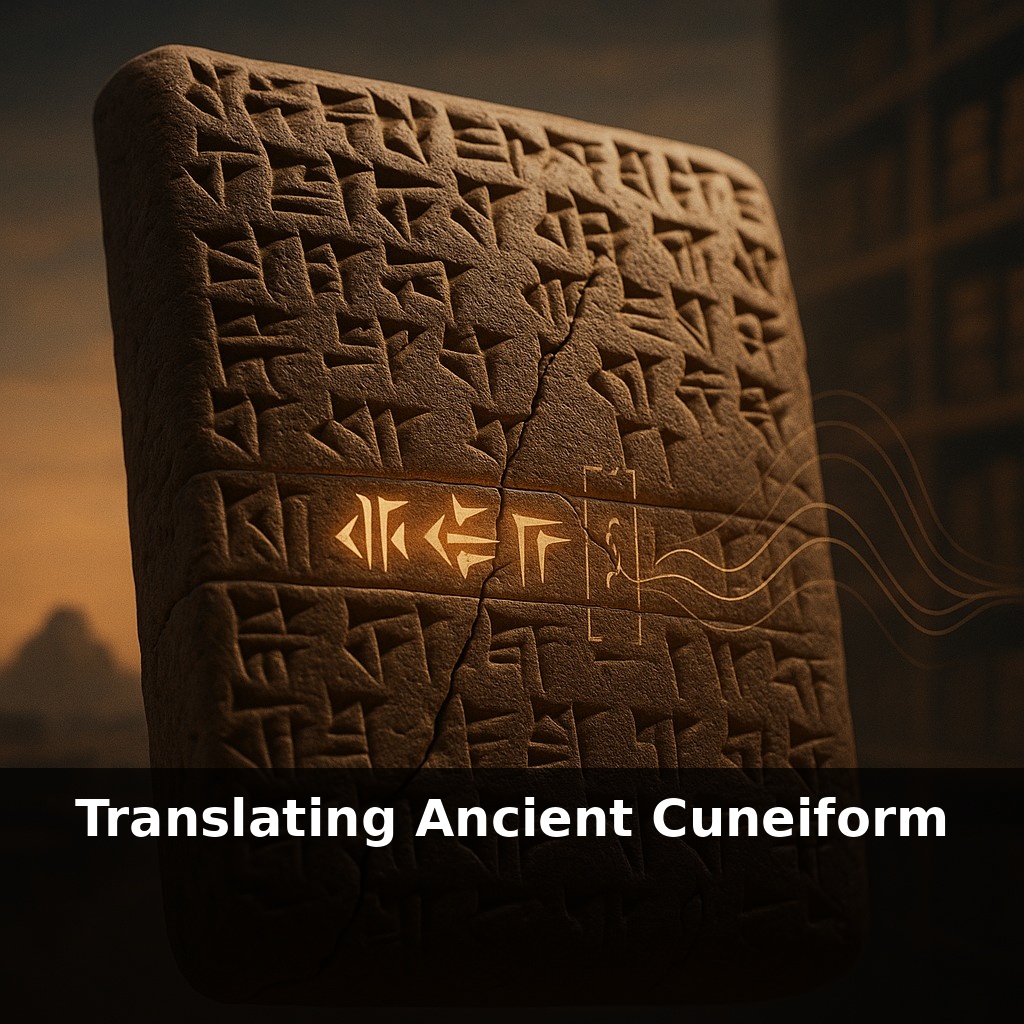
Only about one in ten known cuneiform tablets has ever been fully published—meaning most of the world’s oldest “emails” are still sealed. A royal decree, a love spell, a tax complaint: all waiting in clay, until someone learns to hear the wedges speak.
Some of those silent tablets are routine office notes; others completely overturn what we thought we knew about ancient history. A single new line in clay can shift a king’s reign by decades, resurrect a forgotten city, or reveal that a “myth” is actually based on a real flood, eclipse, or border dispute. But before any of that can happen, a reader has to solve three riddles at once: which ancient language is being written, which values each tiny wedge stands for, and how those pieces fit into sentences that once made perfect sense to a scribe 4,000 years ago. This isn’t just about cracking codes; it’s about learning to think like people who measured fields in days of plowing, counted debts in silver and barley, and dated their documents by the victories of kings no one remembers—yet.
To even start, scholars first have to place a tablet on the map of time and space. A fragment baked in an accidental fire at Mari doesn’t “speak” quite like one sun-dried in Uruk centuries earlier. Scribal schools copied model contracts and literary showpieces the way music students run scales, so the same line of text might surface in cities hundreds of kilometers apart—clues that help date and classify new finds. And because cuneiform could write several languages at once, a single archive can feel like walking through a library where every shelf swaps to a different alphabet mid-aisle.
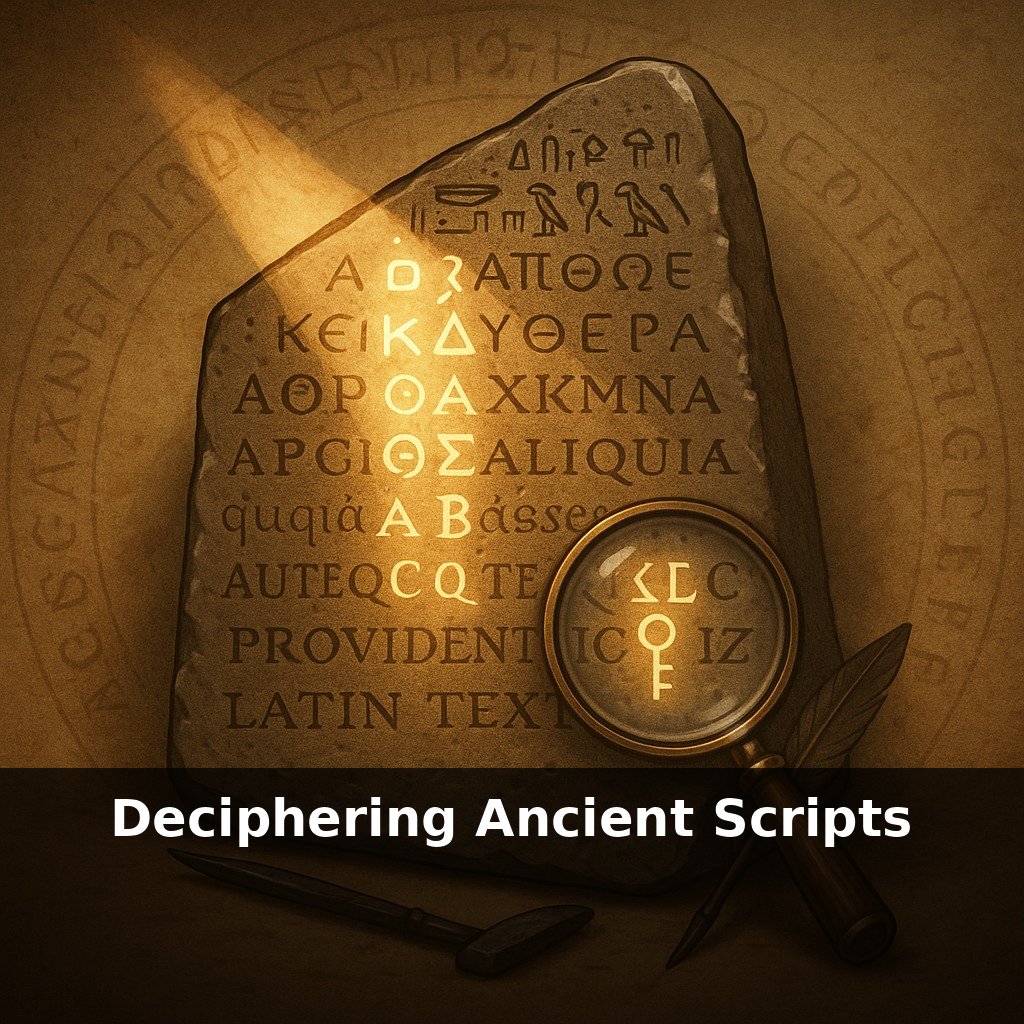
Friedrich Delitzsch once said that the clay archives of Mesopotamia were like “an ocean whose shores we have barely begun to explore.” To wade in at all, modern readers start with sign lists: systematic catalogs that tell you a given cluster of wedges might be read as a word, a syllable, or even a silent category marker. The same shape can label “city,” spell out a name, or stand alone as “god,” depending on where it sits and what surrounds it. Multiply that by hundreds of signs in standard lists, plus regional variants and cursive shortcuts, and each line becomes a dense field of possibilities that has to be thinned out step by step.
So how does someone actually move from raw impressions to a sentence they dare put in print? First they create a hand copy or high‑resolution scan, tracing every stroke precisely. Miss a single diagonal, and you might confuse a common term for a rare one. Then comes transcription into Latin letters, using conventions that flag when a sign is being read as a word, when as a sound, and when it’s just tagging something as, say, a profession or a place. Only after that careful scaffolding do you attempt a running translation.
Context constantly rescues the reader from dead ends. A fragment with month names and numbers suggests an administrative record; one with parallel lines and recurring divine names hints at a hymn or prayer. Legal texts tend to advertise themselves with formulaic openings, while letters often close with stock wishes for health and favor. Philologists lean on those patterns the way a traveler learns to spot street signs in a foreign city, using the familiar to orient themselves among the unknown.
Today, digital corpora and tools like the Chicago Assyrian Dictionary function as massive memory extensions, letting scholars search every attested instance of a rare verb or technical phrase. Imaging techniques reveal blurred wedges on warped clay, while machine‑learning models propose sign readings or parallels from millions of lines. Yet the final step—deciding which of several plausible meanings fits a particular king, contract, or curse—still rests on a human judgment call, argued in footnotes and revised when some dusty box in a museum yields one more matching line.
A good way to feel how tricky this work is: try reading a modern note that only says, “Delivered as agreed—see previous.” Without the contract, the date, or the sender, you’re stuck inferring who promised what to whom. Many economic texts are just as terse, yet from a series of such fragments at Kanesh, scholars reconstructed networks of Assyrian merchants, complete with partners, profit splits, and court disputes. Literary pieces can be even stranger. One damaged hymn preserves alternate versions of a single line across copies, like a song heard in several regional accents; choosing which variant to print becomes a small act of interpretation. And sometimes a single unusual phrase ripples far beyond philology: a rare term for flooding in a legal clause may later surface in a “mythic” deluge story, nudging historians to revisit whether an underlying event was river management gone wrong or a coastal storm hammered into poetry. Your view of the past changes because one scribe chose one odd word.
New tools may also expose quieter voices. As more routine notes and scratched drafts come into view, we might hear students grumble, mid‑level officials improvise, healers revise formulas. Patterns in how phrases shift over centuries could trace the rise of regional identities, like watching dialects spread on a weather map. And when sealed texts become legible without breaking them, curators must weigh curiosity against preservation, as if choosing which unopened letters from the past we have truly earned the right to read.
Each fresh reading doesn’t just “solve” a text; it opens a path into a world where contracts, prayers, and jokes shared the same clay. Follow those paths long enough and you start to see patterns—like constellations slowly forming out of scattered stars—hinting at how whole civilizations argued, feared, negotiated, and imagined their futures.
Before next week, ask yourself: Where in my own work or life am I “reading” only the surface of a text or situation, the way someone might first see cuneiform as just wedge marks, and how could I slow down and look for hidden layers of meaning and context? When you next see a news headline, a legal document, or a company policy, can you treat it like a cuneiform tablet—asking who “inscribed” it, for whom, and what power dynamics or assumptions are baked into its language? If you had to choose one modern message (an email, a contract, a social post) that you’d want people 3,000 years from now to truly understand, what background information, “lexicon,” or cultural notes would you need to add so they don’t misread it the way early scholars misread some ancient tablets?