Latin hasn’t been anyone’s native language for over a thousand years—yet it still decides how we name new planets, diagnose diseases, and argue in court. You’re about to hear how a “dead” language quietly edits the footnotes of almost every history book you’ve ever touched.
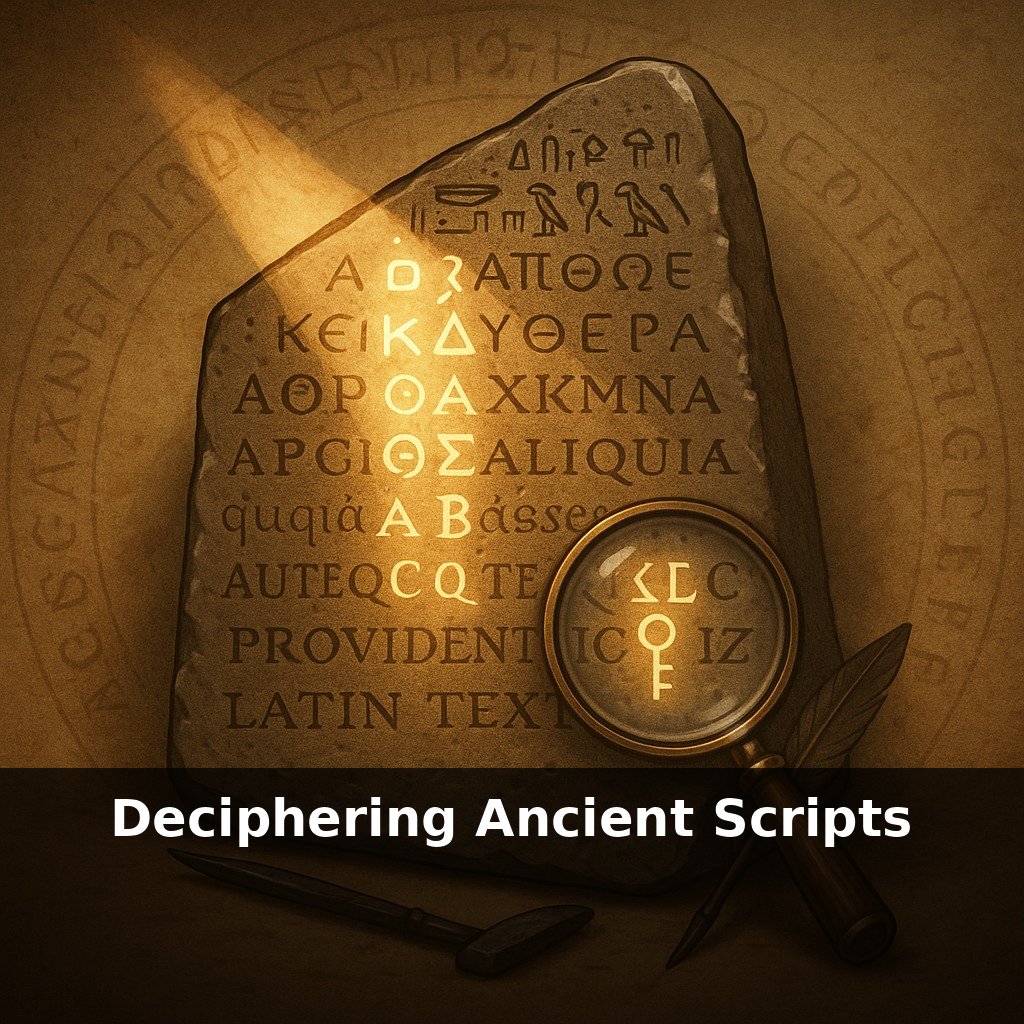
Open a medieval charter, a Renaissance anatomy manual, or a 17th‑century astronomy treatise, and the running joke is that everyone seems to switch into another tongue the moment things get serious. Dates, laws, scientific breakthroughs, even insults in the margins—suddenly they’re in Latin. Not as an ornament, but as the default setting for “this part really matters.” If you want to trace how an idea travels from a Roman courtroom to a Paris university to an Enlightenment salon, you can’t just skim translations; you need to hear what the authors actually said. Latin is the narrow hallway through which most of Europe’s intellectual traffic once had to pass, crammed with voices from emperors to obscure monks, all leaving records that modern historians still struggle to decode with enough precision.
Some of the most revealing Latin isn’t in grand speeches but in the “boring” parts: a scribbled note about missing grain, a formula in a deed, a marginal “nota bene” next to a risky argument. These details work like the stage directions of history, quietly telling us who owed taxes, who could marry whom, who counted as a citizen or a heretic. Even when authors think they’re just following routine phrasing, their choices of case, tense, or word order can smuggle in bias. For historians, learning to read that routine is like getting access to the director’s cut of the past.
When historians talk about “learning Latin,” they don’t mean reciting pretty mottos; they mean training their eyes to spot three kinds of signals that keep showing up in documents: how power is assigned, how time is sliced, and how people are categorized.
Power first. Latin’s six cases let a medieval scribe compress a whole legal argument into a few dense nouns. Change *dominus* “lord” to *domini* “of the lord” in a charter, and you may have quietly shifted a village from communal land to private possession. In a diplomatic letter, the choice between *tibi mando* “I command you” and *te rogo* “I ask you” can reveal who actually outranks whom, even when the tone sounds politely flowery in translation. Historians mine these microscopic shifts to reconstruct feuds, alliances, and jurisdictional battles that never get narrated outright.
Then there’s time. Latin verbs don’t just say *when* something happened; they hint at whether an action was ongoing, completed, hypothetical, or ordered. A council decree that uses the subjunctive—*haec observentur* “let these things be observed”—is prescribing an ideal; the same rule reported in the perfect tense—*haec observata sunt* “these things have been observed”—claims success. That difference can flip our interpretation of a reform from “aspirational project” to “accomplished reality.” In chronicles, an author who suddenly switches from past narrative into historic present can be signaling moral outrage or heightened drama at a particular event.
Categories are where Latin becomes most revealing—and sometimes disturbing. Ethnic labels like *Romani*, *Galli*, *Saraceni*, *Iudaei* are not neutral; paired with adjectives and verbs, they show who is trusted, feared, or targeted. A tax register that lists *Christiani et Iudaei* separately tells us that religious identity has become fiscally actionable. Medical texts that describe female bodies with diminutives while treating male anatomy as the default betray assumptions about gender and “normality.”
If you treat these patterns as mere ornament, you miss the script beneath the script. But once you’ve seen them, later languages become easier to interrogate. The Latin behind *subjugate*, *liberate*, *heretic*, or *alien* isn’t just etymological trivia; it’s a trail of decisions about who belongs inside the circle of protection and who stands outside it.
When historians actually sit with a Latin text, they treat it less like a monolith and more like a city map. Different genres are different neighborhoods with their own unwritten rules. A legal charter has stock phrases the way a modern contract has “whereas” and “hereby”; a monastic rulebook has its own favorite verbs for obedience and punishment; a scientific preface leans on verbs of seeing, measuring, and proving. Trace which clusters of words keep reappearing and you can tell whether you’re in the world of land, of prayer, or of experiment—sometimes even when the manuscript’s title page is missing.
Take a single word like *ordo*: in a council decree it might mean “social rank,” in a monastery “religious community,” in a military report “battle line.” Follow it across centuries and you can watch “order” shift from a physical line in space to a moral or cosmic structure. That kind of tracking lets historians see not just what people wrote, but how entire mental worlds were reorganized over time.
Soon, tools that align Latin with later translations may work like transparent overlays on a map, letting you watch concepts shift as they cross languages. A marginal gloss in a student’s Latin notebook could be matched to a law code or medical manual decades later, revealing how classroom debates hardened into policy. Your challenge this week: spot one modern word with a Latin root each day and ask, “Who gains or loses power if we define it this way?”
So Latin stops being a puzzle and becomes more like streetlights: once you notice where they fall, you start to see what was meant to stay visible and what was meant to fade into shadow. Follow those lit paths—across laws, prayers, lab notes—and you’re not just reading old words; you’re watching past minds decide what counted as real.
To go deeper, here are 3 next steps: (1) Download the free Perseus Digital Library (perseus.tufts.edu) texts of Caesar’s *De Bello Gallico* and Livy’s *Ab Urbe Condita* and spend 15–20 minutes today comparing the Latin text with the built-in morphological tools to see how real historical Latin looks and behaves. (2) Grab a beginner-friendly historical Latin reader like *Reading Latin: Text* by Jones & Sidwell or Collins’ *A Primer of Ecclesiastical Latin*, pick the first short historical passage, and work through it with the Lewis & Short dictionary (online at Logeion) open in another tab. (3) Install the Alpheios or Whitaker’s Words browser tool, then choose one historical document from The Latin Library (e.g., a short letter of Pliny the Younger) and use the tool to hover, parse, and build a personal vocab list focused specifically on political, military, or legal terms you care about.