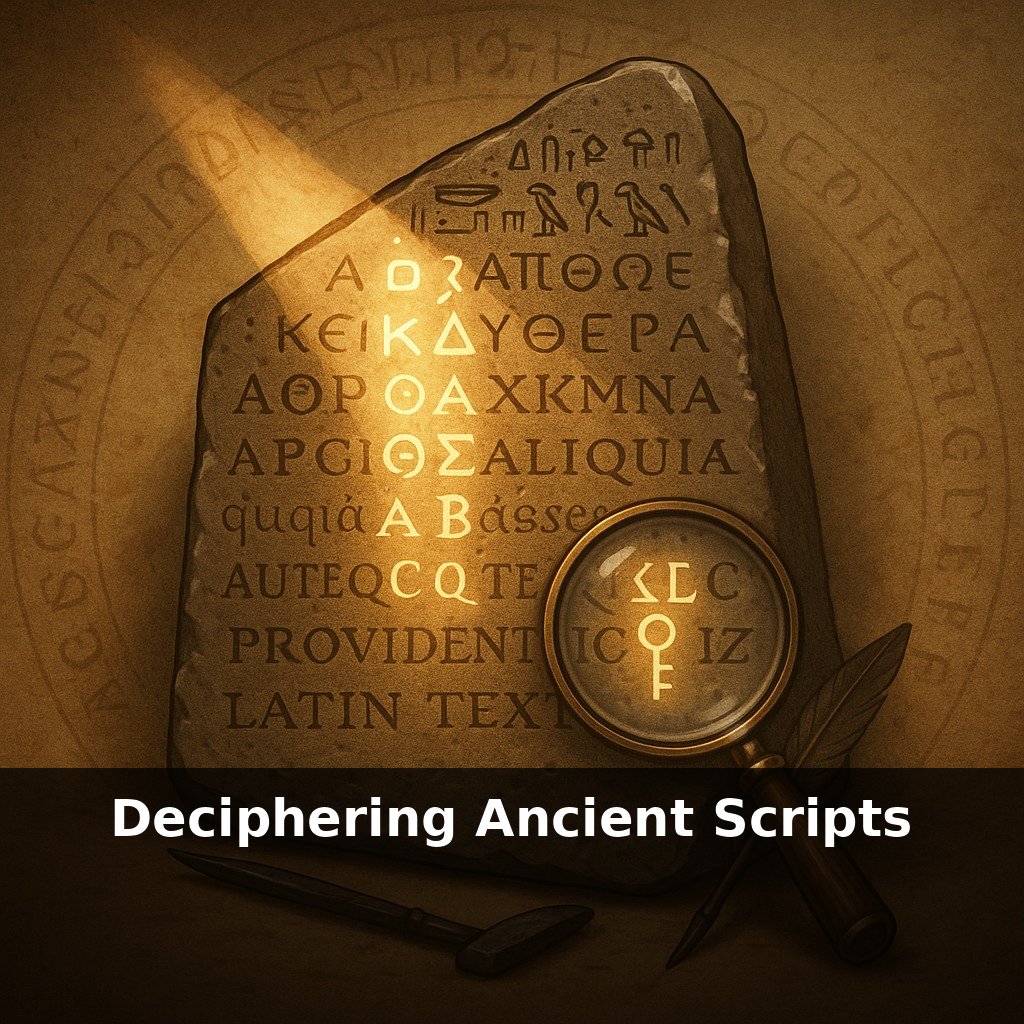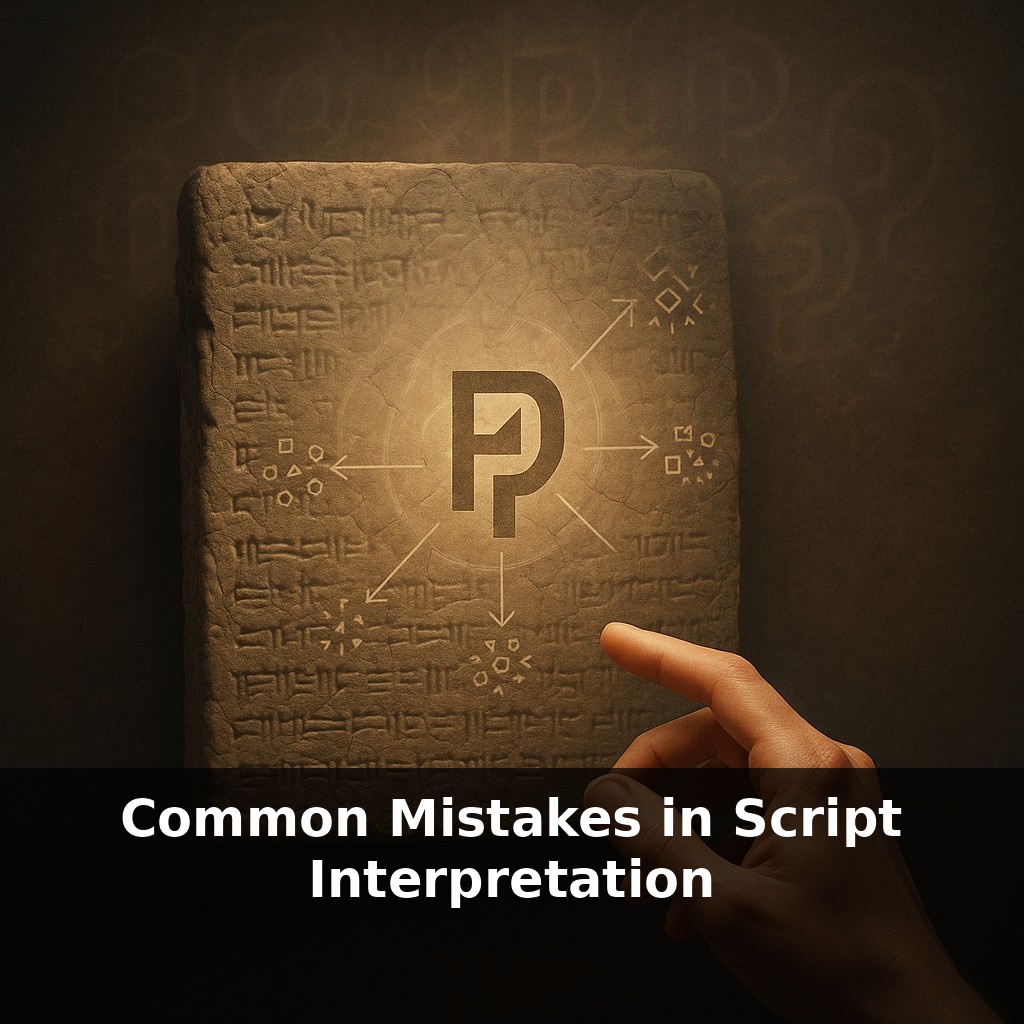
About half of the symbols in some famous ancient scripts were still mysteries less than a lifetime ago. Now, you’re holding a clay tablet in your mind: the marks look familiar, the words sound modern—yet every “obvious” meaning you assign quietly leads you wrong.
“Wrong” readings of the past rarely look wrong at first. In fact, many of the most famous misreadings were once celebrated as breakthroughs. A single sign that resembles a modern word, a pattern that fits a familiar story, a tempting guess that lines up a little *too* neatly with what we expect from a culture—we grab onto it. The catch is that scripts don’t live on the page alone. They’re shaped by the tools that carved them, the landscapes they describe, the rituals they recorded, and even the damage their surfaces have suffered. A cracked line on a stone can erase a king or invent one. A smudge on a scroll can turn a law into a prayer. To move beyond clever guessing, we have to treat every mark as part of a larger, stubbornly physical world that refuses to match our modern categories.
Some of the biggest breakthroughs in decipherment came not from spotting a clever pattern in the signs, but from realizing what **not** to assume about them. When scholars stopped forcing Maya texts into tidy “myths” and started checking them against royal burials and dated monuments, royal biographies suddenly emerged from the noise. When Linear B was tested against inventories, not heroic poetry, unexpected lists of grain and livestock confirmed that it encoded an early form of Greek. Each time, progress hinged on treating every reading as a hypothesis to be stress‑tested, not a truth to be defended.
A striking pattern runs through nearly every major decipherment: the biggest mistakes creep in precisely where things feel most “obvious.” Modern readers see a sign that *looks* like a familiar sound or word and quietly promote a guess into a “fact.” That’s how early readers of Maya texts confidently announced long mythic narratives where we now recognize dynastic histories. The visual resemblance between a few glyphs and known deities was allowed to outweigh awkward details: mismatched dates, repeated “myths” on clearly different monuments, or names turning up exactly where tombs should be.
Projecting modern categories is one of the most persistent traps. We expect *literature*, so we hunt for epics and philosophy; we expect *religion*, so we read every formula as a prayer. Yet when scholars finally treated many Linear B tablets as potential paperwork—receipts, quotas, tallies—the vocabulary snapped into focus. Suddenly, the statistics of which signs appeared near numbers, containers, or place names mattered more than how “Greek” a word looked at first glance.
Physical context quietly rewrites readings too. Infrared imaging of the Dead Sea Scrolls didn’t just fill in a few missing letters; it overturned entire reconstructions based on what scholars *thought* must be in the gaps. Lines that had been harmonized with later theological ideas turned out to say something more mundane—or more unsettling. Likewise, high‑resolution photography of worn inscriptions has shown that “standard” readings sometimes depended on scratches that weren’t strokes at all.
Then there’s the danger of tiny datasets. With only a handful of inscriptions, a clever theory can explain everything—until a single new find shatters it. The shrinking percentage of undeciphered Maya signs, or the consistency now achieved with thousands of Linear B tablets, comes from letting large corpora and digital tools punish seductive but fragile ideas. When computational models try millions of ways to segment a continuous line of script and still keep tripping over the same clusters, that 30% mis‑segmentation spike is no longer an abstract warning; it’s a red flag on a cherished reading.
In practice, the most reliable interpretations grow where linguists, archaeologists, historians, and imaging specialists all have veto power. A reading that fits the grammar but ignores a burial pattern, or one that suits the archaeology but breaks phonetic rules, is treated as provisional at best.
One way to see how fragile “obvious” readings are is to follow three concrete cases. Early readers of one royal monument confidently treated a recurring sign as a generic “lord” title because it sat near images of power. Only when another inscription turned up with that same sign followed by a clear birth‑and‑death sequence did it become clear they’d been erasing a specific individual everywhere it appeared. In another project, a team trained an algorithm to slice continuous lines of text into “words.” The model performed well on a modern language written without spaces, then collapsed when fed an early corpus: it kept grouping a number sign with whatever followed it, effectively turning “3 baskets grain” into one mysterious “basketgrain” term. By contrast, a collaborative project on a fragmentary law code forced epigraphers, legal historians, and materials scientists into the same room; every proposed reading had to survive questions about ink flow, legal logic, and syntax before it was allowed into print—like a painting critiqued from composition, pigment, and subject all at once.
Future tools won’t just “read” old texts faster; they’ll change the questions we dare to ask. As models compare thousands of inscriptions at once, they may expose quiet voices—local officials, foreign traders, even dissenters—previously drowned out by royal boasts. Like walking a familiar forest with night‑vision goggles, scholars could find entire narrative paths between trees they thought they knew. Your challenge this week: each time you see a translation, ask what evidence might be missing—or overruling—it.
So the real skill isn’t just “cracking” a text; it’s learning to live with uncertainty without stopping the search. As imaging sharpens and corpora grow, some cherished translations will quietly retire, like old maps replaced by better surveys. Your challenge this week: whenever a past “fact” feels neat, ask what messy traces it might be smoothing away.