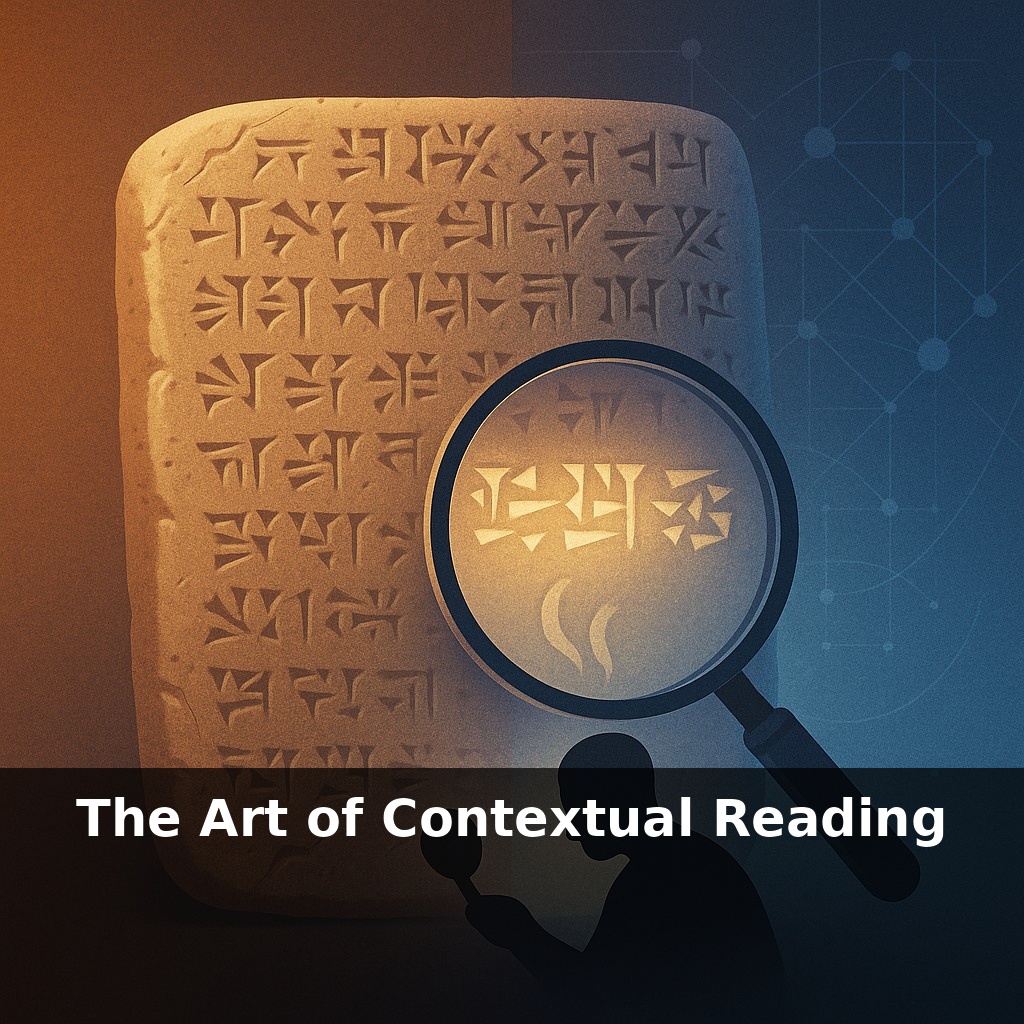
A single mistranslated line once made ancient Sumerian doctors sound like superstitious fools—for almost a century. Now, with AI quietly sorting thousands of fragments, whole civilizations are clearing their throats to correct us. So what else have we been hearing wrong, all this time?
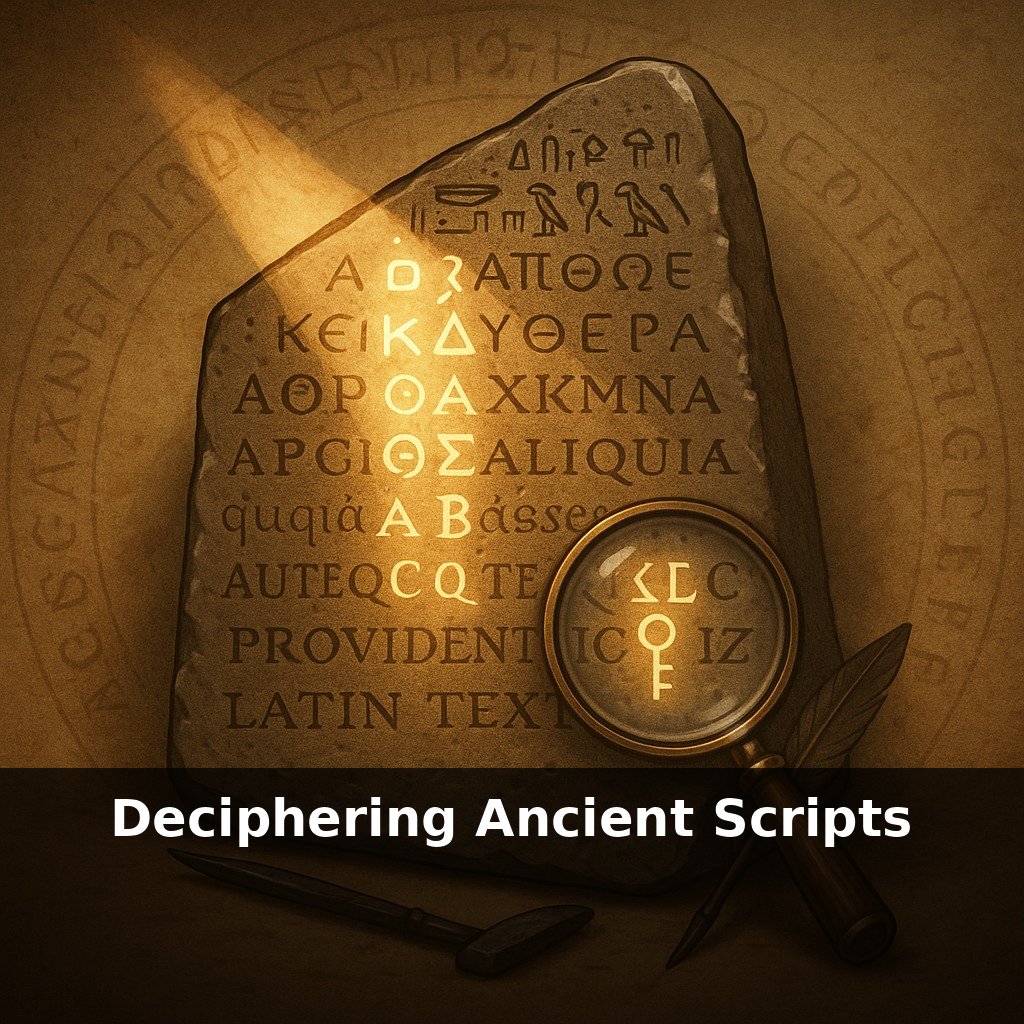
In this episode, we zoom in on the quiet skill that decides whether an ancient text reveals wisdom or nonsense: contextual reading. Strip a line from its setting and it can flip meaning as quickly as a joke loses punch when told out of order. Restore its neighbors—time period, politics, local beliefs, even climate—and that same line can snap into focus with unnerving clarity.
This is where the real detective work begins. Philologists chase every quirk in the wording; archaeologists dig up the room where the tablet lay; anthropologists ask how the people who used it saw their world. Now, pattern-hungry algorithms can sort fragments the human eye glosses over, like subtle differences in a scribe’s stroke—more like recognizing a friend’s walk from far away than just reading a name tag.
Now the puzzle widens: context isn’t just “when and where,” it’s a stack of overlapping worlds. A law code carved in stone reads one way beside a palace gate, and another if copied onto a clay tablet for a village court. The same word for “house” can hint at a family, a temple, or a cosmic order, depending on what other texts from that city whisper around it. Researchers cross-check inscriptions with climate records, trade routes, even pollen trapped in mud. It’s less like decoding a single message and more like walking through a city at dusk, noticing which windows are lit—and which stay dark.
Consider a single, stubborn word in an ancient text: “house.” On a tablet from a river port, it might mean a merchant’s warehouse. In a temple hymn, it could point to the dwelling of a god. In a royal inscription, it may signal an entire dynasty—“the house of X.” The *spelling* can be identical; what changes is the web of associations wrapped around it.
This is where specialists start layering contexts like transparent sheets. First comes the narrow frame: what genre is this? A lawsuit, a hymn, a recipe, a royal boast? A line that reads as a threat in a treaty might be a blessing in a ritual. Genre quietly narrows what a word is allowed to mean without anyone in that culture needing to say so.
Next is the social frame. A formula scratched quickly on a potsherd at a work site won’t play by the same rules as a carefully incised dedication in precious stone. Curse formulas on cheap bowls, for instance, turn out to preserve slang, regional jokes, even nicknames that never appear in “serious” monuments. Miss that, and you risk reading everyday snark as solemn theology.
Then comes the intertextual frame: how often does this phrase appear elsewhere, and in whose mouths? A line in a wisdom text might echo a much older proverb, which itself quoted a ritual. Scholars now map such echoes across thousands of texts, tracing how a phrase shifts as it moves from temple to marketplace to schoolroom. Suddenly, a puzzling passage stops being an isolated riddle and becomes one moment in a long-running conversation.
Material details tighten the focus further. Was the text sealed in a jar, buried under a floor, mounted on a wall? Was it folded, rolled, stitched into clothing? A spell sewn into a child’s tunic asks to be read differently from the same words copied neatly into a scholar’s handbook.
Put together, these layers turn reading into reconstruction. You’re not just asking “What do these signs say?” but “Who is speaking, to whom, in what room, with what expectations—and what else were they reading last week?” Like hiking a familiar trail at a different season, the path is the same, but the colors, sounds, and risks change, and with them, your understanding of every step.
Take a short inscription: three lines on a chipped stone, listing a name, a number, and what looks like “barley.” On its own, it might be filed as a tax receipt. But suppose excavators find dozens of similar stones only in shrines, never in storehouses, and residue analysis shows traces of roasted grain nearby. Suddenly that “receipt” starts to look like a record of offerings: not a bill, but a promise.
Or think of a terse royal note about “opening the canal.” If tree-ring data shows a run of drought years, and nearby tablets complain of failed harvests, the phrase shifts from routine boasting to emergency policy—closer to announcing a modern disaster-relief program than cutting a ceremonial ribbon.
One surviving letter from a soldier to his family reads flatly in translation, until you set it beside contemporary jokes scratched on wall-plaster and realize half his “updates” are stock punchlines. It’s as if we’d taken a stand-up set for a formal report simply because we’d lost the comedy club around it.
Future implications ripple outward from the tablets and scrolls. As more scripts yield, we’re not just revising timelines; we’re reopening debates about whose stories anchor modern identities and borders. Newly legible contracts, prayers, or land deals can strengthen or unsettle present-day claims. And when these texts feed into tomorrow’s language models, their biases, jokes, and silences may quietly shape how machines “remember” humanity’s past. Context, then, becomes a shared ethical project, not just a scholarly technique.
Context turns brittle scraps into ongoing conversations. As more scripts yield, we’re not just piecing together dead archives; we’re meeting new voices mid-sentence. Treat each fragment less like a museum label and more like a doorway: step through carefully, ask who arranged the room, and notice which stories fall silent when you move the furniture.
Try this experiment: Pick one article you’re about to read today (news, Substack, or a blog) and, before reading a single sentence, spend 3 minutes researching its context: who wrote it, when it was written, who it was written for, and what was happening in the world or industry at that time. Then read the piece twice—once straight through, and a second time while asking, “Given that context, what’s not being said here?” Note how your interpretation, trust level, and emotional reaction change between the first and second read. Finally, compare that to how you usually read and decide whether this contextual pass is worth building into your regular reading habit.