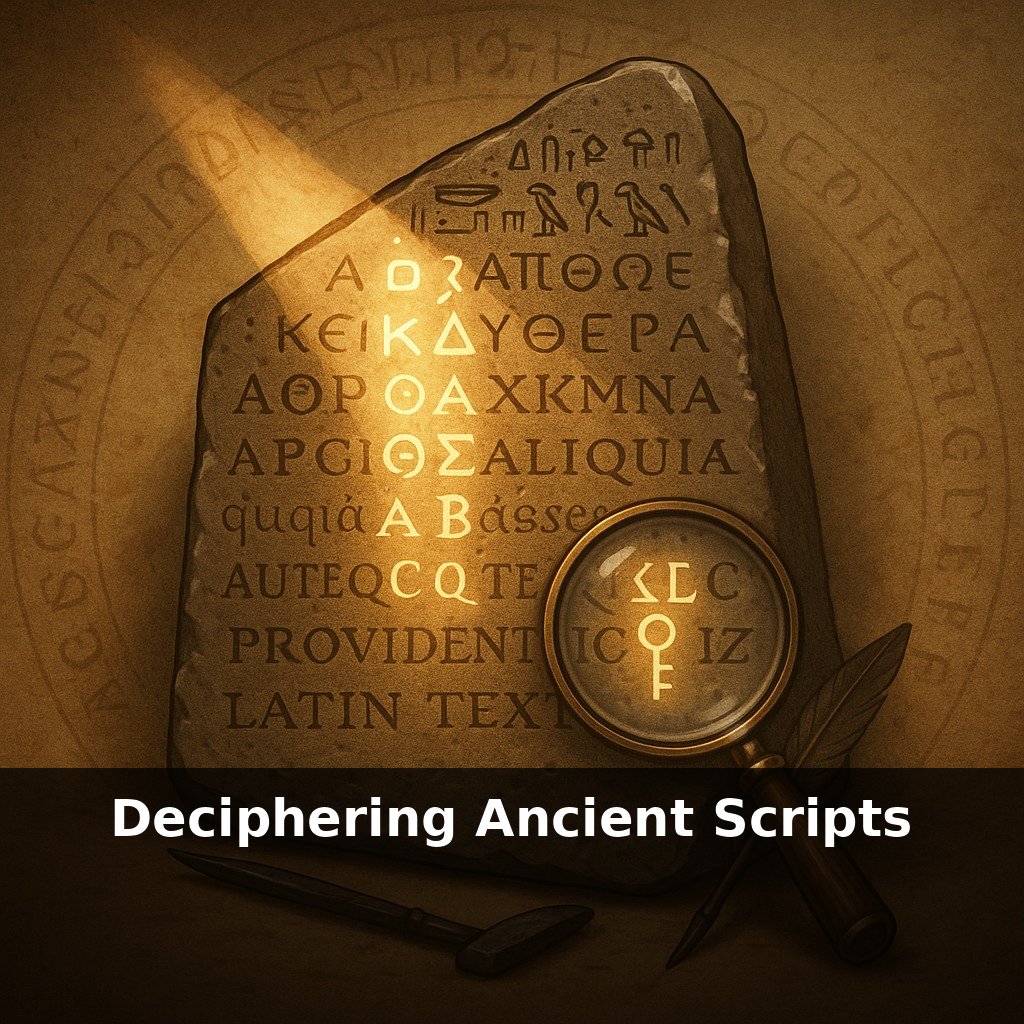
A single, well-designed practice recap can boost your memory of a skill by almost half—yet most learners skip it. In this episode, we drop you straight into a rapid-fire decoding gauntlet, where each short challenge quietly wires your brain for long-term script mastery.
You’ve seen single signs and short phrases; now we’re going to scramble everything you know and put it back together in unexpected ways. Instead of revisiting modules in neat order, you’ll hop from early symbol recognition to later multi-line decoding, then back to tricky look‑alikes—more like walking through a market of stalls than down a straight hallway. Each micro‑challenge is short by design: just long enough to stretch you, not long enough to drain you. Some prompts will deliberately mix “easy wins” with knots that slow you down, so you start to feel where your strengths really are instead of where you *assume* they are. Along the way, immediate feedback will act like a careful curator, pointing out not only what you missed, but *why* your brain was tempted in that direction, and how to nudge it next time.
In this recap session, you’re not just repeating exercises—you’re stress‑testing how flexibly you can use what you know. Some prompts will flash past like street signs from earlier lessons; others will feel more like half‑erased graffiti that forces you to slow down and infer missing strokes from context. We’ll shuffle between quick single‑symbol hits and denser snippets that demand choices: Which value fits here? Which direction does the text flow? When your first guess is wrong, the goal isn’t to catch you out; it’s to show how tiny visual cues—spacing, angle, clustering—quietly guide expert readers.
Think of this recap as a set of “script sprints”: short bursts of effort that end *before* you feel finished. Research on retrieval shows that stopping a bit early keeps your brain slightly “hungry,” and that unsettled feeling is exactly what drives stronger consolidation later. So instead of one long decoding marathon, you’ll cycle through clusters of 3–7 minute bouts, each focused on pulling symbols and patterns out of your head—not staring at an answer key.
We’ll also deliberately shuffle problem types. One moment, you might identify a single sign’s likely sound value; the next, you’ll choose the most plausible reading of a phrase from three near‑twins; after that, you’ll decide which of two directions a line probably runs. Interleaving like this can feel messier and harder than staying with one type, but that difficulty is a signal that you’re learning to *discriminate*—to notice the subtle differences that actually matter when you meet unfamiliar inscriptions.
To keep the effort targeted, each micro‑challenge will end with tight, explanatory feedback. Not just “correct/incorrect,” but a quick breakdown: what clue you could have used, what common trap the wrong options represent, and how an expert eye would have ruled them out. Those tiny course corrections accumulate; the point is not to avoid mistakes, but to make them cheaply and learn from them fast.
Pacing matters too. Attention research suggests that focus craters when tasks drag on without a clear endpoint, so each segment in this recap has a visible “finish line”: a small set of items, a countdown timer, or a goal like “three accurate reads in a row.” You’ll know exactly what you’re trying to do in that slice of time.
To make it easier to come back for more, we’ll layer in light gamification: streaks for consecutive days of recap, small badges for tackling trickier mixed sets, and cumulative points that unlock “challenge boards” composed of authentic historical snippets. Like walking different trails in a national park, each board will emphasize a distinct terrain—dense sign clusters here, damaged text there—so you’re never just retracing the same path.
Think of each micro‑challenge as a quick sketch in an artist’s notebook rather than a finished painting. You’re not aiming for perfection; you’re filling pages with different strokes so your hand and eye start to move together without overthinking. One set might have you racing through ten single signs in two minutes, another might pause on a short inscription and ask, “Which two marks here are probably from a later editor, not the original carver?” A third could give you three partial lines from different eras and ask you to sort them by likely date based only on sign style and layout.
You can also treat difficulty like adjusting light in a studio. Start with “brightly lit” tasks where outlines are obvious, then dim things: smudged photos, cropped corners, mixed writing directions. The goal isn’t to make things obscure for its own sake, but to nudge your attention toward features you usually gloss over—tiny asymmetries, tool marks, or how certain signs tend to cluster near numbers or names.
Over several sessions, notice which kinds of “lighting” make you hesitate and which feel almost automatic.
Future recap tools may quietly weave into daily life, slipping tiny script challenges between tasks the way a fitness tracker nudges you to stand. Your commute, a museum visit, or even a recipe app could surface one-tap prompts tuned to your recent errors. Think of street signs, subway maps, and packaging mock‑ups rendered in past scripts, turning the world into a shifting practice ground that adapts as casually as a smart thermostat responds to changing weather.
As you wrap this recap, treat each tiny win like a pin on a travel map: proof you’ve actually been somewhere, not just read about it. Notice which “cities” you keep revisiting—dates, names, directions—and which stay blank. Those gaps aren’t failures; they’re invitations to plan your next route through the landscape of ancient scripts.
Try this experiment: For the next 24 hours, intentionally overuse one specific skill from the episode—like reflective listening—by mirroring back the last 5–7 words of what someone says in at least three different conversations. Notice how each person responds: do they open up more, correct you, or shift topics? At the end of the day, quickly rate each conversation (1–5) for depth and connection, and compare those where you used the skill to ones where you didn’t. Use what you notice to decide whether to keep, tweak, or drop that version of the skill in your regular toolkit.