Understanding Decision Fatigue
📝 Transcript
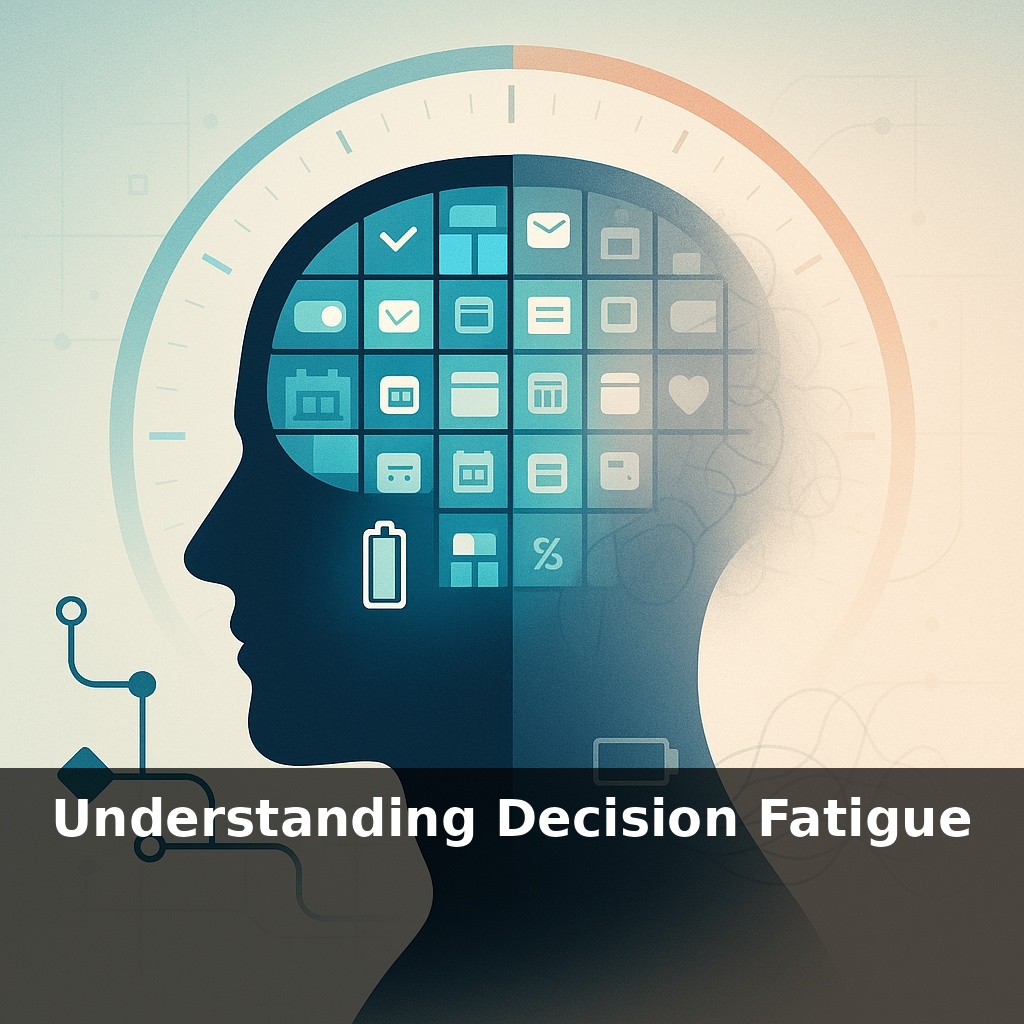
By lunchtime, your brain has quietly made tens of thousands of tiny choices—most you don’t even notice. Yet by mid‑afternoon, you’re more likely to say “whatever’s easiest” to big things: money, health, even relationships. How does that silent slide into worse decisions actually happen?
Most people think bad decisions come from bad values or bad information. More often, they come from a tired brain using shortcuts. That’s when you say yes to meetings you don’t need, scroll past the workout you planned, or click “accept all” on terms you’d normally question. Not because you suddenly stopped caring, but because your brain is quietly trying to conserve resources for what feels most urgent.
Here’s the twist: decision fatigue doesn’t just hit during crises or long workdays. It stacks up across tiny, “harmless” choices—Slack replies, outfit changes, menu scrolling, endless micro‑preferences in your apps—until bigger decisions are made on autopilot. You still feel in control, but your standards subtly drop. In this episode, we’ll trace how modern technology accelerates that build‑up—and why your worst choices often arrive disguised as reasonable ones.
Online, this build‑up doesn’t happen by accident. Most platforms are designed to keep you making small, low‑stakes choices as often as possible: tap to react, swipe to dismiss, skim to decide if something’s “worth it.” Each click feels trivial, but together they create a steady drip of tiny commitments. Think of the moments you’re nudged: “continue watching,” “rate your ride,” “add to your order?” None are demanding alone, yet they quietly tax the same mental systems you rely on for whether to change jobs, confront a friend, or stick to a savings plan.
The strange part is how *invisible* the cost becomes once you’re already tired. From the outside, you still look engaged: you’re answering messages, checking notifications, scanning headlines. But under the surface, your brain is quietly changing the rules of what “good enough” means.
One shift is in how you evaluate options. Early in the day, you might actually compare pros and cons of different tools, plans, or messages. Later, you’re far more likely to rely on whatever is already highlighted, recommended, or pre‑selected. Defaults suddenly feel wise. That’s not a moral failure; it’s a predictable response to a system that keeps asking you to click “just one more thing.”
Research on choice overload helps explain this. When the jam study showed that people bought less when offered 24 options instead of 6, it wasn’t because they hated jam. It was because the extra mental math pushed them toward inaction. Online, this same pattern shows up when you leave a cart abandoned, never pick a streaming show, or delay booking travel because there are “too many deals.” The path of least resistance quietly becomes *no* decision—or the one the interface steers you toward.
There’s also a timing effect. Studies of judges and doctors show that as decision sessions drag on, they drift toward safer, simpler outcomes: deny parole, stick with the existing prescription, schedule another test. The riskier—but sometimes better—choices require more mental simulation: “What happens next if I do this?” As your internal resources dip, you run fewer of those simulations and lean harder on rules, habits, and whatever seems familiar.
Technology amplifies this drift by making every interaction feel urgent but reversible. Notifications suggest you can always tweak settings, unsubscribe, or “decide better” later. In practice, later rarely comes. The tiny “I’ll deal with it tomorrow” choices snowball into subscriptions you don’t use, contacts you don’t prune, files you never organize.
Over days and weeks, that accumulation reshapes your environment. A cluttered inbox, chaotic home screen, or noisy calendar doesn’t just reflect past decisions—it actively sets the stage for the next round to be worse.
A practical way to see this in your own life is to watch what happens at the edges of your day. Late at night, you’re more likely to let apps auto‑renew, accept default privacy settings, or agree to “free trials” you didn’t really want. Not because you suddenly trust every company, but because unchecking boxes, opening terms, or comparing plans quietly feels too expensive.
The same pattern shows up in work tools. A team flooded with “quick polls” and preference settings often ends up adopting whatever layout, notification scheme, or workflow the software suggests—then keeps it for years. No one vividly remembers choosing it; they just never pushed back.
You’ll also see it in group chats and social feeds. When you’re already stretched, you’re more likely to leave muted threads alive, stay in half‑dead groups, or keep following accounts that no longer matter. Each non‑decision preserves the status quo, which quietly accumulates until your digital spaces feel more inherited than chosen.
As systems quietly learn your patterns, they don’t just respond to you—they start *shaping* what you see next. Over time, your digital life can resemble a garden tended by someone else: certain paths kept clear, others allowed to grow wild. That has social effects too. When the easiest responses are “like,” “archive,” or “leave on read,” deeper conversations shrink. Future tools may need “friction by design”—small speed bumps that help you notice when you’re sliding into choices you never really made.
Your challenge this week: once a day, pause before a “small” click—updating an app, joining a channel, accepting a suggestion—and ask, “Do I want more of this in my life next month?” Treat each yes like adding a new subscription to your time. Over a few days, you’ll start to see which choices truly earn their recurring fee.
Unlock all episodes
Full access to 6 episodes and everything on OwlUp.
Subscribe — $1.99/monthLess than a coffee ☕ · Cancel anytime