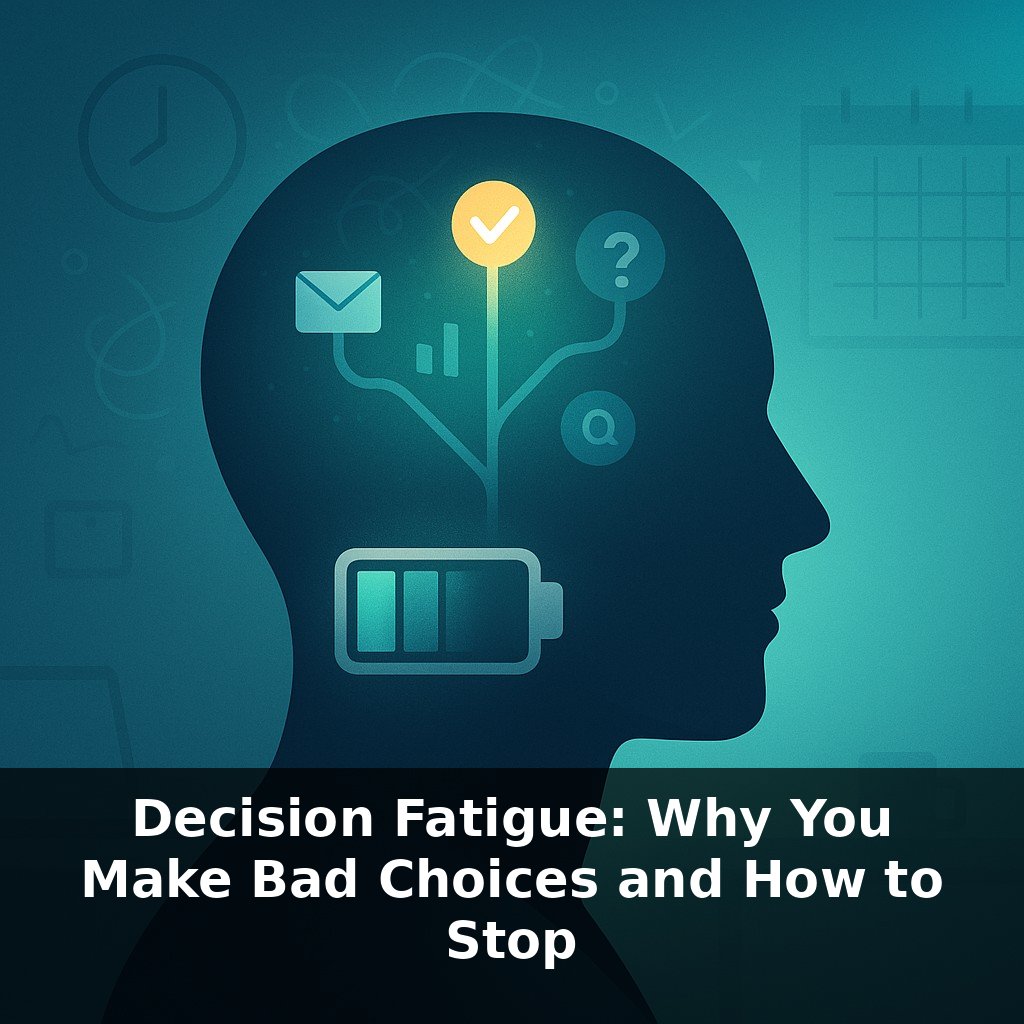
A single judge’s decision can swing from “yes” to almost always “no” just because it’s close to lunchtime. Now zoom in on your own day: by mid-afternoon, are you still choosing… or just defaulting? Today we’re stepping into that quiet slide from deliberate to autopilot.
On an average day, you’ll make more choices than there are minutes—tens of thousands of micro‑decisions, stacked quietly in the background. Most feel harmless: reply now or later, skim or read, scroll or stop. But research shows those tiny calls add up, draining the same mental systems you rely on for big, high‑stakes judgments.
Here’s the twist: the quality of your decisions doesn’t just depend on how smart or disciplined you are. It also depends on *how* you structure choices. Surgeons using a simple checklist cut complications by more than a third. Parole boards and physicians show predictable drops in quality as sessions wear on.
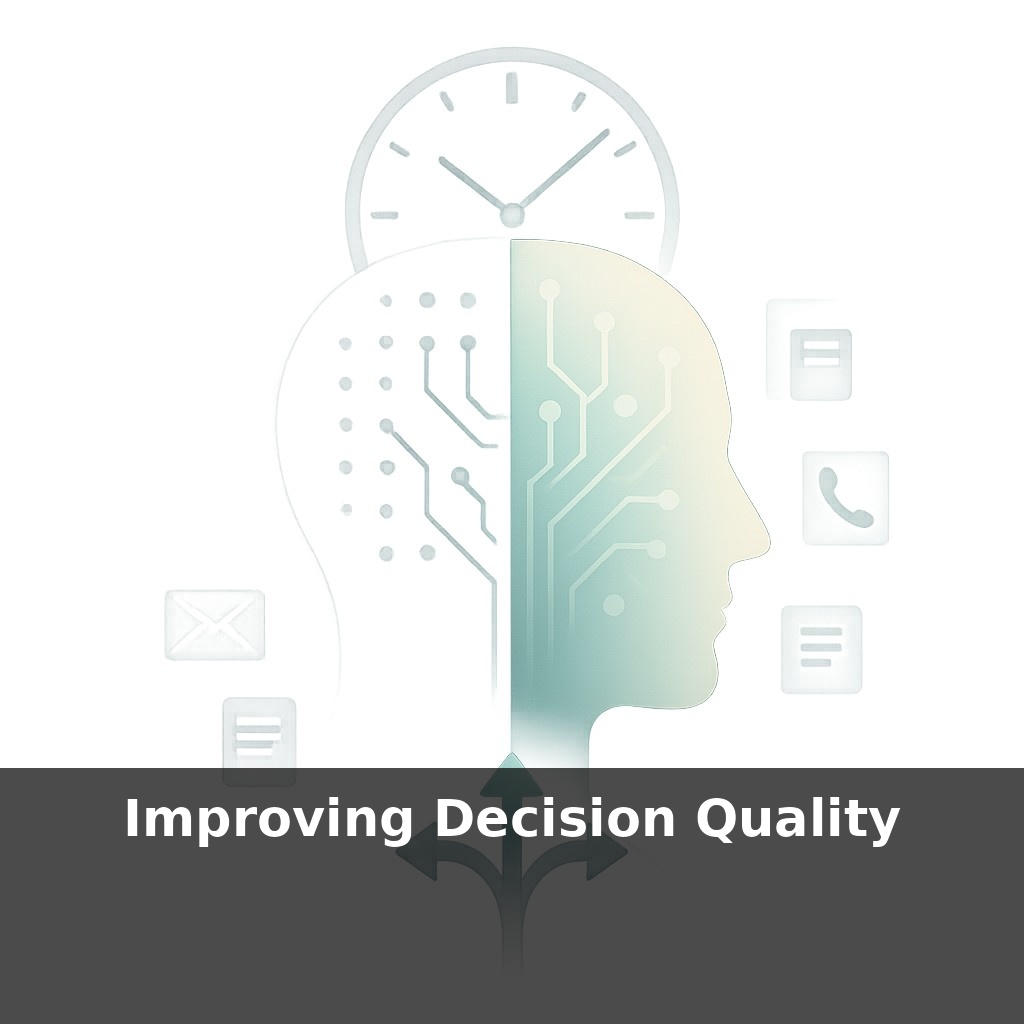
So today, we zoom in on the design of your decision environment—how checklists, batching, and smart defaults can quietly hold your standards steady, even when your mind is running on fumes.
Across medicine, aviation, and finance, the same pattern keeps surfacing: when humans rely on willpower alone, performance drifts; when they rely on systems, it stabilizes. WHO’s surgical checklist didn’t make surgeons smarter—it made it harder to forget the one crucial step on a hectic day. Pilots don’t “wing it” on takeoff sequences, and top investors pre‑commit to rules before emotions run high. In this episode, we’ll borrow those high‑reliability habits and shrink them down to everyday scale—so your future self can coast on today’s good design instead of tomorrow’s fading energy.
A judge, a surgeon, and a primary‑care doctor walk into a workday. Same training as yesterday, same basic tasks. What actually changes, hour by hour, is the *quality* of their calls—unless they’re protected by structure.
That’s the uncomfortable part of the evidence: your raw “good judgment” is more fragile than it feels. Intelligence, experience, even motivation don’t stop the gradual tilt toward the easiest option: deny parole, skip one verification step, click the default prescription, say “I’ll deal with it later.”
So instead of asking, “How do I power through more decisions?” a better question is, “How do I spend my best judgment where it matters, and automate the rest?”
Three levers do most of the work:
**1. Shrink the decision, not your ambition.** You don’t need more heroics; you need fewer full‑blown deliberations. Reducing options—from 12 nearly identical tools to 2 pre‑vetted ones—often improves accuracy because your attention goes deeper instead of wider. In noisy situations (like picking stocks or vendors), fast, evidence‑based rules of thumb can beat elaborate scoring systems that tempt you to endlessly tweak.
**2. Decide once, use many times.** Where you see repetition, you’re looking at an opportunity for a “single, upstream decision” that governs dozens downstream. A podcaster who pre‑commits to: *“Guests must hit at least one of these three criteria”* avoids case‑by‑case wrestling. A manager who codifies *“we reply to clients within X hours, using Y template unless Z”* removes hundreds of tiny judgment calls from the week.
**3. Put hard choices in your freshest hours.** The same person at 9 a.m. and 4 p.m. is not the same decision‑maker. The trick is to align high‑stakes, high‑ambiguity calls—hiring, strategy, complex diagnosis—with your sharpest mental window, then surround that window with lower‑stakes, more scripted work. You’re matching task volatility to cognitive bandwidth.
Think of it less as squeezing more discipline out of yourself and more as building a personal “risk‑management” system: your future, tired self is constrained to make the *right kind* of easy mistakes—ones that are reversible, low‑impact, and noticed early—while your rested self designs how the big, expensive choices will be handled.
A venture capitalist I worked with has a ritual before partner meetings: she scans her calendar, circles the “non‑reversible” calls—term sheets, key hires, major pivots—and writes one line for each: *“If this goes wrong, what exactly will hurt?”* That question doesn’t slow her down; it narrows her field of view, so trivial preferences don’t weigh as much as downstream consequences.
You can do a similar thing with personal choices. Before you dive into a crowded inbox or a cluttered to‑do list, flag the 1–2 decisions whose effects will still matter in six months. Those get your clearest attention; the rest are candidates for templates or quick rules.
In nature, a river will always favor the lowest, easiest path; over time, that path deepens into a canyon. Your habits do the same. Each time you pre‑define a response—how you say no, when you escalate, what “good enough” looks like—you’re carving channels that tomorrow’s tired brain is likely to follow. The art is choosing in advance *which* channels you’re willing to deepen.
A 1% improvement in how you handle big choices can outweigh a year of optimizing tiny ones. As AI assistants mature, you’ll likely outsource more of those trivial calls—calendar shuffling, email triage, even which article to read next. That raises a new question: *when* should you let software decide, and when should you insist on being fully present? Think of future tools less as autopilot and more as co‑pilots, redirecting you toward the few decisions only you can own.
Your choices don’t need to be flawless; they need to be *designed* to fail safely. Treat experiments in structure like adjusting a recipe: a little more constraint here, a note about timing there, then taste and revise. Over time, you’re not just conserving effort—you’re quietly upgrading the average quality of the calls that actually shape your life.
Before next week, ask yourself:
1) “Looking at a real decision I’m facing right now (e.g., whether to say yes to that new project or keep my focus), what *specific* options am I considering, and which plausible options have I not even put on the table yet?” 2) “If I apply the ‘good process over good outcome’ idea, how can I pressure-test this decision today—who can I briefly consult, what key assumptions can I challenge, and what information gap could I realistically close in the next 24 hours?” 3) “If I imagine my future self looking back in six months, what would they say I should be weighting more heavily right now: long-term learning and alignment with my values, or short-term comfort and certainty?”