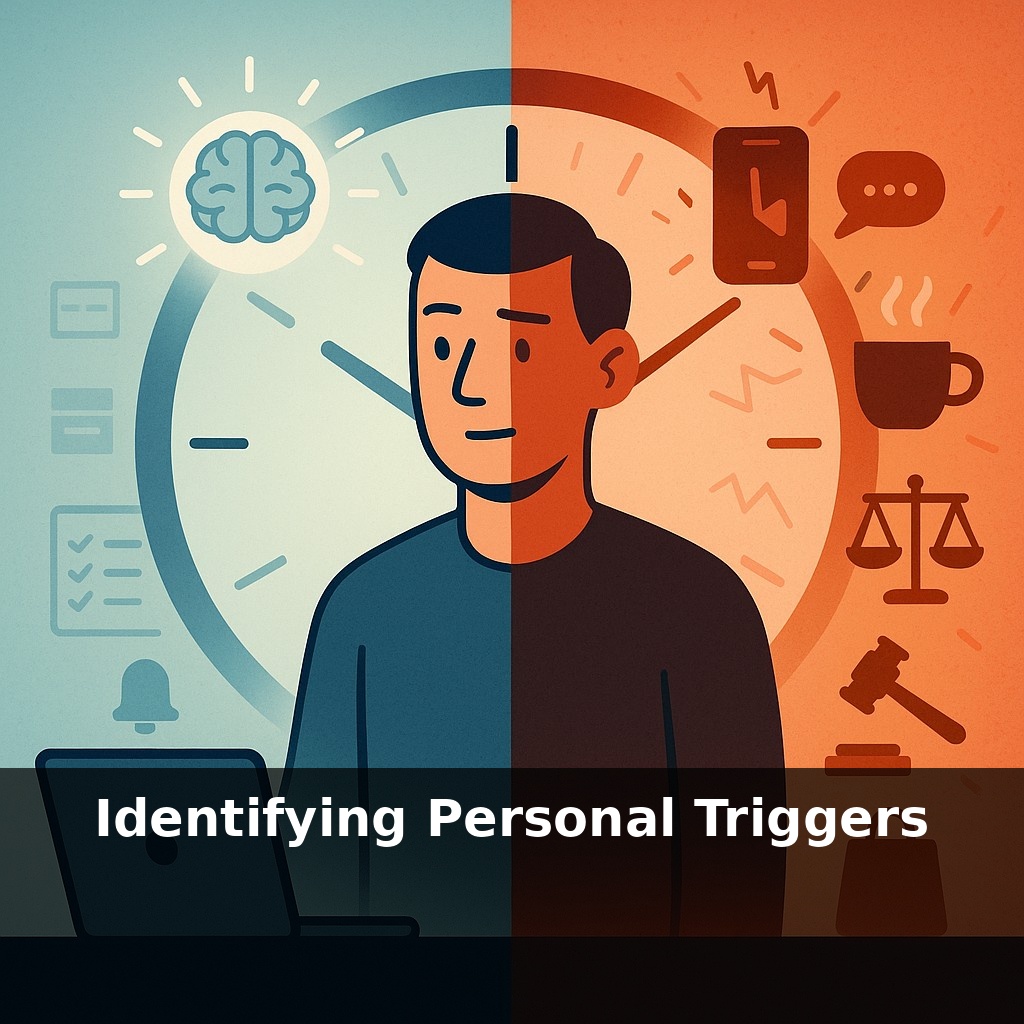
A judge is more likely to approve parole right after breakfast than right before lunch. Same case, same facts—totally different outcome. In this episode, we’ll explore how your own hidden “trigger moments” quietly tilt your decisions all day long.
That same pattern we saw with judges shows up in regular life too—just in less dramatic ways. Maybe you snap at a teammate only on Zoom calls after 3 p.m., overspend when you shop standing up on your phone, or always abandon your to‑do list when Slack and email are both open. These aren’t random bad days; they’re predictable “high‑drain zones” in your routine.
Research on heart‑rate variability and remote‑work fatigue suggests that certain times, contexts, and emotional states reliably spike mental strain and cloud judgment. In earlier episodes we talked about how much energy your brain burns; here we zoom in on *where* it leaks most for *you*. The goal isn’t to power through, but to map your personal hotspots so precisely that you can redesign around them—batching decisions, inserting tiny buffers, or shifting tasks—before your mental battery hits red.
Think of this episode as moving from weather report to detailed climate map. Instead of “afternoons are rough,” we’re asking: *Which* afternoons? *Which* meetings? *Which* moods? Research on time‑mapping and mood diaries shows that people’s rough patches aren’t random; they cluster around repeatable patterns—specific tasks, locations, or even people. One person’s worst zone is back‑to‑back video calls; another’s is silent solo work after 9 p.m. By treating your day like a dataset instead of a blur, you can spot those patterns early and quietly re‑route your hardest choices away from your personal storm fronts.
Start with a simple question: *When do your good intentions consistently fall apart?* Not in theory, but in the tiny, repeatable ways your day actually unfolds.
Researchers who follow people’s behavior hour‑by‑hour notice something striking: the most draining moments are rarely surprises. They show up like bad guests who keep arriving at the same time, by the same door. For some, it’s “the first 20 minutes after opening email”; for others, “any conversation that mixes money and family,” or “scrolling marketplaces after 10 p.m.” The theme isn’t drama—it’s *friction*: situations where every small choice feels heavier than it should.
Three kinds of triggers show up again and again:
1. **Context triggers.** These are tied to where and how you’re doing something. Standing in a noisy kitchen with your phone, you might accept calendar invites you’d decline if you were at a desk. Many people donate more generously from a laptop than a phone—same person, different context, different call.
2. **Social triggers.** Certain people or roles reliably pull you into a different decision style. You might become overly accommodating with one manager, hyper‑critical with a particular colleague, or impulsive around a friend who loves “limited‑time offers.” The relationship, not the decision itself, does the draining.
3. **State triggers.** These are inner conditions that quietly tilt your choices: being slightly hungry, mildly anxious, pleasantly hyped, or just bored. Excitement before a launch can push you to over‑commit; low‑grade worry can nudge you to avoid any choice that feels irreversible.
One fresh way to see this is to borrow a page from personal finance: instead of tracking where your *money* goes, track where your *best judgment* gets spent fastest. Not “was today good or bad?” but “*Which* situations kept charging me a hidden fee in mental effort?”
High performers who do this systematically often discover both “red zones” and “green zones.” Red zones are moments where even trivial choices feel costly. Green zones are surprisingly protective: the coworker who makes hard tradeoffs feel easier, the walking 1‑on‑1 where you think more clearly than in any boardroom, the 30‑minute window after exercise when planning feels almost effortless.
Your aim isn’t to avoid every red zone; life won’t allow that. It’s to know them precisely enough that you stop blaming your character and start adjusting your calendar, your tools, and your expectations around the specific conditions that reliably tax your mind.
Your “trigger map” often hides in places you treat as neutral. Two people can sit in the same open office: one feels quietly focused, the other is on edge the whole afternoon, saying “yes” to things they don’t really agree with. The difference isn’t willpower; it’s how their brains price that environment.
Think of it this way: in finance, some expenses are obvious—rent, groceries—and some are “leaks”: tiny subscriptions and fees you barely notice, but that add up. Decision‑making has leaks too. You might discover that:
- Writing important messages on your phone leads to over‑promising, but drafting on paper first doesn’t. - Brainstorming with one particular teammate leaves you energized, while another leaves you second‑guessing every choice for hours. - Working from a café boosts your creativity but makes you say yes to risky timelines.
Those aren’t random quirks; they’re your personal “mental fee schedule.” Once you see where the hidden charges show up, you can start renegotiating them.
AI systems are already inching toward “mental weather” forecasts—spotting patterns you can’t see in real time. Instead of you combing through logs, your tools might quietly say, “You tend to accept shaky deals at 4 p.m.—want to delay this?” Over time, workplaces could treat cognitive load like budgets: meetings booked only when everyone’s “account” is healthy, deep‑work slots shielded by default, and dashboards flagging when a project’s decision load is drifting into the red.
Your challenge this week: run a live “trigger experiment.” For 5 days, pick one recurring decision slot—late‑night messages, budget approvals, or calendar edits. Change just *one* variable: location, device, or timing. Note how your choices shift. You’re not fixing yourself; you’re learning how different “settings” rewrite the script of your day.