By mid-morning, your brain has already made more choices than you realize—what to wear, which route to take, which message to answer first. Yet the most important decisions of your day are still ahead. So why do we spend our sharpest mental energy on the smallest stuff?
Research suggests you don’t “run out” of willpower so much as waste it on the wrong things. One big culprit: invisible micro-decisions that nibble at your focus all day. Answering every notification the moment it pings. Rewriting the same type of email from scratch. Debating lunch for ten minutes, then rushing an important afternoon choice on autopilot.
Across a typical workday, these aren’t just quirks—they’re structural drains on your prefrontal cortex, the part most responsible for planning, prioritizing, and self-control. When it’s overloaded, you default to habits, impulses, and whatever’s easiest in front of you.
This is where simple, evidence-based systems matter. Not because they’re cute productivity tricks, but because they deliberately protect your limited high-quality thinking time. In this episode, we’ll look at how planning, batching, and delegation turn good intentions into reliable safeguards for your best decisions.
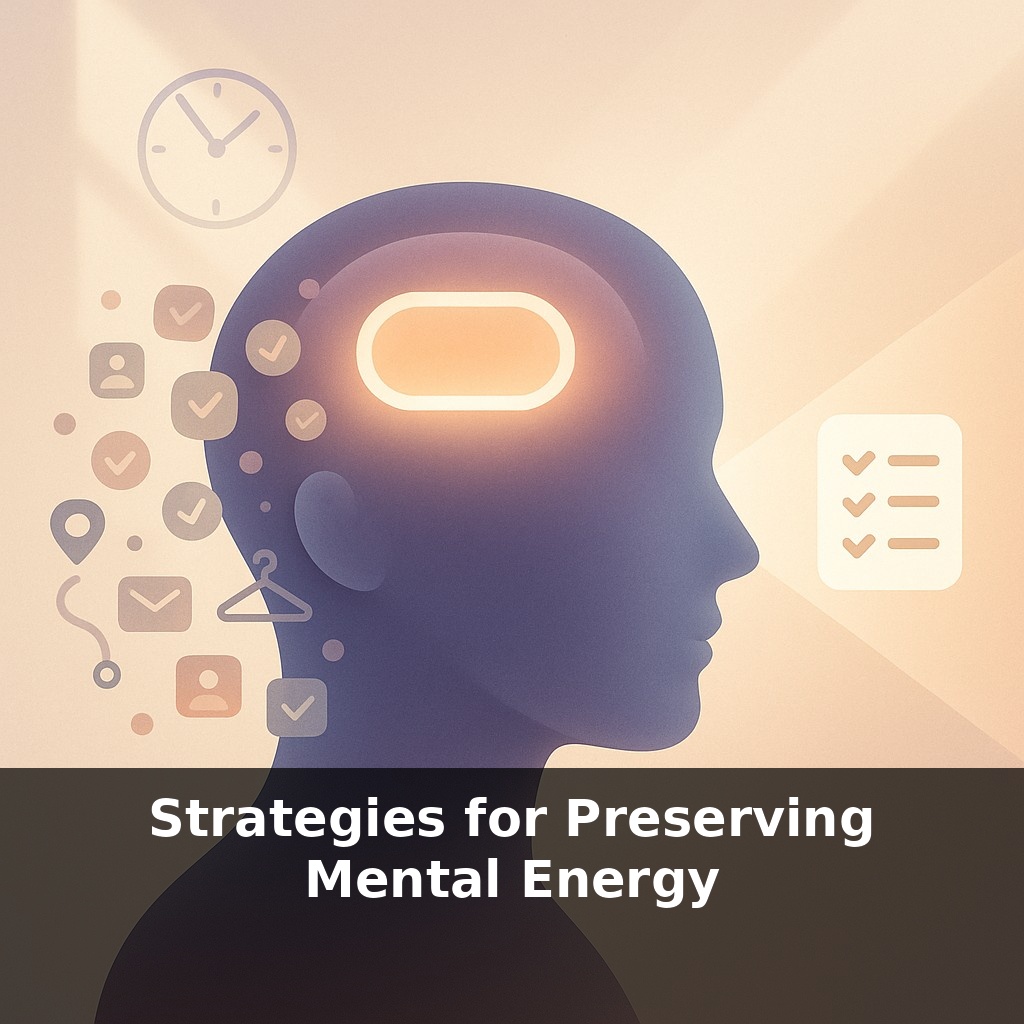
You’ve probably noticed that two days with the same to‑do list can feel completely different: one flows, the other grinds. The tasks didn’t change—your mental “overhead” did. Hidden costs creep in when you jump between tools, keep plans in your head, or renegotiate priorities every hour. Think of all the half-finished thoughts you carry—“don’t forget to reply,” “remember to check that”—like open browser tabs quietly slowing everything down. In this episode, we’ll explore how small structural tweaks to your environment and schedule can quietly close those tabs and free up capacity for the work that actually matters.
The research is blunt: your brain is not failing you; your environment is quietly booby‑trapping you.
One major trap is “default settings” you never consciously chose. Many of the 35,000 decisions you make in a day come from how your tools, calendar, and routines are configured. Email that’s always open, meetings automatically set to 60 minutes, notifications enabled by default—each one forces you into dozens of tiny reactions you didn’t intend to spend energy on.
So instead of asking, “How can I try harder?” a better question is, “Which decisions can I move upstream?” That’s the logic behind laying out your clothes the night before or pre‑deciding what “deep work” means for you (time, place, and rules). You’re not just saving a few minutes—you’re protecting the quality of later choices by taking low‑stakes decisions off the board early.
Task‑switching is another drain that feels harmless in the moment. The APA estimate that rapid switching can slash productivity by up to 40% doesn’t just mean “you work slower”; it means you burn through more cognitive fuel per unit of output. That’s why grouping similar work—calls, writing, analysis, errands—matters less for speed and more for energy efficiency. You’re lowering the “start‑up cost” each time you begin.
Planning the next day does something similar at a higher level. That 9% bump in goal attainment isn’t from longer hours; it comes from deciding once what matters, then executing instead of renegotiating every hour. A simple evening review—What did I actually move forward? What will define a “good day” tomorrow?—turns vague intentions into a shortlist your tired morning brain can follow without a fight.
In teams, unclear ownership quietly multiplies decisions. Every “Who’s doing this?” or “Is this my job?” is a small hit to everyone’s bandwidth. The HBR finding that clear role definitions correlate with 33% higher job satisfaction is, in part, a story about reduced cognitive friction: fewer ambiguous calls, more clean yes/no choices.
Think of these changes less as self‑discipline and more as infrastructure. You’re building a system that spends your sharpest attention on the few decisions only you can make—and lets the rest run on rails.
A useful way to test this in real life is to zoom in on one “ordinary” hour and treat it like an energy audit. Take, say, 3–4 pm tomorrow and write down every tiny fork in the road: answer the Slack ping now or later, skim that article or close it, start the slide deck or “just check” your inbox. Don’t judge, just capture. Then, ask: “Which of these choices actually moved something important forward?” You’ll usually find a handful of decisions doing most of the heavy lifting—and a long tail of noise. That contrast is where leverage lives. Some people codify it with a short “if‑then” playbook: “If it’s a calendar invite without an agenda, then I decline,” or “If it will take under two minutes, I decide immediately.” It’s like building a personal investment policy for your attention: you pre‑decide what counts as a “high‑yield” use of your focus, so you’re not negotiating with yourself all day when you’re tired or distracted.
A quiet shift is coming: preserving focus will matter as much as building skill. As AI assistants mature, they’ll steadily absorb “low‑stakes friction”—tuning calendars, sorting inboxes, even suggesting when to stop for a break based on patterns in your work. Workplaces may start offering “cognitive ergonomics” the way they now offer better chairs: fewer context‑shifting meetings, clearer handoffs, dashboards for overload. The edge will belong to people and teams that treat attention like a portfolio and rebalance it on purpose.
Your challenge this week: design one “energy safeguard” you can turn on and forget—like a standing no‑meeting block, or a rule that mornings are for one project only. Treat it as a beta test: notice what frictions vanish, what resistance shows up, and what unexpected space appears when you stop renegotiating the same boundaries.