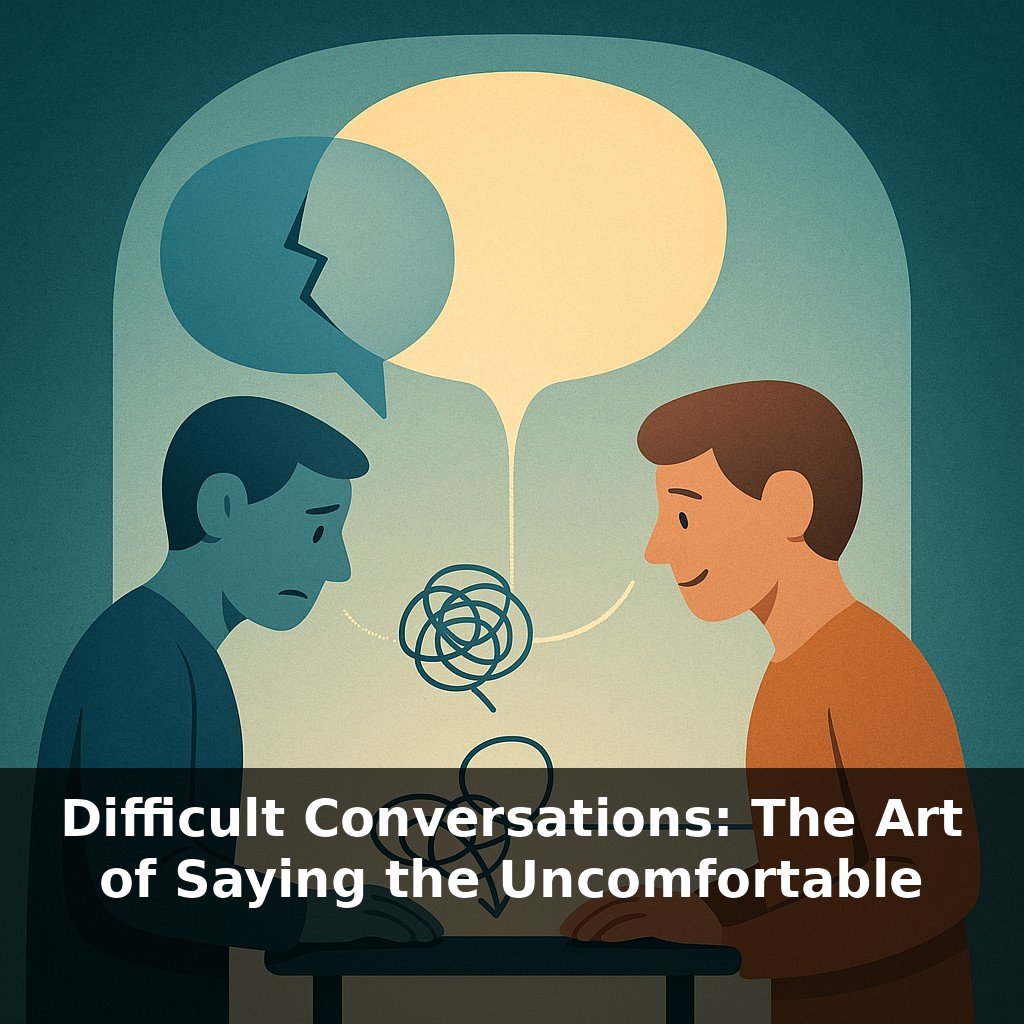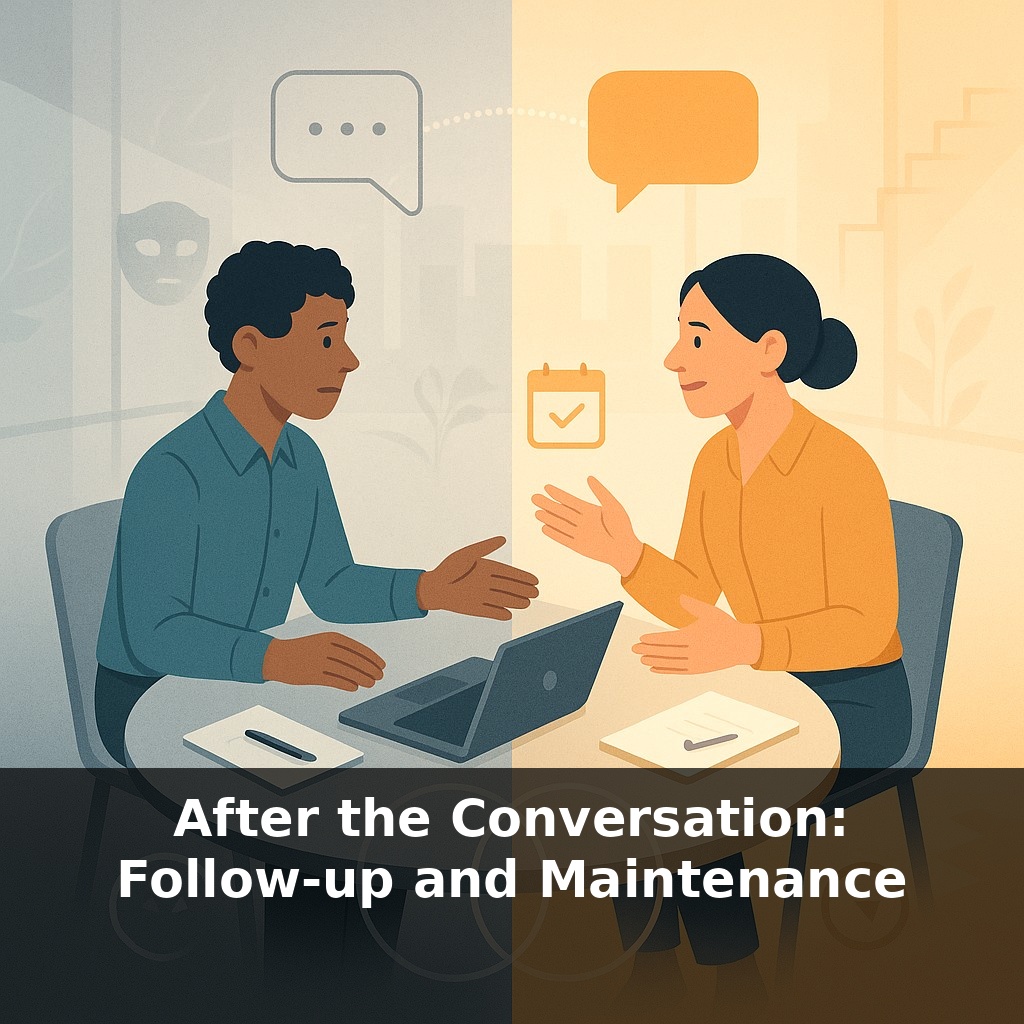
Half of employees hold back from tough workplace conversations, creating a facade of relationships that seem 'fine' but mask deeper issues. In this episode, we dive into that gap: why a conversation that *felt* resolved can quietly unravel in the days and weeks that follow.
Thirty-one percent. That’s how much more likely agreements are to stick when teams schedule a follow-up within a week. Not because the original conversation was perfect, but because no one pretends the story ends there. The hours and days after a hard talk are when second thoughts creep in, old habits resurface, and people quietly test whether anything really changed.
This is also when biology joins the meeting. Stress hormones slowly drop, defensiveness cools, and the brain starts deciding: “Was that safe? Do I risk being this honest again?” Without signals of consistency—check-ins, small wins, repaired missteps—the safest answer becomes “no.”
So instead of treating the conversation as a finish line, we’ll treat it as the start of a feedback loop: specific follow-ups, simple written commitments, and tiny course corrections that turn one brave talk into a new pattern.
So in this episode, we’ll zoom in on what happens after everyone leaves the room: the quiet recalculations, the “did they really mean that?” doubts, the small choices that either reinforce trust or erode it. This is where many teams unintentionally send mixed signals—saying “we’re aligned” but then canceling the check-in, delaying decisions, or slipping back into old response patterns. We’ll look at simple structures leaders and peers can use in those first days—clear timeframes, visible progress, and calm course corrections—to turn that fragile post-conversation window into the place where new norms actually take root.
Most “failed” conversations don’t explode in the room; they decay quietly afterward. People replay what was said on their commute, in the shower, in that 3 a.m. window when your brain loves to catastrophize. Tiny doubts creep in:
“Did they only agree because they were cornered?” “Was I too blunt?” “Are they already regretting what they promised?”
Without anything concrete to interrupt that spiral, our minds fill the silence with old narratives. That’s one reason teams who plan a specific next touchpoint so often see better follow‑through: they don’t rely on memory or mood alone to carry the change.
Maintenance after a hard talk has three layers.
First, clarity of “who does what by when.” Vague endings—“Let’s both try to communicate better”—invite drift. Precision shrinks room for silent disappointment. “By Friday, I’ll send a draft of the new process. Next Wednesday, we’ll review what’s working and what’s not.” The more observable the action, the easier it is to notice progress and course-correct without drama.
Second, visibility of progress. When agreements live only in people’s heads, they feel fragile. When they live somewhere external—a short recap email, a shared doc, a note in your project tool—they become something the relationship can lean on. You’re not arguing about who “promised what”; you’re jointly looking at a shared reference point.
Third, responsiveness to the inevitable wobble. Early on, almost no one executes perfectly. Someone will slip into an old tone, miss a deadline, or freeze in a moment they meant to handle differently. The turning point is how quickly and calmly that slip is acknowledged. A brief, low‑drama repair (“Hey, I noticed I cut you off again in that meeting—can we reset?”) signals that the new norm is real, not performative.
Think of it like post‑surgery care: the operation matters, but infection prevention, medication timing, and gentle movement in the days after determine whether the patient regains full strength or ends up back in crisis. In relationships, those “aftercare” moves are small, repeatable behaviors—short updates, naming early concerns, celebrating small adherence—that steadily teach both nervous systems: “This change is actually happening, and it’s safe to participate in it.”
“Let’s sync sometime next week” quietly dies on most calendars. A concrete follow-up sounds more like: “Tuesday 10:30, 15 minutes, just to see what’s feeling easier and what’s still clunky.” Now you’re not policing promises; you’re running an experiment together.
Take a manager who agreed to give less last‑minute work. Instead of waiting a month to see “if it feels better,” they log every request for two weeks, tag which ones were urgent, then review the pattern with their teammate: “We cut surprise tasks by half. The remaining ones came from clients—how do we want to handle those?” Data replaces guesswork and defensiveness.
Or two peers who clashed over email tone decide that for 10 days, any message that “lands wrong” gets a quick clarification chat, no apology tour required. Most tensions evaporate in under five minutes, and they learn which phrases are easy to tweak without sanding off their personalities.
Your relationships don’t need huge rituals here—just small, visible experiments that make it normal to adjust, not pretend perfection.
Teams that treat “aftercare” as optional will soon feel outdated. As workflows scatter across time zones and tools, relationships will need the same kind of quiet monitoring we expect from health apps: subtle alerts, early pattern-spotting, gentle prompts before strain becomes injury. Leaders who can read these signals and turn them into small, human adjustments—brief re-alignments, course tweaks, shared re-prioritizing—will become the ones people actively choose to work with and stay near.
So the real art isn’t just surviving one intense meeting—it’s learning to keep adjusting while life keeps moving. Think in “micro-updates,” like seasoning a dish as it simmers: a quick note when priorities shift, a short debrief after a win, a question when something feels off. Those tiny moves turn one repaired moment into a more resilient, adaptable relationship.
Try this experiment: Pick one real conversation you’ve had in the last week where something important was said (a boundary, a request, or a vulnerable share), and send a 3-part follow-up message: (1) reflect back one specific phrase they used, (2) name one concrete thing you’re committing to do differently because of that conversation, and (3) ask one simple, yes/no check-in question about how that change is landing for them. For the next 3 days, keep doing the thing you committed to (for example: actually honoring the “no work talk after 8pm” or “texting before dropping by”). At the end of day 3, ask them how they’ve experienced you over those days and compare their feedback with how consistent you *thought* you were—notice any gap between your intention and their experience.