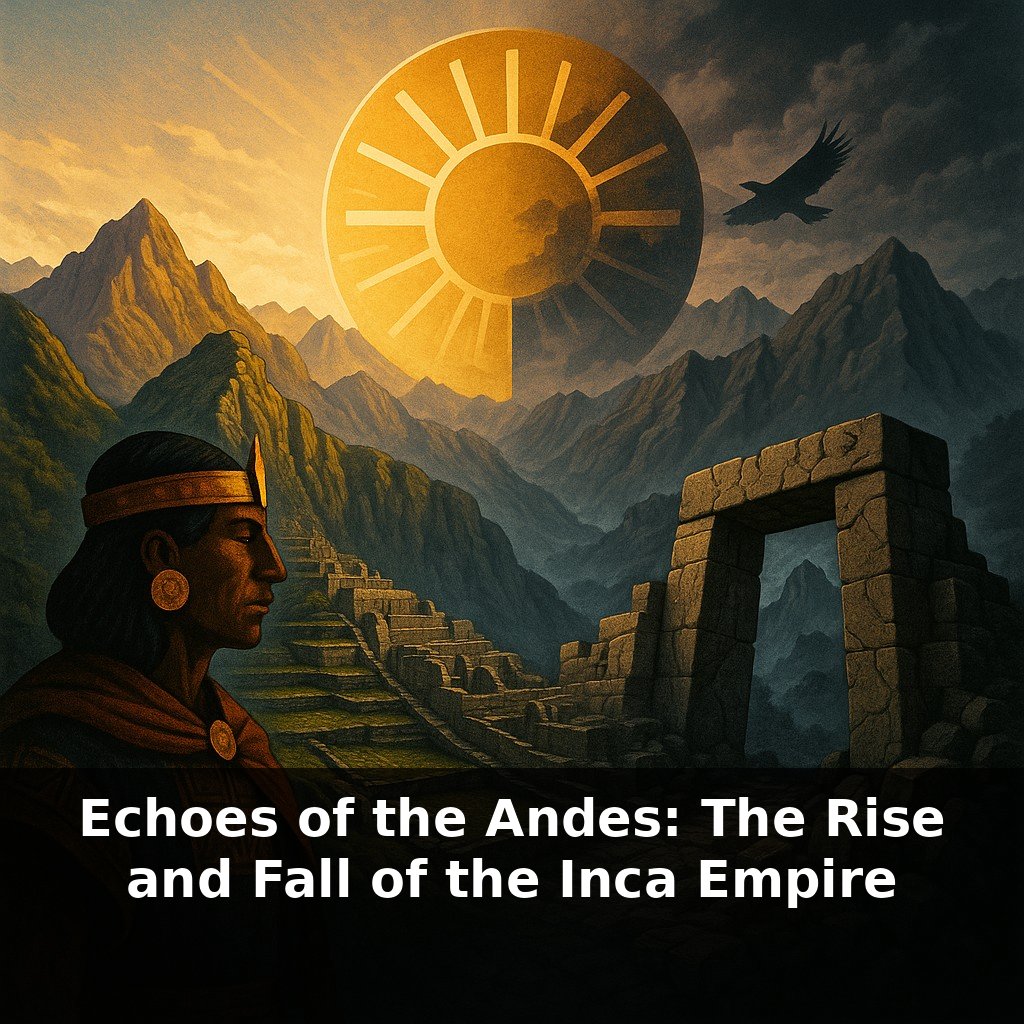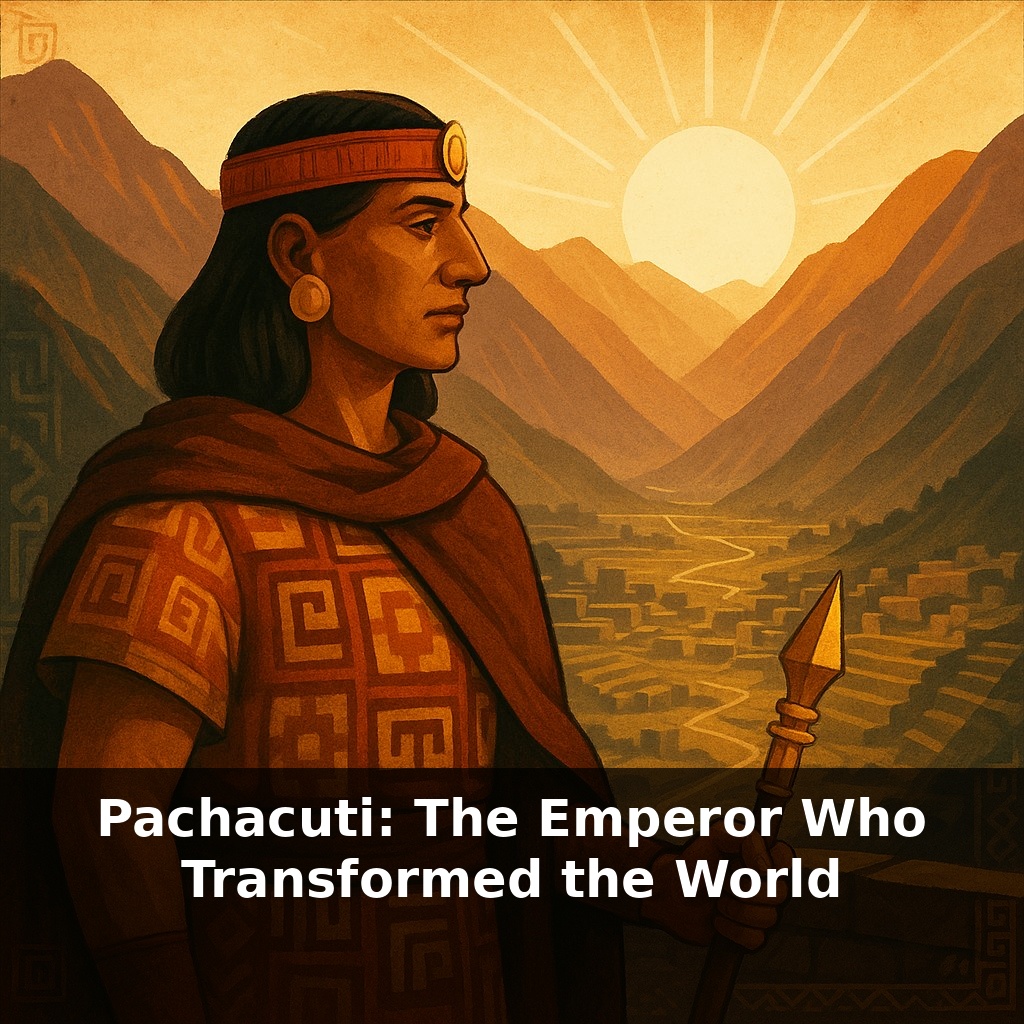
An empire that stretched for thousands of miles began with a single rumor: enemies marching toward a mountain valley city, sure it would fall. In the palace, a prince nobody expected to rule listened, stood up, and decided the entire future of the Andes would change that day.
He didn’t just reach for a spear; he reached for a new way to organize a world.
The Andean highlands around Cusco were a mosaic of fiercely independent communities, each with its own leaders, rituals, and rivalries. Power shifted with harvests, marriages, and sudden droughts. Most rulers were caretakers of tradition, not architects of radical change. Pachacuti broke that pattern.
He began treating people like builders treat stone: not as scattered rocks, but as blocks that could be shaped, aligned, and locked together into something that could stand for centuries. Lineages became ranked offices, local loyalties were redirected toward a distant but tangible center, and sacred landscapes were quietly rewired to point toward Cusco.
Instead of ruling from a throne, he ruled from a blueprint—one that would redraw roads, cities, and even memory itself.
He also understood that ideas travel faster when they ride on rituals, stories, and stone. Under Pachacuti, Cusco stopped being just a political hub and started functioning like a carefully tuned amplifier: festivals, processions, and state ceremonies all broadcast the same message about order, hierarchy, and cosmic balance. New temples didn’t merely honor deities; they choreographed how people moved, gathered, and looked toward power. Quechua spread as the spoken thread stitching distant valleys together, while road stations, storehouses, and waystations turned mountains from barriers into organized corridors of movement.
Power, for Pachacuti, had to be countable.
He didn’t just want to know who was loyal; he wanted to know how many fields they farmed, how many warriors they could send, how much maize could be moved on short notice. So he and his officials broke society into tens, hundreds, thousands, and ten-thousands of households—each layer watched by its own appointed head. It was less a pyramid of nobles and more a lattice of responsibility, where every family was a known quantity inside a wider grid.
To make that grid visible, they relied on cords instead of paper. Khipu specialists tied and twisted colored strings into precise patterns, turning obligations, harvests, and labor rotations into something you could run your fingers across. A subtle change in knot or spacing shifted a number, and with it, the expectation placed on a village. In a world without writing on walls or pages, these hanging archives became the nervous system of the state.
That nervous system pulsed along roads that clung to cliffs, crossed high passes, and threaded deserts. Relay runners waited at waystations with fresh sandals and memorized messages, able to move news faster than most people could imagine traveling themselves. A failed harvest, a rebellious leader, an approaching stranger—information could race through mountains in days, not weeks.
But Pachacuti knew that counting and moving people wasn’t enough; they had to feel they belonged to something larger. He elevated a particular sun cult into a public, radiant symbol, giving distant communities a shared ritual calendar that overlaid their older practices without always erasing them. Provincial shrines might keep their local spirits, but now they were subtly linked to a blazing center, like satellites drawn into a new orbit.
Language carried that pull. As Quechua spread through officials, marriages, and marketplaces, it became easier to negotiate, command, and tell the same stories across valleys that had once barely spoken to one another. Different accents and vocabularies lingered, yet a trader from far hills could still bargain in the same tongue as a court steward in Cusco.
The result was not a simple, uniform block of power, but something more layered: a realm where figures on a khipu, footsteps on a high road, and words shouted in Quechua all reinforced the same quiet instruction—know your place, and know who ties you to everyone else.
Instead of simply expanding outward, Pachacuti drilled downward into the daily lives of his subjects. Think of his reforms less as one grand gesture and more as a series of precise adjustments to how time, labor, and space were organized.
He reoriented agricultural work through the mit’a—rotating labor obligations that didn’t just build roads and terraces, but also trained communities to think in shared projects that outlived any single season. Fields, canals, and storehouses formed a kind of living calendar, telling people when to sow, when to move, when to gather.
Urban spaces mirrored that discipline. Cusco’s neighborhoods were segmented by social role and origin, a physical map of obligation and privilege. Provincial centers copied this pattern, shrinking the capital’s logic into local scale. Walking through one of these towns, you could read status and function in the layout itself.
If earlier rulers inherited their worlds, Pachacuti treated his as something to be continually prototyped and iterated—more like an architect returning to a model, shaving off what didn’t support the next layer, then building again, higher and wider, without losing balance.
Pachacuti’s system hints at futures we’re still catching up to. His khipu networks resemble analog spreadsheets, suggesting that complex data cultures don’t need ink or screens to thrive. If we fully decode those cords, we might uncover tax codes, census lists, even local disputes—voices usually lost to empire-level stories. His terraces and canals, tuned to thin air and steep slopes, read like open-source designs for climate-stressed farmers testing how to coax abundance from fragile edges.
Pachacuti’s legacy lingers in terraces that still catch rain and in festivals that trace patterns older than nearby cathedrals. Instead of a vanished past, he leaves us a toolkit: count precisely, build for extremes, stitch stories into terrain. Like a careful coder refactoring old scripts, we can mine his world for durable ways to face upheaval without starting from zero.
To go deeper, here are 3 next steps: 1) Read John Hemming’s *“The Conquest of the Incas”* (focus on the chapters on Cuzco and imperial expansion) while keeping a map of the Inca road system (Qhapaq Ñan) open from UNESCO’s website so you can trace Pachacuti’s territorial changes visually. 2) Explore the virtual reconstruction of Machu Picchu on Google Arts & Culture and pause at the Temple of the Sun and Intihuatana stone to compare how the site embodies the cosmology and power politics described in the episode. 3) Watch the BBC documentary “Lost Cities of the Ancients: The Lost City of the Incas” (available on YouTube or streaming platforms) and take note of three specific engineering or administrative innovations credited to Pachacuti, then search for academic articles on each via Google Scholar to see how historians debate his legacy.