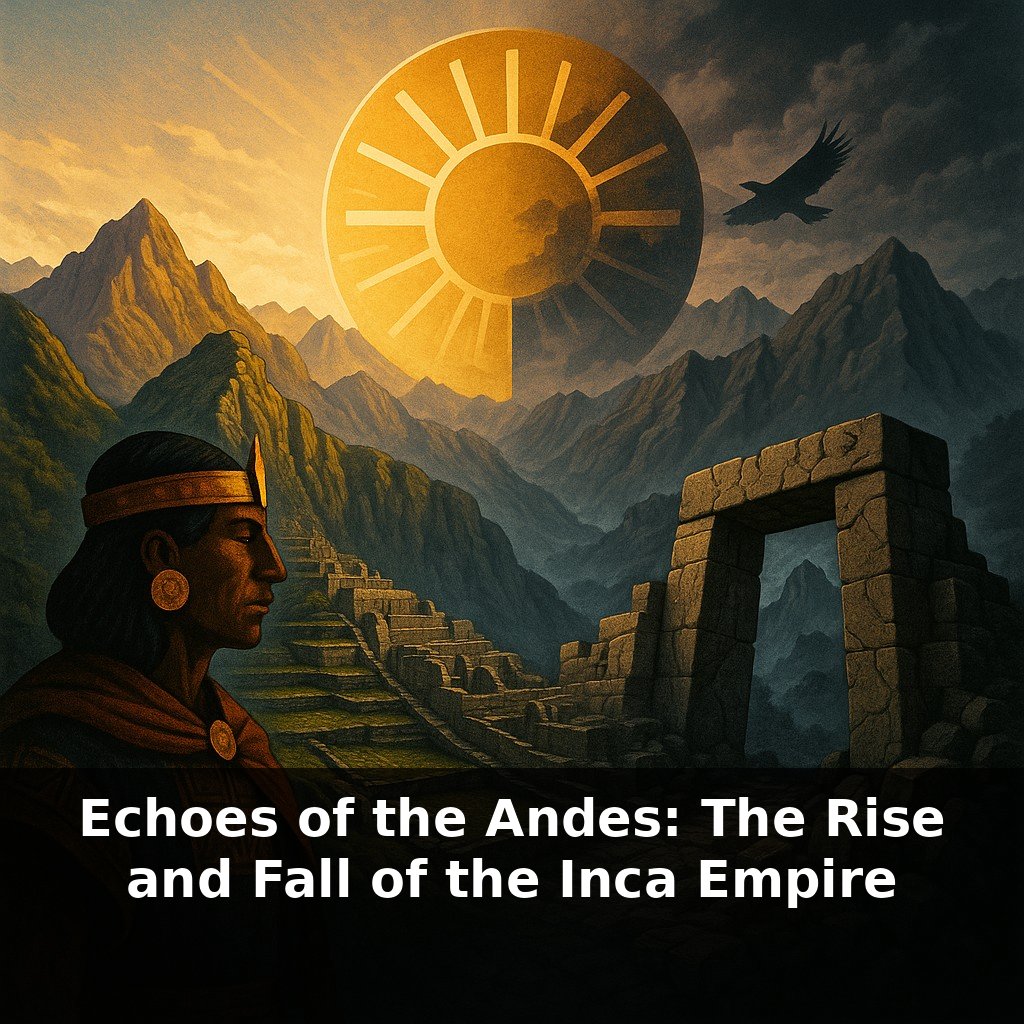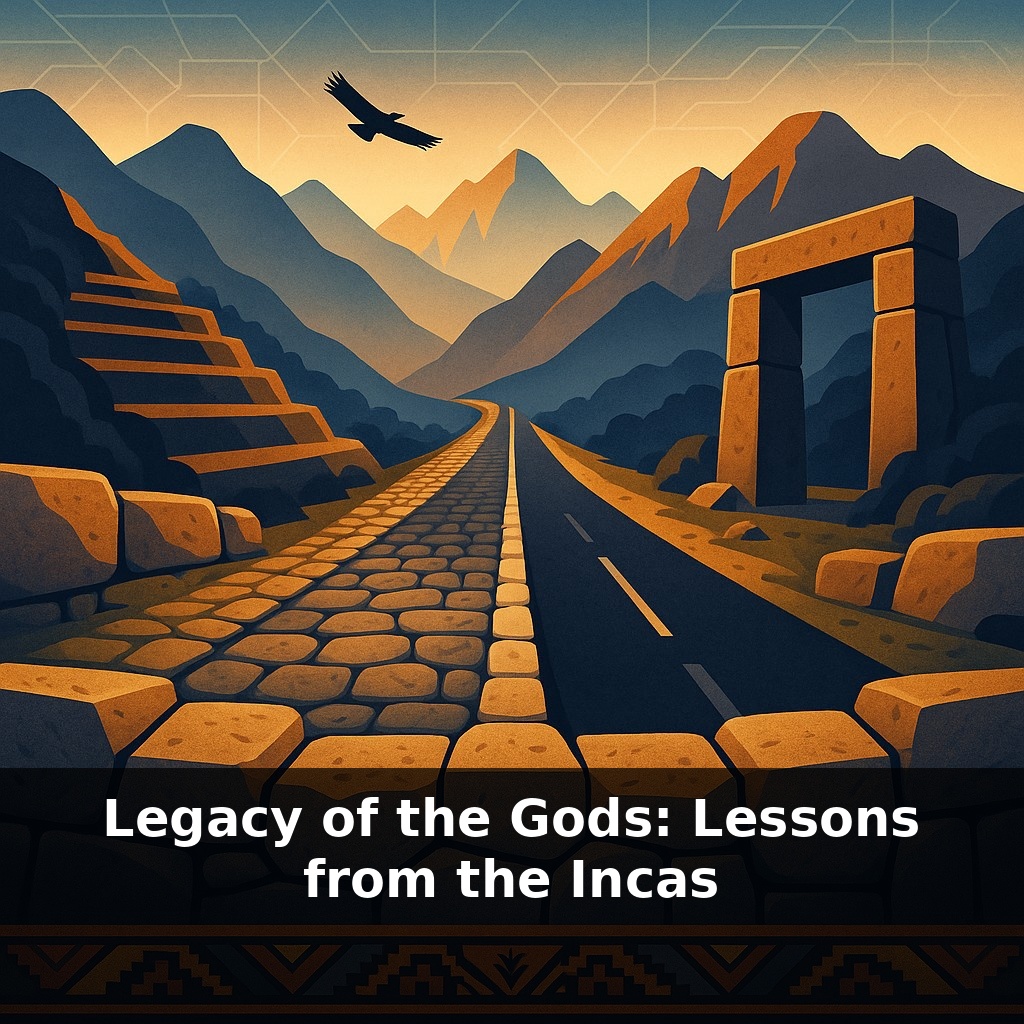
An empire that ruled for barely a lifetime built roads longer than Earth’s waistline—and they’re still shaping highways today. In this episode, we step onto those stone paths to ask: how did a “short-lived” empire design systems built to outlast collapse?
Six modern countries still carry the faint gridlines of Inca planning: terraces etched into mountainsides, canals threading through dry valleys, stonework that shrugs off earthquakes like a seasoned boxer rolling with a punch. This wasn’t random ingenuity; it was a whole worldview that treated geography as a collaborator, not an obstacle. Where others saw impossible slopes, the Incas saw stacked growing seasons. Where others feared tremors, they built walls that flexed instead of fought. Their quipus didn’t just count corn—they coordinated labor, tribute, and ritual across landscapes most empires would have written off as unusable. In this episode, we follow those threads: from terraced fields that still feed highland communities, to data systems woven from fiber instead of silicon, to social structures that tried—imperfectly—to turn diversity into redundancy, ensuring that when one valley failed, the whole story didn’t end.
Step a little closer and the picture gets stranger. These same people who carved food out of thin air at 4,000 meters also managed labor like a rotating playlist: communities took turns on massive projects, then returned to their own fields, and somehow the music rarely stopped. Their officials tracked who owed what without coins or paper, yet shortages in one valley could trigger relief from another, as if the whole region shared a single pantry. And when disaster hit—frost, flood, or rebellion—their responses were less about hero leaders and more about how the parts of the system could reshuffle themselves fast enough to cope.
Call it empire by constraint. Start with the brutal facts: thin air, steep slopes, earthquakes, droughts that could linger for years. Instead of fighting those limits, Inca planners treated them as design briefs. High valleys specialized in frost‑tolerant tubers, mid‑elevations in maize, coastal zones in cotton and fish. The state then stitched these niches together through storage and redistribution, so a failed harvest in one band didn’t automatically mean starvation. Redundancy wasn’t an accident; it was strategy.
Those massive state storehouses—qullqas—weren’t just piles of grain. They were placed to exploit wind, shade, and altitude as natural refrigeration. Some were positioned near passes so food could be moved quickly toward trouble spots; others sat close to population centers to buffer everyday shortages. Modern supply‑chain designers might recognize the pattern: a mix of central and regional “hubs” sized to handle predictable shocks and rare crises.
Underneath this sat data. Far from being primitive mnemonics, quipus underwrote a form of distributed accounting. Recent research suggests local specialists could track not only quantities but categories and even sequences—enough detail to coordinate labor rotations, military provisioning, and ritual calendars without a single sheet of paper. The point wasn’t perfection; it was “good enough, everywhere” so decisions could be made before scarcity turned into disaster.
You can see the same mindset in water. In highland basins, the Incas expanded existing Andean traditions of small reservoirs, infiltration galleries, and canals that leaked on purpose, recharging aquifers instead of chasing every drop downstream. In a world where climate variability was a given, they favored systems that slowed water, spread it, and stored it in multiple forms: soil moisture, wetlands, cisterns, snow.
If this all sounds eerily contemporary, it should. Urban planners now talk about “resilient cities” that stay functional when one subsystem fails. Agroecologists push polycultures and vertical zoning to buffer climate shocks. And engineers study sites like Machu Picchu not as museum pieces but as prototypes for building flexibly on unstable ground. The Inca legacy isn’t a list of artifacts; it’s a way of thinking under pressure: start from your limits, then design so that when—not if—the world tilts, the whole structure can shift without shattering.
Think of today’s resilient infrastructure as a late sequel to Andean experiments. Hydrologists in Peru now restore pre‑Inca “amunas”—ancient seepage channels—to delay wet‑season flows and boost dry‑season springs; early studies show communities downstream gaining weeks of extra water without new dams. In Bolivia, agronomists test potato varieties descended from high‑altitude landraces, not as heritage curiosities but as climate‑insurance against sudden cold snaps and shifting rains. Even data science has found an unexpected ally in knotted cords: researchers at MIT and in Cusco digitize surviving quipus, searching for recurring positional patterns that might reveal narratives or legal records, not just tallies. Architects borrow lessons too, modeling interlocking stone blocks to design joints that absorb vibrations in timber and steel. The throughline isn’t nostalgia; it’s prototyping under constraint, then recycling those hard‑won tricks into fresh problems we’re only now learning how to name.
Two future frontiers stand out. First, Andean methods are being tested beyond the mountains: rice paddies in Southeast Asia and vineyards in Europe are quietly borrowing high‑altitude crop mixes and seasonal labor rituals to ride out erratic weather. Second, as quipu databases grow, some coders treat them like an alternate branch of computing history, asking how a world built on knots instead of keyboards might have organized power, privacy, and memory.
Today, we stand where their experiments left off. Andean farmers still tweak seed mixes like coders patching live software, testing which blends survive harsher seasons. Hydrologists treat old runoff paths like beta features for flood control. Your city’s future blueprints may quietly borrow their logic, turning risk maps into to‑do lists for redesign.
Before next week, ask yourself: 1) “If I treated my daily commute or chores like an Inca road—built to last and serve many—what’s one routine I could redesign so it better supports my future self (for example, turning a daily walk into quiet planning time or language practice)?” 2) “Looking at how the Incas aligned their temples and terraces with the mountains and stars, where in my life am I ‘building’ out of alignment with my real values, and what’s one concrete tweak I can make this week to bring that project, habit, or relationship back into alignment?” 3) “The Incas invested in work that benefited the whole ayllu (community); if I picked just one skill, relationship, or local project to nurture that could outlast me, what would it be—and what’s one step I’m willing to take in the next 48 hours to start strengthening that legacy?”