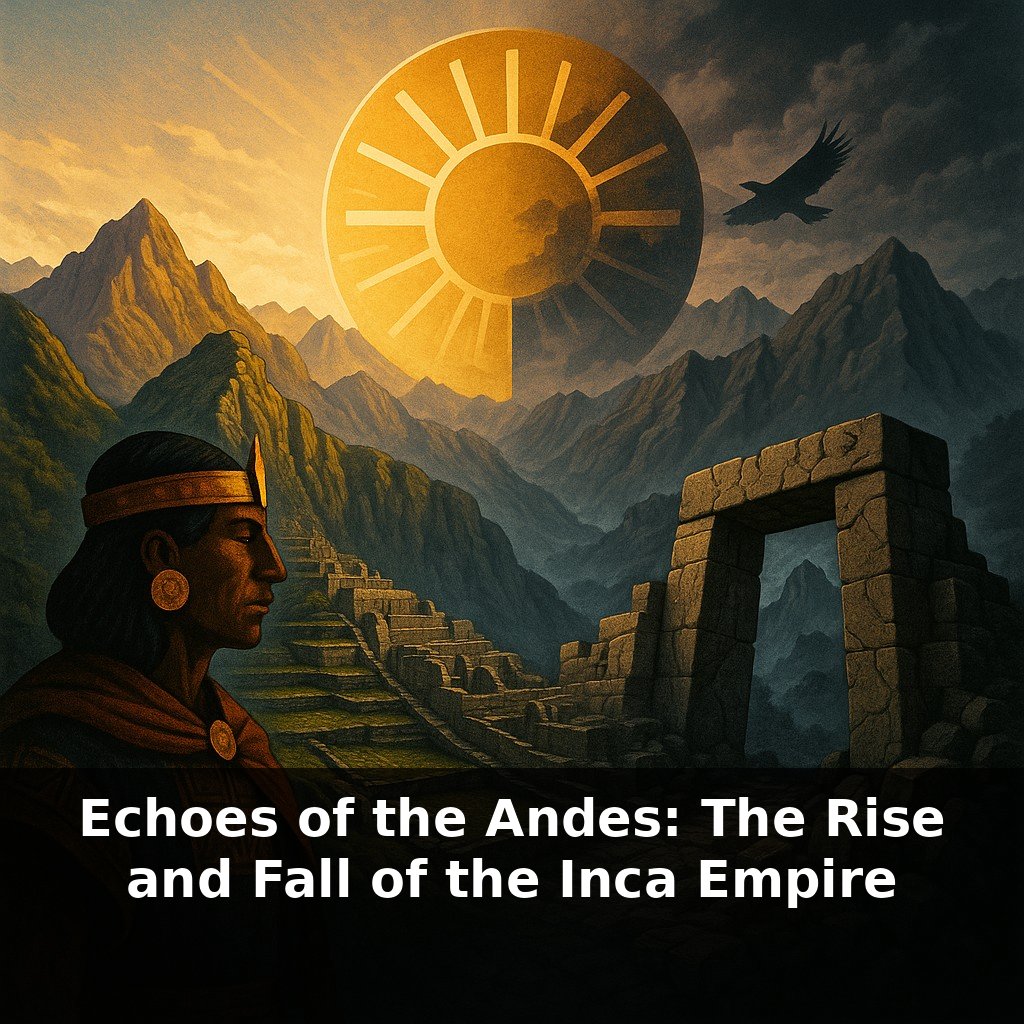
Some of the most powerful rulers in the world once governed an empire with no money, no markets, and no written language. Yet from the high Andes to the Pacific coast, millions of people woke each day to plant, weave, and worship on a schedule planned by the state.
Inca society began at the smallest unit: the ayllu, an extended family group that shared land, labor, and ritual like a long‑standing neighborhood co‑op. Birth tied you to an ayllu, and that membership shaped nearly everything—what fields you worked, which festivals you joined, even whom you might marry. But these local worlds didn’t float alone. They were stacked into larger clusters, each overseen by curacas who translated imperial orders into local customs and local problems into imperial petitions. Above them, the Sapa Inca claimed descent from the sun, turning politics into sacred genealogy. The effect was less like a single, rigid pyramid and more like terraces carved into a mountainside: each level distinct, yet all supporting one another, channeling labor, food, and faith up and down the imperial slope.
Still, hierarchy only explains part of how 12 million people stayed in sync. The real glue lived in habits you’d notice in any village morning: who walked to which field, who spun wool at which doorway, who prepared offerings before sunrise. Time itself was sliced by ritual and season—planting months, weaving months, harvest weeks—so that a family’s calendar felt like a shared drumbeat. Quechua, promoted across mountains and coasts, turned distant neighbors into people who could swap advice, gossip, and prayer. Overhead, the same sun watched all of this, its festivals echoing from capital plaza to the smallest hillside hamlet.
Daily life in this lattice of fields and plazas turned on a simple rule: everyone owed labor, but no one stood completely alone. One year, you might be assigned to carve terraces into a steep hillside; another, to help maintain a stretch of stone road, or serve in a workshop producing fine cloth for distant nobles. The same hands that sowed potatoes for the family could be summoned to push stones into place for a state storehouse, then return home carrying news of other valleys and their methods. The labor tax did not arrive as a faceless order; it came with overseers who knew who in the village could plow longest at altitude, who was best at herding, who could read the clouds.
Food moved along these same human channels. Granaries dotted the landscape near roads and crossroads, each packed with maize, quinoa, dried potatoes, and salted meat. In lean years, doors that stayed shut in times of abundance would open, and porters would fan out along the highways. A hillside community struck by frost might find itself eating coastal chili peppers, or receive maize seed better suited to the next planting. These redistributions were political theater as much as relief: a reminder that the distant court claimed responsibility for the stomachs of people it would never see.
Inside homes, production took quieter forms. Spinning began early, often with children twisting fibers as they walked. Women and some men wove cloth whose patterns signaled place, rank, and service owed. A single tunic could announce, at a glance, whether its wearer had fought in campaigns, served in religious offices, or worked in specialized state workshops. In a world without coin, to hand over a finely woven mantle was to transfer prestige, obligation, and memory at once.
Information flowed differently. Khipu specialists, trained from youth, could run fingers along cords and knots, calling out tallies of laborers or stores. Messengers carried these devices at a steady trot between relay stations, moving news as quickly as a modern team passing a baton around a track. Yet at the village level, memory also lived in elders’ stories—tales of migrations, floods, and past rulers’ promises—used to argue for lighter burdens or recognition of old rights.
Religion stitched these routines together. Local huacas—springs, rocks, mummified ancestors—received offerings side by side with imperial ceremonies. A family might pour chicha to a nearby boulder believed to house a spirit, then later join a procession honoring the sun. Rather than erase older beliefs, officials often folded them into a wider sacred map, so that acknowledging the emperor and his gods felt less like replacing the familiar and more like extending its reach.
High above this everyday mesh, the imperial court in Cuzco watched for cracks: rumors of hoarded grain, of curacas bending counts, of border provinces slow to send workers. Responses could be harsh—forced relocations, the planting of loyal colonists in restive regions—but they could also be tactical, granting new cloth, new feasts, or public recognition to shore up wavering alliances. Control was constant negotiation, not just command.
Yet beneath these layers of obligation, people carved out small, stubborn spaces. A farmer might sow an extra corner of field in a hardy local tuber instead of the preferred state crop, hedging against distant miscalculations. A weaver could slip a regional motif into a tunic destined for officials, a quiet assertion of identity traveling into imperial halls. Even the timing of communal work could be nudged, aligning a state project with a local festival so that what looked like obedience also felt like celebration.
In this way, the grand machinery of the Inca world depended on countless small judgments made in kitchens, on paths, and at loom-side. The empire’s strength lay not only in planning from above, but in how often those below decided the bargain was still worth keeping.
Step onto a high pass where three valleys meet. One sends herders with wool, another farmers with surplus chili, a third potters with sturdy jars. No coins change hands, yet everyone leaves carrying something they lacked. In many regions, such exchanges were fixed into the calendar, like recurring community “patch days” where neighboring groups tested how well their skills meshed. Along the roads, whole villages might be shifted hundreds of miles—moved not only as punishment, but to plug expertise into new landscapes: potato specialists resettled near frost-prone frontiers, master canal builders planted where irrigation could flip a barren slope into a breadbasket.
Military units drew on this diversity too. A force marching south might combine high‑altitude slingers from one region with nimble coastal runners from another, layering strengths like a coach building a lineup tailored to thin air or steep terrain. Even music traveled: panpipe styles and dance steps migrated with people, so that a song born beside a northern lake might, decades later, echo in a plaza far to the south, carrying an accent of its first home.
As archaeologists reopen terrace systems and canals, the Inca past stops being a museum and starts looking like a toolbox. Mountain villages in Peru now test Inca‑style raised beds the way coders A/B test new features—one slope farmed conventionally, the next restored with stone walls and ancient seed mixes to see which weathers drought. Meanwhile, AI sifts khipu patterns for traces of narrative, hinting that future Andean schoolbooks may quote voices once trapped in knots.
The Inca story is still unfolding, less a finished monument than a half‑mapped trail. Farmers testing old crops, engineers copying terrace angles, and linguists tracking Quechua through city buses all treat the past like a toolkit. Your challenge this week: notice one modern habit that could anchor a community as firmly as stone steps on a slope.