 2min preview
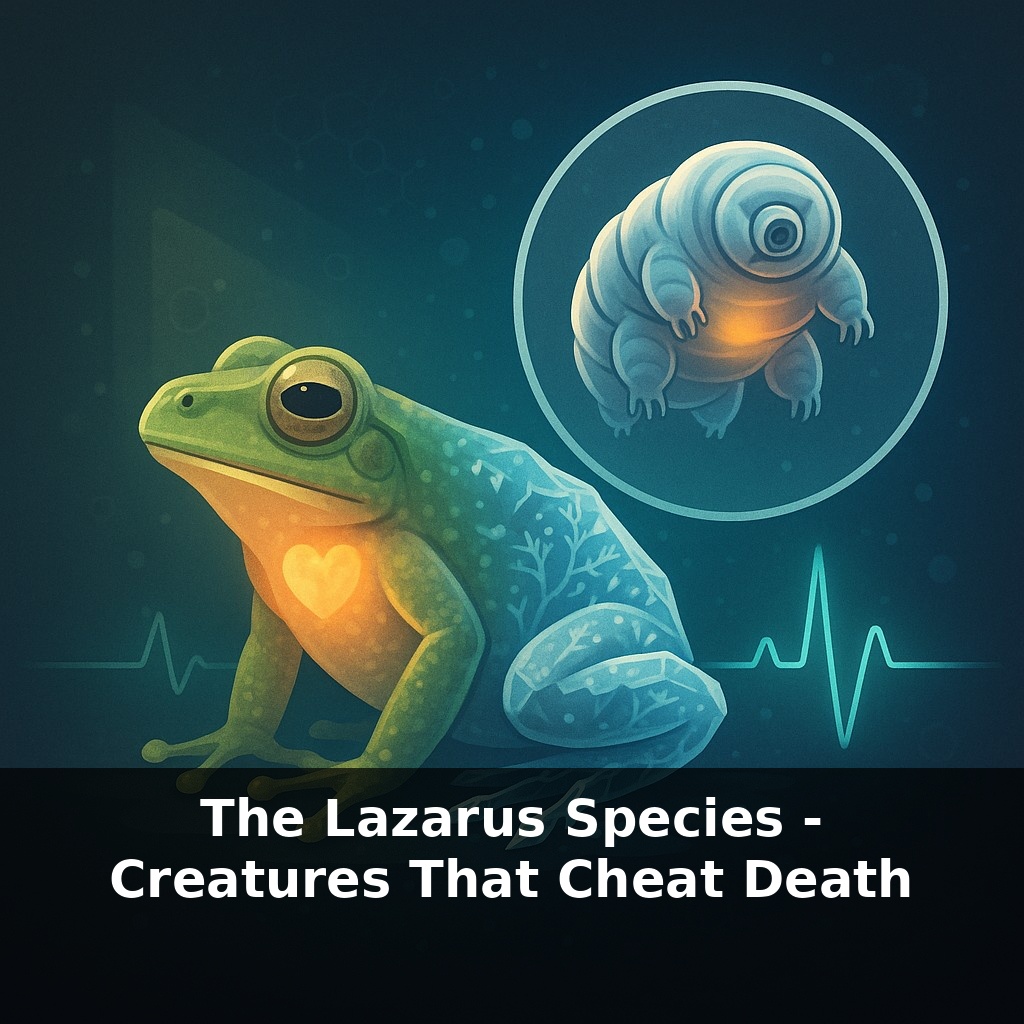
The Lazarus Species - Creatures That Cheat Death
📝 Transcript
A frog’s heart stops beating, its blood turns to ice, and scientists still don’t call it dead. In another lab, a “dust speck” animal dries out for years, then springs back to life with a drop of water. Today’s question: where does life actually end, if some creatures can press pause?
Biologists now group these survival stunts under one broad banner: cryptobiosis—life so slowed that instruments can barely detect it, yet not quite gone. Instead of fighting lethal cold or drought in real time, these organisms quietly exit the game. They stockpile unusual molecules, rearrange their cell interiors, and let almost everything grind down to a whisper. Some even swap liquid cellular contents for a glassy state that locks structures in place, the way cooled caramel hardens on an apple. The result isn’t immortality, but an extreme hedge against bad luck. Frozen forests, dried-up ponds, even outer space become less like death sentences and more like long, risky layovers. And when conditions finally shift in their favor, chemistry reverses, motion returns, and the question becomes stranger: not just “How did they survive?” but “What, exactly, was surviving all that time?”
Some of the most striking examples come from places that look utterly lifeless: salt-crusted lakes, polar deserts, even ancient permafrost. Under those hostile surfaces, “Lazarus” species wait—not for minutes, but for decades or longer. Wood frogs time their frozen stasis to winter, then thaw in step with the forest’s melt. Tardigrades and brine shrimp, by contrast, ride out unpredictable disasters: drought, radiation, even vacuum. Their trick isn’t just endurance, but flexibility. Evolution has turned them into biological savings accounts, conserving just enough viable structure to “cash out” when the environment finally pays off again.
Subscribe to read the full transcript and listen to this episode
Subscribe to unlockSubscribe for $1.99/month to unlock the full episode.
From this course
Evolutionary Oddities
7 episodesUnlock all episodes
Full access to 7 episodes and everything on OwlUp.
Subscribe — $1.99/monthLess than a coffee ☕ · Cancel anytime