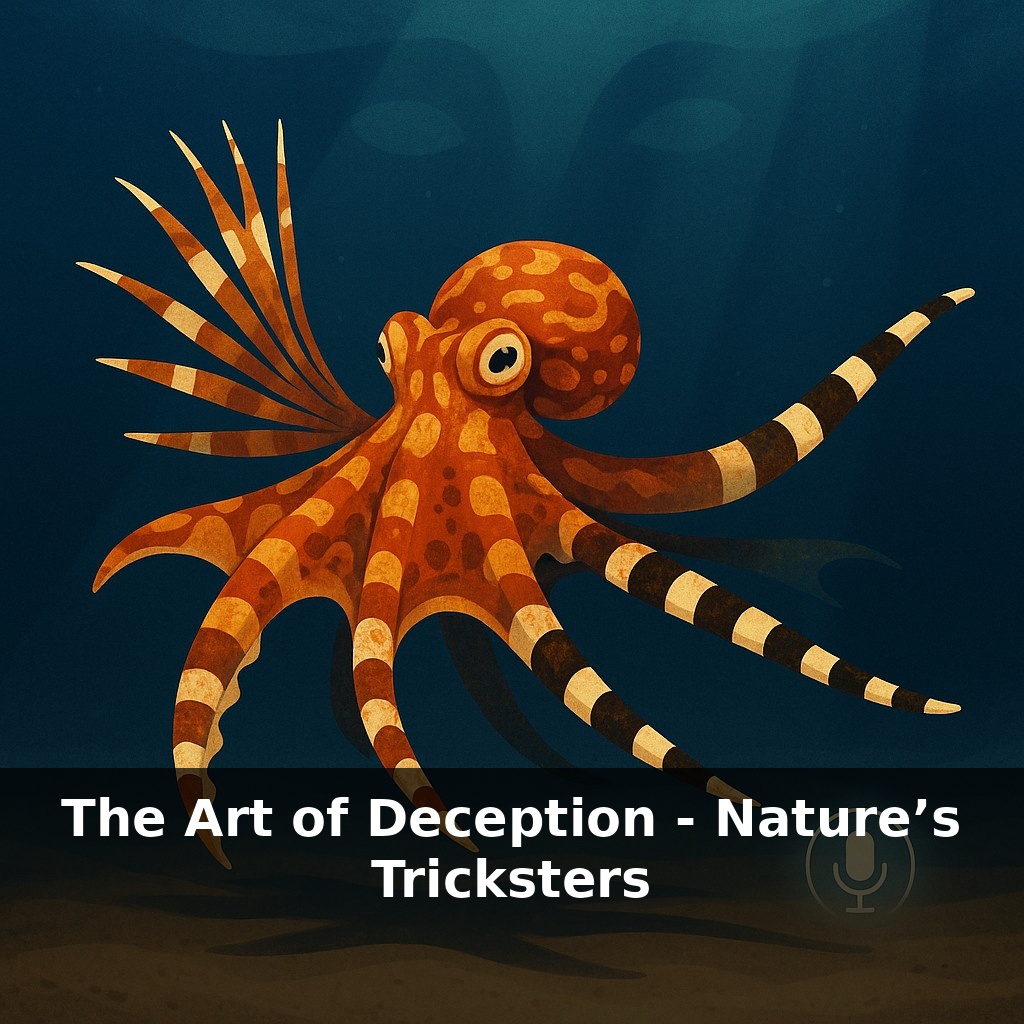
An octopus glides over the seafloor—and then, in a heartbeat, “becomes” a poisonous lionfish. A bird shrieks a fake alarm to steal lunch. A flower lures insects with the scent of sex, then offers no reward. Deception isn’t rare in nature; it’s one of evolution’s favorite tricks.
Some of nature’s most convincing liars don’t just blend in; they stage entire performances. The mimic octopus doesn’t stop at “don’t notice me”—it “auditions” as dangerous lionfish, banded sea snakes, or flatfish, swapping roles in seconds depending on which predator is nearby. On land, the fork‑tailed drongo of the Kalahari perfects voice acting: it copies the genuine alarm calls of multiple bird species, then deploys them at just the right moment so meerkats drop their food and dive for cover. Plants join the act too. Many orchids craft ultra‑specific scents that match female insect pheromones so precisely that male bees and wasps attempt to mate with the flower itself. In that brief confusion, pollen is transferred. Nature isn’t just hiding or shouting “danger”—it’s running tailored cons on highly tuned senses.
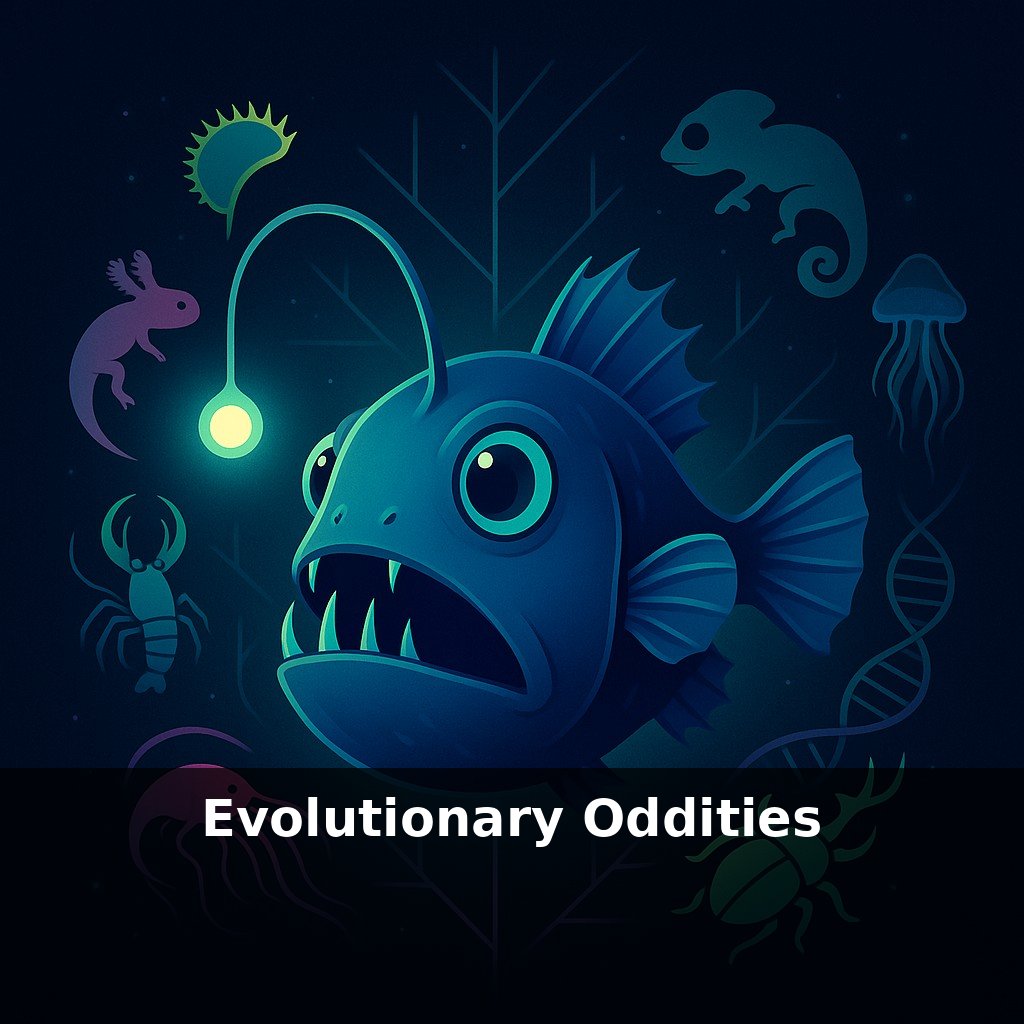
Biologists sometimes sort these tricks into rough “genres.” There’s camouflage, where bodies and behaviors fade into backgrounds like masterfully matched paint swatches. There’s masquerade, where harmless creatures pass as twigs, stones, or leaves—objects predators usually ignore. Aggressive mimicry goes on offense: anglerfish dangle living lanterns, and predatory fireflies copy the mating signals of other species to lure partners they’ll eat. Then there’s social deception, from drongos to cleaner‑fish impostors, where communication itself becomes a battleground and lying can pay—until listeners wise up.
Deception only pays if a nervous system on the other side can be fooled—and that’s where things get interesting. Natural selection doesn’t just sculpt the liar; it reshapes the audience. Predators learn, victims update their “rules,” and the bar for a successful trick keeps rising.
One way biologists see this is by tracking gene frequencies as environments change. The classic case is the peppered moth in industrial England, where soot‑blackened trees suddenly made dark moths much harder for birds to spot. Within a few decades, the population flipped from mostly pale to mostly melanic, then flipped back after clean‑air laws restored lighter bark. That swing isn’t just a story of “better camouflage”; it’s a real‑time record of how fast deception can spread when the visual background—and predator perception—shift.
Plants pull similar stunts on much longer timescales. Deceptive orchids often evolve astonishing regional “dialects”: one population might mimic the sex pheromone of a local bee species, while the same orchid elsewhere targets a different pollinator entirely. Genetic studies show that a single mutation tweaking a scent pathway can change which insect gets duped, potentially isolating populations and even kick‑starting new species.
Animals that fake alarms or honest signals face an extra constraint: reputation. Fork‑tailed drongos can only lie so often before meerkats start ignoring them. Field experiments show that drongos adjust on the fly—when one type of false alarm stops working, they switch call types or target different species altogether. The bird isn’t “deciding to be a con artist” in any human sense; selection has simply favored flexible callers that, on average, time their tricks well.
All this raises a paradox: if deception is so powerful, why isn’t everything tricking everything else all the time? The answer lies in cost. Bioluminescent lures demand energy and, in anglerfish, a partnership with glowing bacteria that must be maintained. Elaborate disguises can slow growth or movement. And when an ecosystem becomes saturated with cheats—like nectarless flowers—pollinators may abandon the area, undercutting every plant, liar and honest broker alike. Evolution, in other words, isn’t striving for maximum deception, but for just enough illusion to stay one careful step ahead.
Some of the strangest cases of deception turn up in places we rarely look. Tiny marine worms, for example, release glowing mucus “bombs” when attacked; predators veer toward the drifting light while the worm slips away in the darkness. Certain brood‑parasitic catfish sneak eggs among mouth‑brooding cichlids; when the cichlid “protects” its clutch inside its mouth, it ends up raising a swarm of baby catfish that eat its own offspring from the inside out. Even embryos can be part of the con: cuckoo chicks hatch primed to shove host eggs from the nest, monopolizing care before the foster parents realize anything’s wrong.
Deception can cascade through whole communities. Some reef fish copy the colors of harmless neighbors just long enough to infiltrate shoals and grab a bite of fin. In a sense, it’s like a software patch race: every time one species updates its “security,” another is already testing a new exploit.
Nature’s tricksters are also stress‑tests for the future. As habitats shuffle and seasons drift, some illusions will fail—like a magic trick performed under brighter stage lights. New neighbors, from invading insects to city predators, may reward entirely different cheats, shuffling who thrives in a landscape. Engineers and ecologists are already “listening in” to these shifting cons, hoping to forecast winners, losers, and surprise upstarts in tomorrow’s ecosystems.
Your challenge this week: try to catch deception in the wild—no lab coat required. Watch pigeons, garden spiders, street trees, even supermarket produce displays. Each time you spot something that seems designed to mislead eyes, noses, or expectations, ask two questions: “Who’s the audience?” and “What’s the payoff?” By weekend’s end, you’ll have a small field guide to everyday illusions—and a sharper sense of how often survival, profit, or attention hinge on a well‑placed trick.
In the end, nature’s “lies” double as experiments, constantly testing what senses can and can’t detect. As climates warm and cities spread, old tricks may fail like outdated passwords, while new cheats slip through the cracks. Watching which illusions break—and which suddenly flourish—may be one of our best clues to how living systems adapt, reroute, or collapse.
Try this experiment: Pick one everyday situation this week—like a work meeting, a group chat, or a commute—and consciously become a “mimic octopus” by subtly mirroring someone’s posture, tone, or pacing for 10 minutes, then switch to your natural style for the next 10. Notice how people’s responses (eye contact, openness, talkativeness) change between your “camouflaged” phase and your “true pattern” phase. Jot down exactly what shifted—who talked more, who relaxed, who withdrew—so you can see where blending in helps and where it actually dampens real connection.