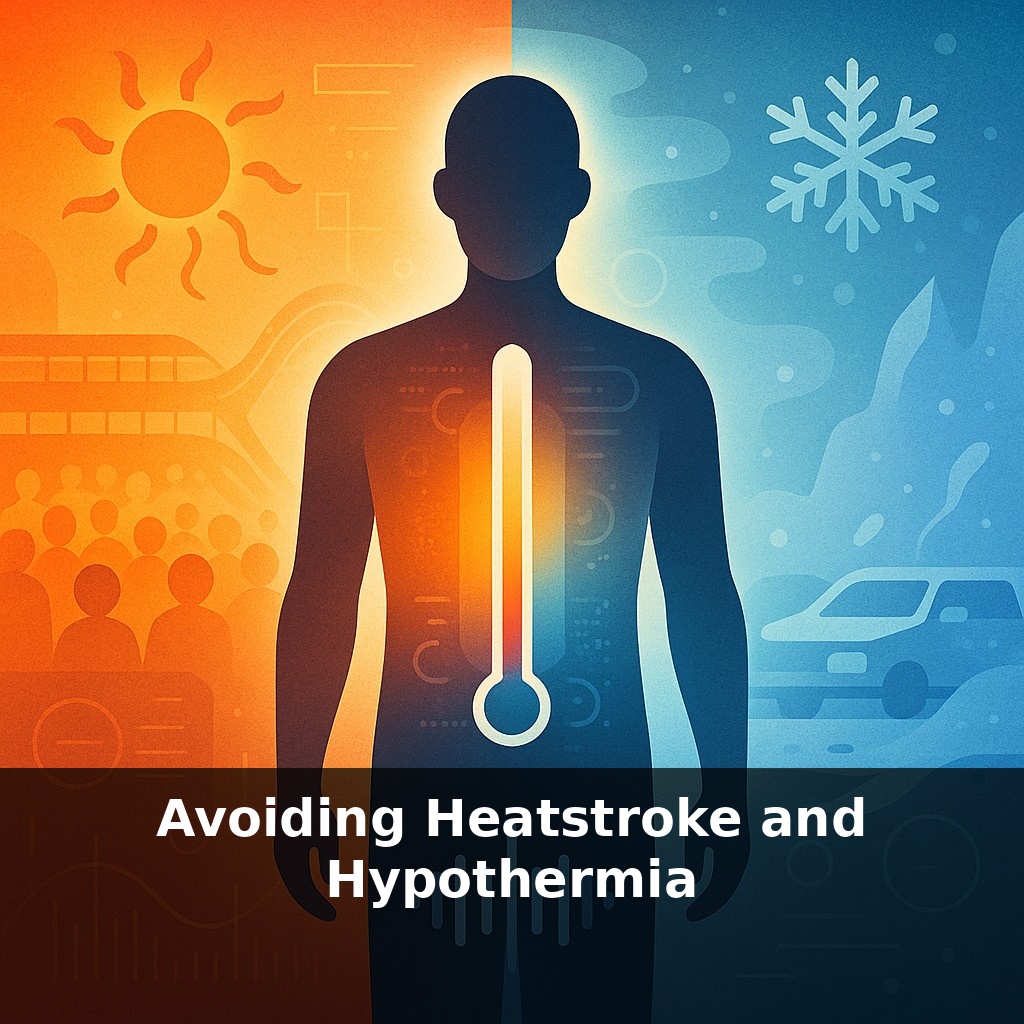
Your body is only comfortable within a tiny slice of temperature, yet we expect it to handle desert trails, packed stadiums, and icy commutes. On a hot race day or a winter roadside breakdown, the same thing is at stake: keeping that narrow “liveable zone” from quietly slipping away.
On paper, 37 °C looks like just another number in your health app. In real life, your day quietly nudges that number up and down: packing into a summer subway car, chasing a bus in a hoodie, standing still on icy sidelines while your kid plays. Most of the time your body’s “auto‑pilot” handles these swings so smoothly you never notice. The real danger comes when conditions stack up faster than that auto‑pilot can adjust—heavy gear plus blazing sun, wet clothes plus cold wind, alcohol plus any extreme. That’s when you slide from “uncomfortable” into “unsafe” far quicker than it feels. In this episode, we’ll zoom in on those tipping points: the early, easy‑to‑miss clues that your internal balance is failing, who is most vulnerable, and the specific actions—some surprisingly simple—that keep a rough day from turning into an emergency.
Think about the last time you stayed at a summer festival hours longer than planned, or watched “just one more” goal at a freezing night match. Most real‑world heatstroke and hypothermia cases don’t start with a blizzard or a desert—they start with ordinary plans that quietly stretch, plus one or two extra stressors you didn’t budget for: wet socks, a tight schedule, no shade, a skipped meal, a couple of drinks. In this episode we’ll treat your day like a training schedule: when to “substitute players” (layers, rest, fluids), when to change tactics entirely, and when it’s time to call in emergency help fast.
Elite endurance athletes and polar‑expedition teams obsess over one thing you can steal for everyday life: a simple, repeatable plan for hot and cold days that kicks in before anything feels “serious.” They don’t wait for drama; they treat temperature like pacing.
On hot days, begin by controlling intensity and exposure, not just fluids. Long, all‑out efforts in direct sun are what push people from “red‑faced and tired” into real trouble. Shift the schedule when you can: yard work early or late, runs in shade, breaks in air‑conditioned spaces instead of just “finding a breeze.” Clothing acts like a valve—loose, light‑colored, breathable fabrics let sweat do its job, while dark, tight, non‑breathable layers trap heat. Metals and black backpacks soak up more sun than you think; if you can’t change the weather, change what’s soaking it up on your body.
Cold days flip the priorities. The fastest way to get in trouble isn’t actually low temperature—it’s a mix of damp plus wind plus stillness. Staying slightly cool but dry while moving, then adding insulation the moment you stop, works far better than piling on heavy layers that get sweaty and stay wet. Think in three zones: something that wicks moisture off your skin, something that traps air, and something that blocks wind and rain. Cotton fails here; once wet, it clings and conducts heat away relentlessly. Hands, feet, ears, and face aren’t just about comfort—losing heat there accelerates whole‑body cooling.
Hydration and food quietly support both extremes. Fluid loss in heat is obvious, but you also dehydrate in cold, dry air and by breathing hard in the cold; thirst lags behind. Small, steady sips beat chugging once you feel awful. In the cold, frequent snacks—especially carbs—are like steady fuel stops on a long drive, keeping your internal “engine” producing heat. Alcohol feels warm for minutes but sabotages both systems: it widens blood vessels and blunts judgment so you miss the moment things start to slip.
Your challenge this week: deliberately “pre‑plan” one hot‑leaning day and one cold‑leaning day. For the hot one, decide in the morning when you’ll seek shade, how you’ll adjust intensity, and what you’ll wear and drink. For the cold one, lay out layers that stay warm when damp, pack a dry backup pair of socks or gloves, and choose specific times you’ll move around instead of sitting still. After each day, ask yourself: Where did I actually feel my limits first—breathing, sweating, shivering, fingers, focus? Noticing that personal weak spot now is what lets you build a realistic, automatic plan before the next game, run, commute, or roadside wait turns risky.
A coach watches a player’s form, not just the scoreboard. Treat your own reactions the same way. Out on a hot trail, notice who in your group stops joking first, who gets unusually quiet, or who keeps insisting they’re “fine” while walking slower—that’s often the earliest sign someone’s sliding past their safe zone. In cold weather, it might be the friend whose answers get oddly vague when you ask simple questions, or the kid who stops complaining about being cold and just stares at the ground.
If you like numbers, think in “small deltas” instead of drama. On heat‑heavy days, any clothing change, rest, or cooling that shaves even 0.5 °C off your trend can be the difference between feeling wrecked and landing in an ambulance. In the cold, rehearse a tiny script: “Are my hands useful? Is my speech clear? Can I still do a text with one hand?” If any answer shifts from yes to “sort of,” that’s your cue to act, not wait. Like a good point guard reading the court, you’re learning to pass or reset the play before the turnover, not after.
Weather forecasts will soon feel more like personalized “risk dashboards” than generic highs and lows. Your phone might quietly combine local heat index, wind, and your wearable’s data to nudge you: “Dial back intensity this afternoon; you’re heating faster than usual,” or “Pack a windproof layer—your skin temp is dropping.” Think of it as a calm sideline medic, flagging when today’s conditions and your current state no longer match, long before you feel obviously off your game.
In the end, this isn’t about fearing heat or cold; it’s about treating them like terrain you learn to read. As you practice, you become more like a good trail runner: scanning shade, wind, and effort without drama. Your challenge this week: teach one friend or kid one specific hot‑day and one cold‑day habit, and notice how that subtly shifts how both of you move.