Your DNA can’t predict your next career move—yet it quietly shapes how anxious, bold, or curious you’re likely to feel. A job interview, a first date, a tough email: in each moment, your genes are whispering… but your experiences decide how loudly those whispers matter.
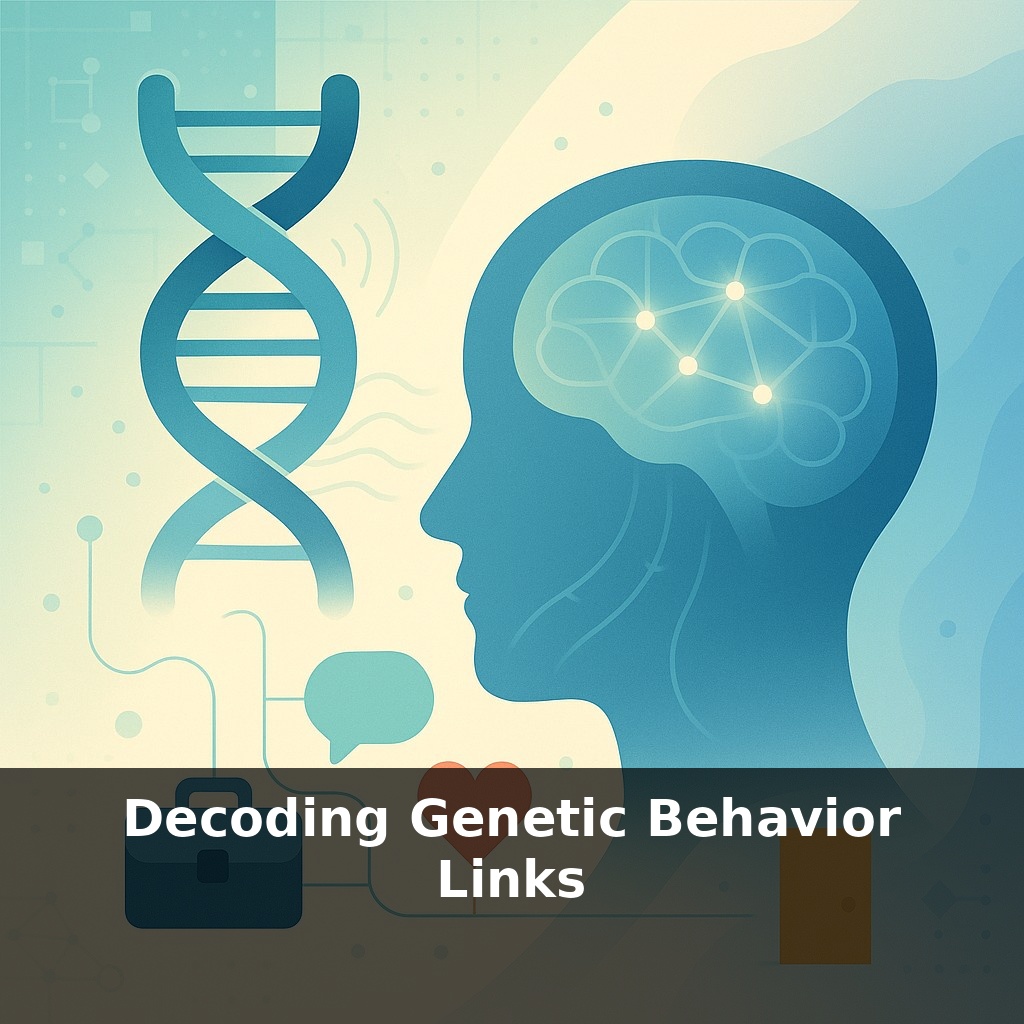
Some of those “whispers” are surprisingly well‑mapped. Researchers can now scan the genomes of millions of people and spot tiny patterns: certain variants tend to cluster in people who report more mood swings, others in those who seek out excitement or feel stress more intensely. No single letter in your code decides whether you’ll be the life of the party or the quiet observer, but large patterns begin to reveal gentle tilts in those directions.
Think of walking into a crowded room: one person instinctively looks for the exit, another for the loudest laughter. Neither reaction is random. It reflects a long history of biological nudges meeting family rules, school norms, cultural messages, and personal choices. The result isn’t a fixed label, but a range of likely reactions—a starting point you can learn to notice, question, and, over time, reshape.
Across thousands of studies, one theme keeps resurfacing: those inner tilts are measurable, but they’re not destiny. Twin and adoption research suggests that for major traits like extraversion or emotional sensitivity, nearly half the differences between people trace back to inherited variation. Newer genome‑wide studies go further, linking hundreds of tiny DNA differences to how we typically think, feel, or respond. Yet these links are statistical, not personal verdicts. They outline a set of tendencies—more like a weather forecast than a schedule—within which habits, skills, and environments still matter enormously.
When researchers zoom in beyond broad traits like “extraversion,” they start to see countless tiny levers rather than a few big switches. One set of variants might slightly alter how quickly your brain’s reward system responds to novelty. Another set might nudge how long stress hormones linger after a tough event. One by one, these shifts are almost imperceptible. In combination, they help explain why two people raised in the same home can walk away from the same experience with very different stories about what it meant.
Large studies now use “polygenic scores” to summarize many of these tiny levers into a single number for things like emotional volatility or persistence at school. That number doesn’t say who *you* are; it simply estimates where someone *with your pattern* tends to land compared with a huge crowd. Right now, those scores are blurry—useful for research, not for drawing life maps. They might capture a slice of why one person finds exams oddly energizing while another feels drained before they even begin, but they can’t tell you which job to choose or whether you’ll finish a degree.
What makes this more interesting—and more empowering—is that those inherited tilts don’t act in isolation. They help shape which situations feel appealing or unbearable in the first place. A child who finds noisy chaos thrilling may drift toward risk‑taking friends; another who feels overwhelmed by the same scene might carve out solitary hobbies. Over years, these choices feed back, reinforcing some tendencies and softening others, not through willpower alone but through practice and repetition.
You can see this in everyday micro‑moments: someone with a quick‑to‑ignite temper who learns de‑escalation skills; a naturally wary person who slowly widens their comfort zone through structured challenges. In each case, any inherited bias is still there, but it’s being steered. Much like a river flowing through a valley, the basic direction is constrained, yet small interventions—canals, barriers, new channels—can dramatically change where the water actually goes.
Take two coworkers starting the same high‑pressure role. One tends to bounce back quickly after critical feedback, using it as fuel. The other lies awake replaying every word, heart racing before each meeting. Both might share similar training and support, yet tiny inherited differences in stress‑response circuits and reward sensitivity can tilt them toward these patterns. Over months, those tilts get reinforced: the first volunteers for stretch projects and gains confidence; the second quietly avoids risk, missing chances to prove their skill.
Or consider siblings who both move to a new city. Each faces the same streets, jobs, and social options. One feels an almost magnetic pull toward crowded events and late‑night gatherings; the other discovers calm in structured routines and a few deep friendships. Neither style is better; they simply tune into different parts of the same environment, then build habits around what feels manageable.
In both stories, small internal biases ripple outward, gradually shaping careers, relationships, and even how others describe “who you are.”
You might soon see optional “behavioral risk dashboards” alongside health reports, flagging likelihood of burnout or substance problems before they surface. Schools could trial supports the way coaches adjust training plans—extra recovery time for some, higher stimulation for others. But any tool that highlights vulnerability can also invite stigma. A crucial test will be whether we use these forecasts like weather reports—signals to pack an umbrella—not quiet verdicts on who we think someone will always be.
Treat this science less like a verdict and more like a user manual. The more you notice your default settings—what drains you, what steadies you, what reliably lifts your mood—the more options you gain. Like learning a city’s backstreets, understanding your own wiring lets you choose detours, shortcuts, and safer routes when storms roll in.
Try this experiment: For one week, pick a single everyday behavior that was discussed in the episode—like your sleep pattern, snacking habit, or stress response—and track it alongside a specific environmental trigger (e.g., caffeine intake, time of day, or social setting) in a simple two-column note. Each day, deliberately change just one environmental variable the podcast mentioned (such as going to bed 30 minutes earlier, removing late-night screen time, or swapping a sugary snack for protein) while keeping other factors stable. At the end of the week, compare which environmental tweaks produced the biggest behavior shift for you and ask yourself whether those shifts feel “easy” (possibly aligning with your genetic tendencies) or “forced” (possibly pushing against them).