Your DNA can already tell you whether a late‑night coffee ruins your sleep or barely touches you. Now, here’s the twist: most people get that report… then do almost nothing with it. This episode steps into that gap—turning raw genetics into real‑world, daily decisions.
Roughly 150 traits, dozens of colourful charts, and a neat “overall wellness” score—that’s where most genetic reports stop. But the real value begins where the PDF ends: in the tiny, specific choices you make between reading those results and brushing your teeth tonight.
This episode is about that translation layer.
We’ll look at how to sift the signal from the noise when only about 40% of common report traits have solid scientific backing, and how to prioritise the ones that actually deserve your attention. You’ll see how a few well‑chosen SNPs can nudge you toward smarter nutrition, training that matches your muscle profile, and recovery habits that respect your built‑in stress tolerances.
Think of this as moving from “Huh, that’s interesting” to “Here’s what I’ll do differently this week—and how I’ll know if it’s working.”
Some of your most valuable results don’t shout; they whisper. A single line about caffeine, folate, or injury risk can quietly reshape how you plan your days, just like a small detour on a map can save an hour of traffic. The key is learning which lines deserve a change in route. That’s where evidence strength, polygenic scores, and even early epigenetic markers start to matter: they hint at which levers are worth pulling first. We’re not chasing perfection here; we’re running experiments—tweaking timing, dosage, and routines—then watching how your body actually responds over weeks, not hours.
Here’s where things start to feel practical instead of theoretical.
Begin by sorting your results into three buckets: “high‑evidence levers,” “interesting maybes,” and “background noise.” High‑evidence levers are traits where multiple human studies agree and the effect is meaningful. That CYP1A2 caffeine result? If your report flags it with strong evidence, that’s a lever. Same with well‑studied nutrition variants like folate metabolism or lactose tolerance, or robust exercise markers like ACTN3.
“Interesting maybes” are findings with small effect sizes or early research. You don’t ignore them—you just don’t rebuild your life around them. They can guide gentle nudges, not radical overhauls. Background noise is everything that’s weakly supported, poorly replicated, or vague. These are fun to read, bad to plan around.
Next, zoom out from single markers to patterns. A lone “slightly higher injury risk” flag is mildly useful; three separate traits nudging toward joint vulnerability, slower collagen turnover, and lower vitamin D status start to paint a strategy: more pre‑hab, stricter progression in training loads, blood work to confirm vitamin levels, and a lower threshold for seeing a physio when something feels off.
Polygenic scores raise the stakes further. A high score for cardiometabolic risk doesn’t mean panic; it means you prioritise the basics earlier and more consistently than your friend who drew a luckier combination. The same lifestyle habits apply—movement, fibre, sleep duration, stress load—but your margin for long‑term sloppiness is narrower.
Epigenetic age adds a feedback loop. If your biological clock skews “older,” treat that as a dashboard warning, not a verdict. You might choose two or three interventions with the best track record—resistance training, a Mediterranean‑style diet pattern, tighter eating windows—and commit for 8–12 weeks before re‑testing or at least re‑assessing energy, recovery, and lab markers.
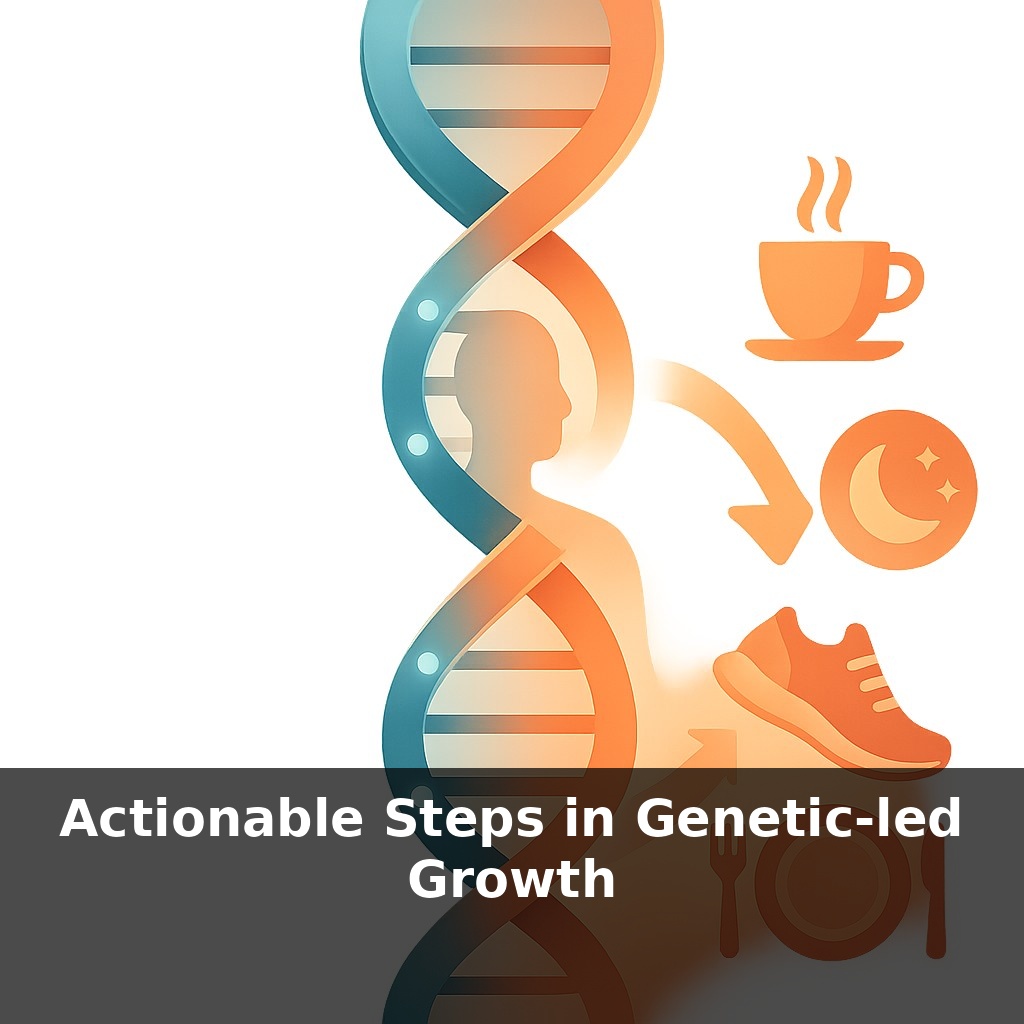
Through all of this, the real skill is stacking: aligning one habit to serve multiple genetic tendencies at once. A programmed strength routine, done at consistent times, with built‑in deload weeks and earlier cut‑offs for stimulants, can simultaneously support muscle potential, injury risk, and mental resilience without feeling like a dozen separate “biohacks.”
A useful way to think about this next phase is like planning a hiking route with a detailed topographic map. You’re not just asking, “Where’s north?” anymore—you’re asking, “Given these steep sections and weather forecasts, where do I conserve energy, and where do I push?”
For example, someone with markers linked to higher blood‑pressure sensitivity who also shows an older‑than‑expected epigenetic profile might choose three targeted moves: swap processed snacks for higher‑potassium whole foods, add two brisk 20‑minute walks after meals, and set a strict “no devices in bed” boundary to reduce late‑night arousal.
Another person, flagged for stronger power capacity but modest joint resilience, might build a block of short, explosive sessions twice a week paired with meticulous warm‑ups and a monthly check‑in with a coach to adjust volume.
In both cases, the art is in sequencing: one or two precise changes first, then layering more only once those feel automatic.
Soon your “self‑improvement plan” may look less like a generic checklist and more like a personalised travel itinerary: specific routes, detours, and rest stops based on how your body tends to respond over time. As more clinics, insurers, and coaching platforms plug this data into everyday decisions, you’ll face a choice: passively accept their presets, or actively co‑design your own roadmap, asking not just “Is this safe?” but “Is this meaningful for the life I actually want?”
The real experiment starts after you close the lab report. Each tweak you test—shifting meal timing, changing workout intensity, adjusting how you wind down—adds another brushstroke to a self‑portrait in progress. Over time, patterns emerge like constellations: not rigid fate, but navigational stars you can choose to steer by—or deliberately sail past.
To go deeper, here are 3 next steps: explore your genetic tendencies with tools like 23andMe or SelfDecode, specifically focusing on their reports related to stress and metabolic rate, and compare how these areas influence your daily well-being. Select one focus area from the episode, such as cognitive performance, and implement a detailed protocol recommended by your analysis—using devices like WHOOP or Oura Ring for 14 days to observe changes in sleep when altering caffeine intake or exposure to natural light. To further your understanding, select a book such as “The Gene” by Siddhartha Mukherjee, focusing on a chapter that discusses diet adjustments, and integrate one suggested dietary change over the coming week.