Zeus and the Titans: The Divine Struggle
📝 Transcript
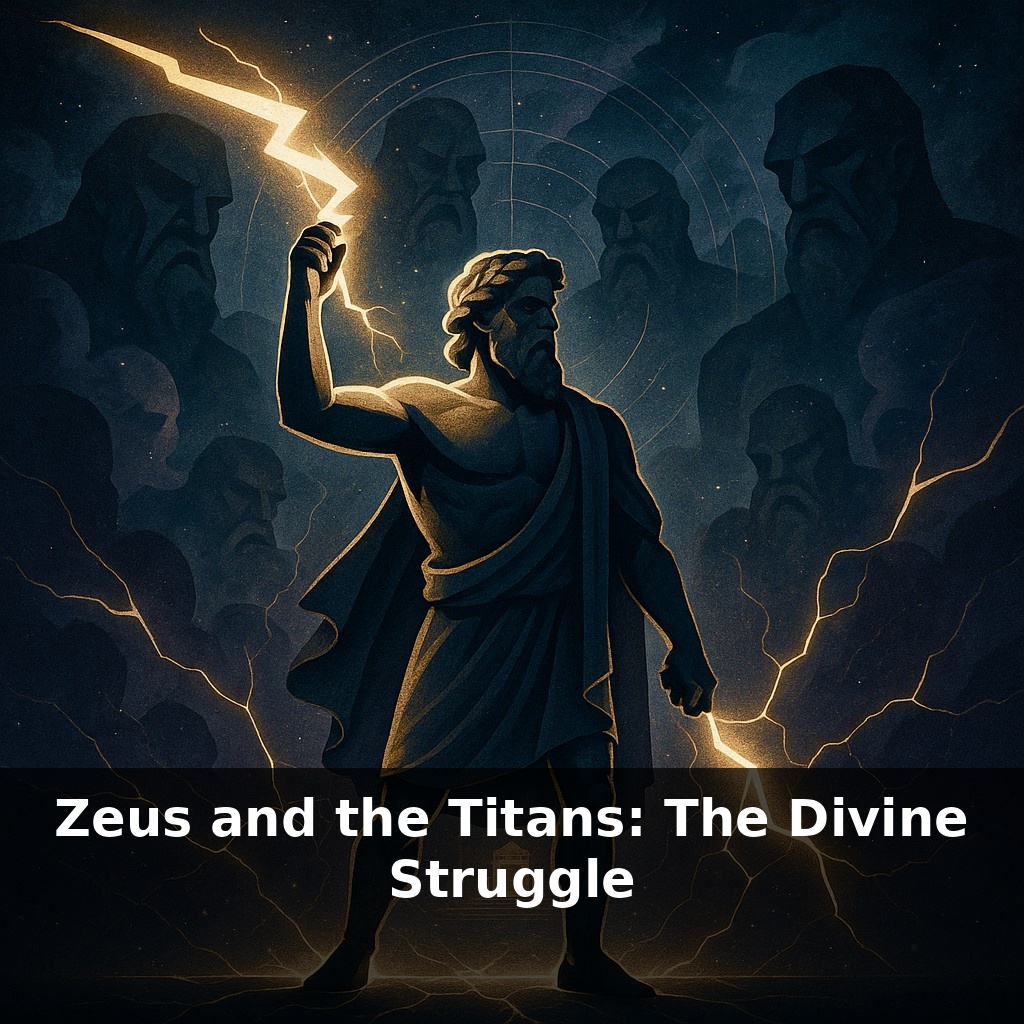
Lightning splits the sky. A young god stands on a battlefield that isn’t land or sea, but the fabric of the universe itself. His enemy? Not monsters, but his own parents’ generation. Tonight, we drop straight into the moment Zeus decides the cosmos needs a hostile takeover.
Hesiod doesn’t present this war as random divine drama; he treats it like a trial where the verdict will decide how reality is run. At stake isn’t just who sits on the throne, but *what kind* of rules will govern everything that lives, dies, or even thinks. On one side stand the Titans, wielding nothing but age, tradition, and the stubborn belief that “first in power means forever in power.” On the other stands a coalition that shouldn’t, by any mortal logic, stand a chance: younger gods, recently traumatized, under-armed, and politically fragile. Think less of a fair fight and more of a stacked deck at a casino, where the house has been winning for eons—until someone walks in determined to rewrite the rulebook, not just beat the odds. The real shock of the Titanomachy isn’t that Zeus wins; it’s that the old rules of winning stop working.
Hesiod anchors this upheaval not in chaos, but in genealogy and debt. The younger gods don’t just *want* change; they quite literally owe their existence to a chain of violence and concealment—children swallowed, hidden, traded like assets in a risky portfolio. Zeus’s choice to act is less a heroic impulse and more a response to a backlog of unpaid grievances clogging the family system. And he can’t do it alone. His first moves are diplomatic and strategic: recruiting allies no one else bothered to value, tapping overlooked forces buried at the edges of creation, and turning raw resentment into organized resistance.
The first thing Hesiod zooms in on is not a clash, but a *decision*: which neglected forces will the younger gods bring into the fight? The turning point isn’t a dramatic duel; it’s a jailbreak.
Buried in Tartaros—so far down “an anvil would fall nine days” before reaching it—are the Cyclopes and the Hecatoncheires. Earlier, they’d been locked away by the very powers that feared losing control. They’re not just “monsters”; they’re specialized assets nobody knows how to use yet. The Cyclopes forge weapons so extreme they barely count as objects—thunderbolt, lightning, peals of shock that shudder through creation. The Hundred-Handers aren’t about subtlety at all; they’re about sheer, absurd volume. In battle, they don’t outthink opponents; they overwhelm them.
Hesiod is quietly making a claim here about where decisive strength comes from. It’s not the polished, respectable gods who tip the scales, but the buried, the unwanted, the ones written off as too dangerous or too strange. The old regime’s error wasn’t just cruelty; it was profoundly bad strategy. By locking away anything unpredictable, they accidentally stored the exact leverage their rivals would later need.
Notice who *doesn’t* end up on the losing side. Not every elder power backs Kronos. Themis—embodiment of order and right relationship—leans toward the younger coalition. Prometheus, with his suspiciously sharp sense of consequences, will later maneuver within this new system rather than against it. The conflict isn’t a simple age war; it’s a sorting of values. Some older powers align with emerging patterns of justice, others double down on fear and hoarding.
The actual fighting, in Hesiod’s compressed account, feels repetitive on purpose: years of stalemate, neither side gaining ground, until the ignored allies enter. Once unleashed, the Hundred-Handers hurl entire mountains as if they were stones. Landscape stops being background and becomes ammunition. The message is almost ruthless: cling too tightly to control, and even the terrain you stand on can be turned against you.
And when the struggle ends, it doesn’t dissolve into peace; it hardens into architecture. The defeated are not destroyed but *stored*—in Tartaros again, now under guard by the very beings they once imprisoned. Power is restructured, not erased. The younger order builds its security system out of the previous regime’s worst fears, assigning its most terrifying forces to be the locks on the new world’s basement door.
Think of the shift Hesiod describes as less “good guys vs. bad guys” and more a change in **operating system**. Under Kronos, stability means suppression: anything volatile gets buried, no matter its potential. Under the new order, risky forces are re‑integrated—but with guardrails. That’s not moral perfection; it’s controlled volatility.
A modern parallel is how some central banks treat financial derivatives. After crises, regulators don’t usually ban complex instruments outright; they demand collateral, transparency, and oversight. The tools remain, but who wields them—and under what constraints—changes. Similarly, the Hundred‑Handers don’t vanish after the conflict; they become living infrastructure, enforcing limits on how far any future challenge can go.
Notice also how Atlas’s punishment quietly reframes responsibility. He isn’t merely chained; he’s turned into a permanent support structure. In many myths, bearing weight—legal, cosmic, or emotional—falls to those who once tried to evade any shared order. The burden becomes the tuition fee for having tested its edges.
Hesiod’s story keeps echoing because it treats power like a system you can refactor. Modern leaders quietly replay the same script: do you bury volatile talent, or bring it into the core with constraints? Boardroom coups, political revolutions, even open‑source projects hinge on how “dangerous” contributors are handled. Your challenge this week: when you see a group resisting change, ask what they’ve locked away—and who might weaponize it next.
In later myths, this victory becomes background noise—just “how things are”—the way old revolutions shrink into a paragraph in a history book. Yet poets keep slipping back to that fault line, testing whether any order is permanent. Like a stage reset between acts, the struggle hints that even the grandest script is still a draft, waiting on its next risky revision.
Here’s your challenge this week: Identify a recurring challenge in your professional life—whether it's a project hurdle or team conflict. Use 'The Zeus Method': brainstorm ways to use existing resources or support (like collaboration or mentorship) to tackle this challenge head-on. Document how these strategies change the dynamic over the week and share one success story in your next team meeting.
From this course
Greek Mythology: Gods, Heroes, and Monsters
7 episodesUnlock all episodes
Full access to 7 episodes and everything on OwlUp.
Subscribe — $1.99/monthLess than a coffee ☕ · Cancel anytime