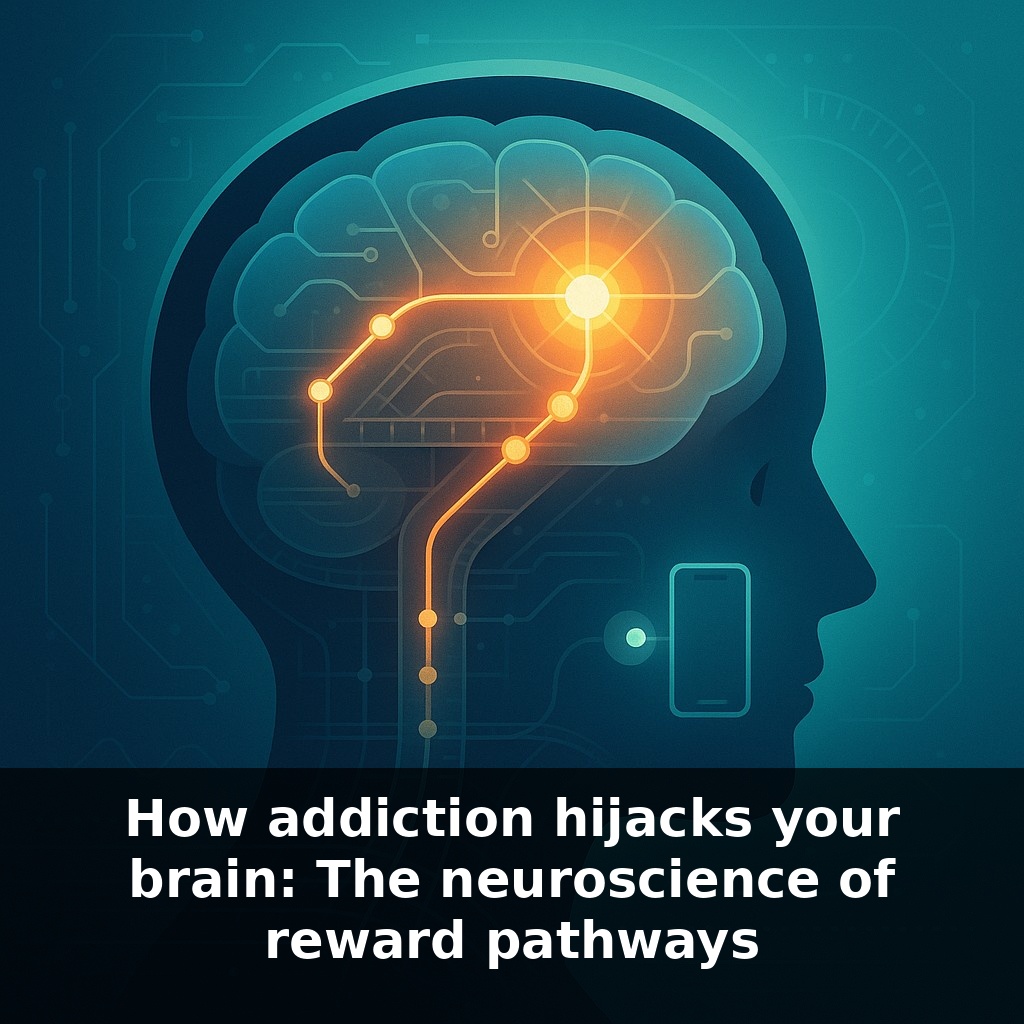
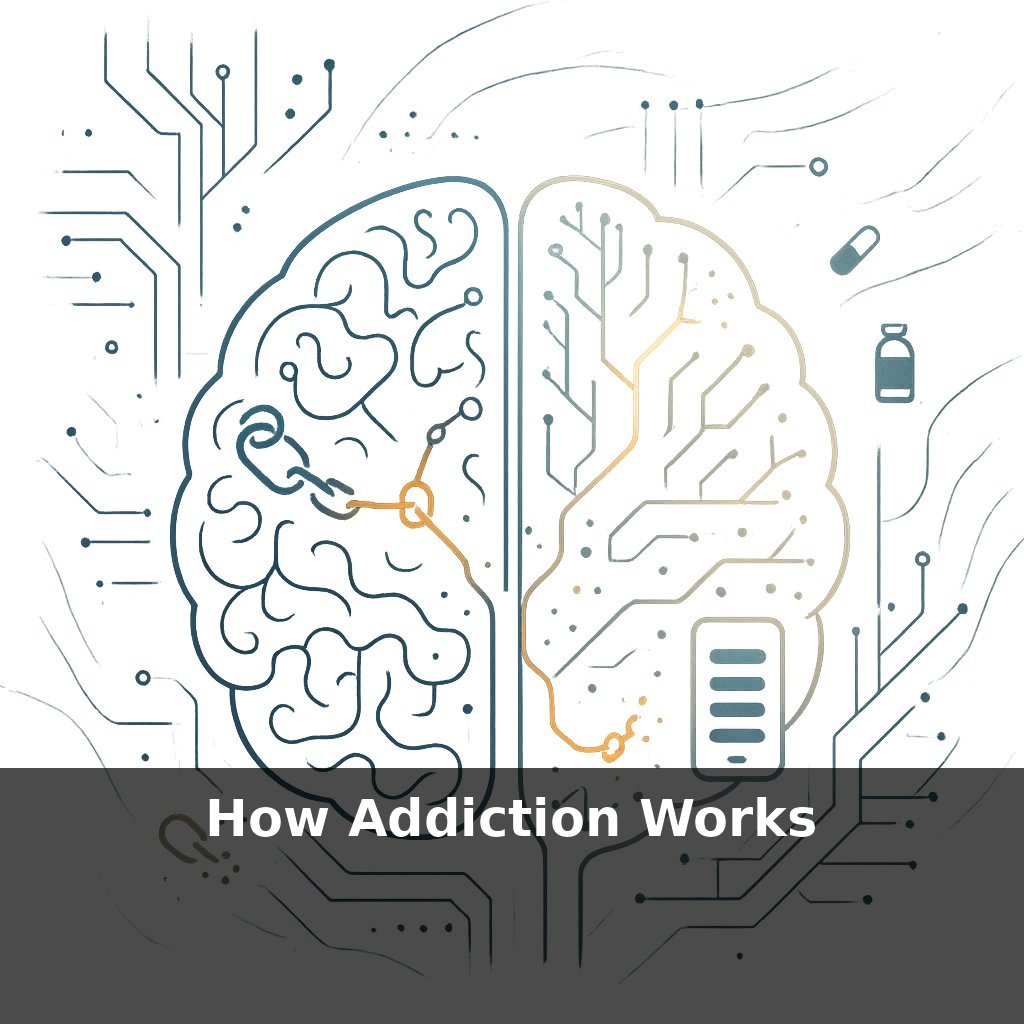
Right now, as you’re listening, your brain is quietly dripping out tiny rewards for checking your phone, finishing a task, even hearing this sentence. Now here’s the twist: the same system that helps you learn and focus can be rewired to chase one thing, over and over, no matter the cost.
So why does addiction feel less like “bad choices” and more like being pulled on invisible rails? Under the surface, your brain is running a kind of internal scoreboard, constantly updating which actions are “worth it.” Drugs and certain behaviors don’t just nudge that score—they flood it, tagging the addictive target as absurdly valuable compared with everything else in your life.
Over time, this doesn’t just change what you *like*; it reshapes what you *pursue*. Circuits that once pushed you toward sleep, meals, or conversation start reallocating their energy. The result isn’t just stronger craving—it’s a quieter signal for normal rewards, and a louder, more insistent signal for the addictive one.
This shift doesn’t happen randomly. It follows a pattern, spreading through specific brain pathways that specialize in motivation, habit, and self-control. That’s where we’re going next.
To understand how this shift takes over, we need to zoom in on the specific players doing the heavy lifting. There’s a strip of deep brain tissue—the nucleus accumbens—that acts like a “priority gate,” deciding which urges feel urgent enough to act on. Upstream, the ventral tegmental area sends powerful chemical signals that can make something feel instantly important. Higher up, regions of the prefrontal cortex weigh long-term goals against whatever is screaming for attention right now. Addiction emerges as these regions start working in a subtly different balance, favoring speed and intensity over nuance and context.
When a powerful drug or behavior first hits that “priority gate,” the reaction is wildly out of proportion. Lab animals pressing a lever for cocaine can drive dopamine in that circuit to more than triple baseline levels; food barely reaches half that. The brain doesn’t interpret this as “fun” so much as “this matters more than almost anything.”
That outsized signal is the start, not the end. With repetition, the pattern spreads outward. Cells in the gate region start firing more briskly when you see cues associated with the substance: the corner store, a particular notification sound, a certain time of day. Over repeated runs, the cues alone can provoke a strong physiological response—tightness in the chest, restless hands, a magnetic pull toward the next dose or episode.
At the same time, deeper learning systems in the striatum begin to absorb the pattern. Early on, use is deliberate and flexible—you think about whether to do it. Later, chunks of behavior fuse into near-automatic routines: finish work → feel drained → open the app or pour the drink, often before you consciously “decide.” Neurons there start to fire at the start of the routine rather than at the reward itself, marking the whole sequence as a well-worn route.
Up top, regions that normally compare options begin to shift their weighting. Under constant high-intensity bombardment, the circuits tracking risks and long-term goals lose influence compared with those tracking immediate relief. Imaging studies show that in people in the grip of compulsive use, brain activity can light up more for a picture of their substance than for photos of family or favorite hobbies.
Over months or years, this isn’t just about stronger drive toward one target. It’s also about a gradual dulling elsewhere. Natural satisfactions—small successes, time with friends, even food and sex—fail to produce much response in the same pathways. People often describe a gray, low-energy background state when not using or engaging, as if life’s volume has been turned down.
This combination—hyperreactive to certain cues, underresponsive to almost everything else—sets the stage for a pattern that’s hard to reverse from the inside. Even when someone clearly sees the costs, the underlying machinery keeps pushing the same narrow set of options to the front of the line.
Watch what happens in small, everyday moments. Someone scrolls short videos “just to unwind,” then suddenly it’s 2 a.m. and they’ve skipped dinner, messages, even sleep. Another person means to have “one drink to loosen up,” but their night keeps reorganizing itself around refills: who they talk to, where they stand, when they leave. In each case, attention and time quietly re-center around one repeating loop, while other options fade into the background.
You can even see early shifts long before things look extreme. A gamer who used to enjoy long strategy sessions starts needing constant novelty—loot boxes, micro-rewards, rapid-fire matches—to feel engaged at all. A worker refreshing email or analytics dashboards feels flat when tackling deep, slower tasks; the “ping” becomes oddly necessary just to feel normal.
Like a piece of music whose bass line keeps getting turned up, these patterns don’t only add something new—they drown out softer parts that used to matter.
Soon, the same circuits that once pulled you toward a substance will be things clinicians can tune, almost like adjusting levels on a sound mixer. Genetic profiles could flag who needs gentler “volume” on intense rewards before trouble starts. Clinics may use pulses of magnetism or brief psychedelic sessions to help stuck patterns loosen. Even apps might be forced to include recovery features—scheduled quiet zones where the endless drip of tiny rewards has to pause.
Recovery, then, isn’t about “willpower” alone; it’s about patiently retraining a system that’s been running one playlist on repeat. New routines, relationships, and environments act like fresh tracks, giving your circuits other patterns to lock onto. Your challenge this week: notice which activities quietly pull you back, even when a quick hit is right there.