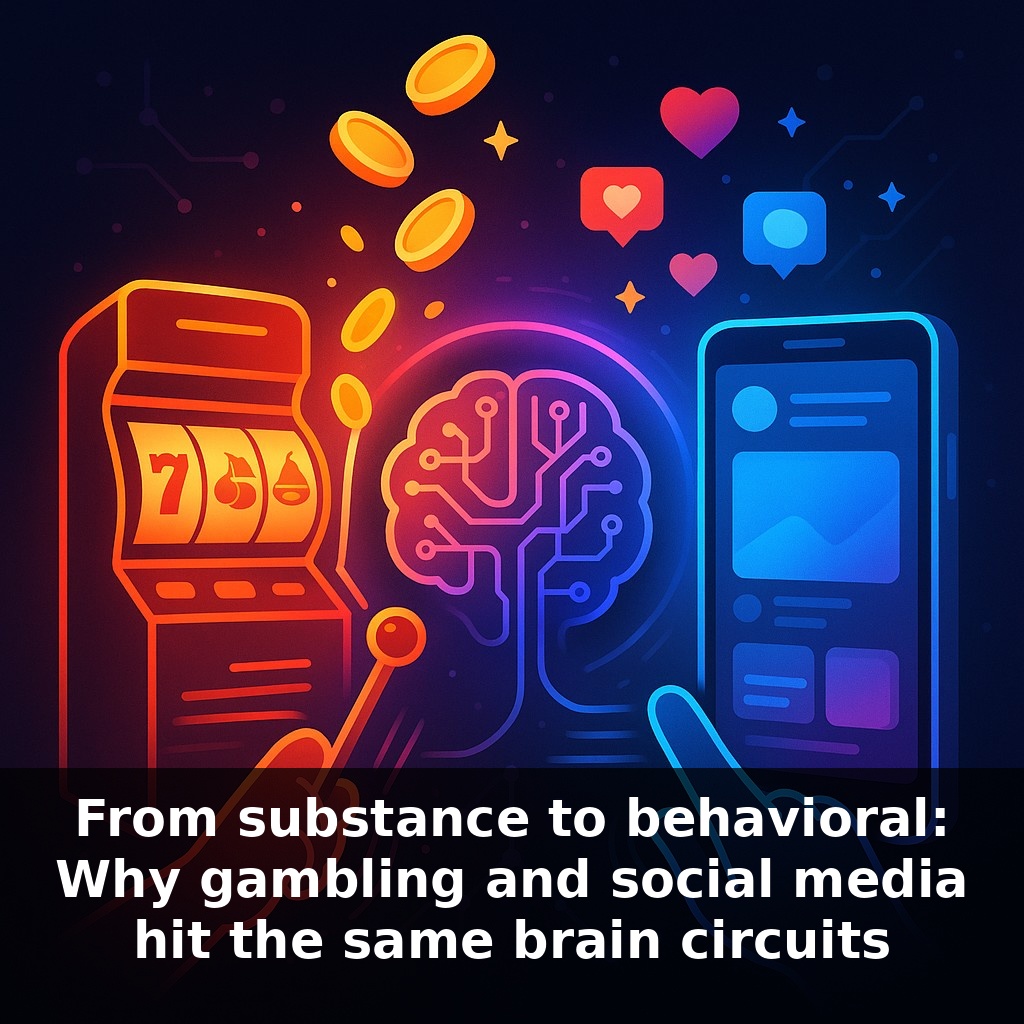
Your brain can’t tell the difference between a casino jackpot and a viral post. A gambler pulls a lever in Vegas; a teen refreshes TikTok in bed. Two totally different scenes, one shared story: the same reward circuit lighting up, training both of them not to look away.
A casino designer has one goal: keep you playing one more round. A social-media product manager has the same goal: keep you scrolling one more swipe. Different industries, nearly identical playbooks. They A/B test colors, sounds, timing, tiny animations—each tweak measured not in beauty or truth, but in “time on device” and “return sessions.” Over millions of users and billions of data points, the most irresistible patterns rise to the top and get locked in. That’s why online slots shower you with near-miss flashes and celebratory sounds, and why apps drip out notifications, streaks, and “pull-to-refresh” feeds. These aren’t random design choices; they’re carefully tuned signals that latch onto your habits, your boredom, even your loneliness—and feed them right back into the loop.
Underneath all the surface polish, both casinos and apps depend on the same hidden ingredient: uncertainty. Not just any uncertainty, but the *almost* win, the *maybe* message, the “something good could be here” feeling. That tiny suspense spike is what jolts your mesolimbic dopamine system and tags certain actions as urgent and important. Designers don’t need you euphoric; they need you slightly restless, never quite satisfied. It’s the pause before the next note in a song, stretched just long enough that you lean in—and then repeated so often that leaning in becomes automatic.
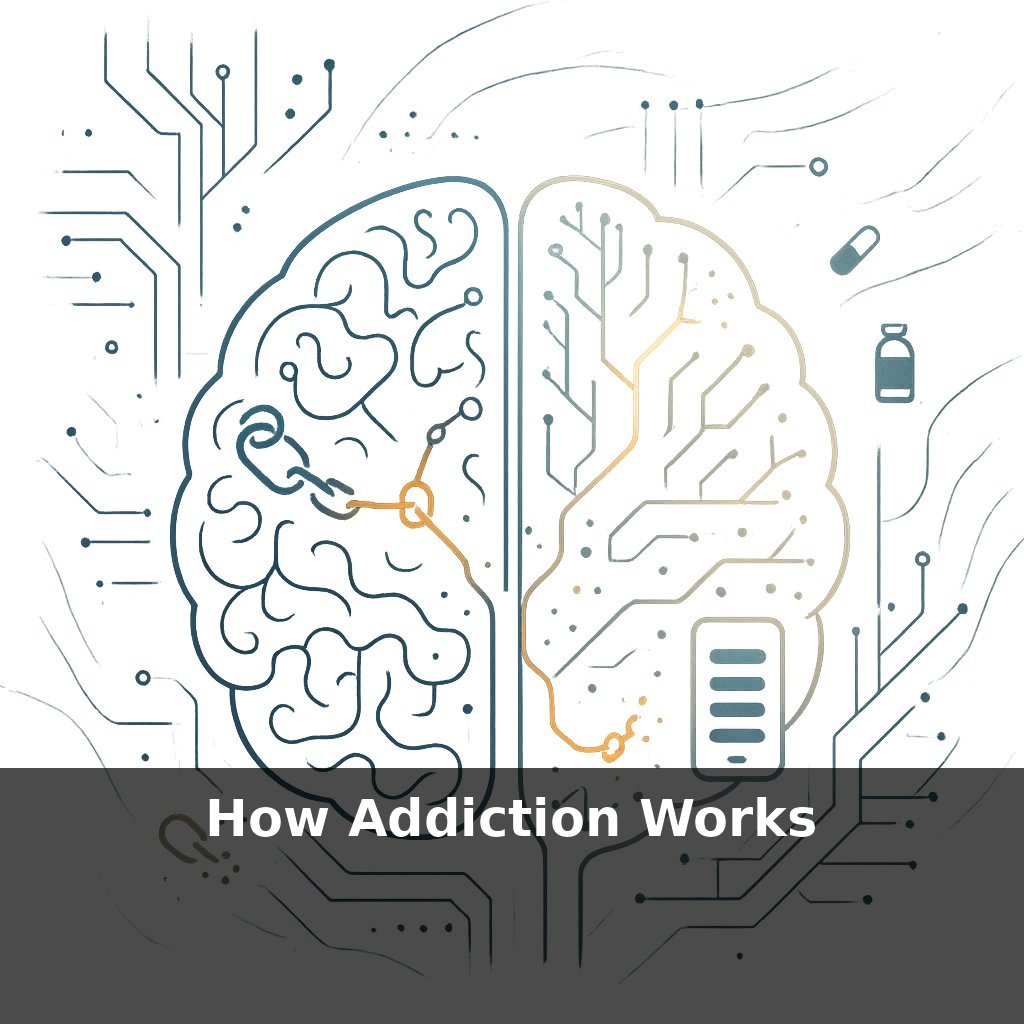
Here’s the twist most people miss: what feels like “I just like this” is often “my mesolimbic system has been recalibrated.” When you hit spin or refresh, the ventral tegmental area fires, dopamine surges toward the nucleus accumbens, and your prefrontal cortex is supposed to weigh long‑term goals against short‑term urges. With repeated hits, that balance quietly shifts.
In substance addiction, we know this shift well: tolerance builds, cravings intensify, and control weakens. Brain‑imaging shows a remarkably similar pattern in compulsive gambling and heavy social‑media use—especially in how the prefrontal regions lose their veto power. Over time, “I’ll just check quickly” stops being a choice you fully own and starts feeling like something that happens to you while you’re half‑watching.
The key misunderstanding is thinking “no chemical, no real addiction.” But your brain *is* a chemical system. Cocaine or nicotine dump dopamine from the outside; a massive gambling win or a sudden spike in likes pulls the same lever from the inside. In both cases, the circuitry adapts: baseline motivation drops, sensitivity to cues rises, and ordinary life feels flat compared with the next potential “hit.”
Designers exploit this by tuning *when* and *how often* rewards show up. Most online slots, for instance, don’t pay out on a predictable schedule; they use variable‑ratio reinforcement, where any given spin could be the one. That same uncertainty is woven into feeds where the next swipe could reveal something mundane—or intensely validating. The rare “jackpot” moments train your system far more than the dull ones.
A subtle danger is binge‑style use. You might not touch an app all week, then lose five hours in a single sitting. From the brain’s perspective, that’s a concentrated flood—enough to push neuro‑adaptations forward even if your calendar looks “balanced.”
One analogy helps here: in medicine, a drug can be swallowed, injected, or inhaled, but once it’s in the bloodstream, your organs don’t care about the delivery route. Likewise, whether the trigger is a substance, a bet, or a barrage of digital “wins,” the core circuitry being remodeled is largely the same.
A useful way to test how deep this goes is to look at edge cases. Take someone who quit cigarettes years ago but now spends late nights on crypto apps. They’re not “using a drug,” yet they report the same tunnel vision: promising themselves “one more check” at midnight and surfacing at 3 a.m. That pattern often appears in brain scans as reduced activity in control regions—similar to what’s seen in people who relapse to smoking under stress.
Or consider a teen who doesn’t care about gambling but can’t put down short‑form video. They may not chase money, but they chase social micro‑rewards: a DM, a comment from a crush, a creator noticing them. When access is briefly blocked—dead battery, no Wi‑Fi—some report irritability and mental “phantom pings,” as if the feed is still moving without them. Clinicians increasingly treat these cases using adapted tools from substance‑use therapy: urge‑surfing, stimulus control, and “delay and distract” drills, not because phones are drugs, but because the *patterns* of compulsion rhyme.
We’re moving toward a world where “dopamine design” becomes visible, like nutrition labels on food. Interfaces may soon show “stimulation density,” flagging features most likely to keep you locked in. Regulators could demand “slow modes” by default for minors, while adults might customize their own limits—like setting speed caps on a car. As brain data guides both treatment and design, the real power shift is this: you’ll know when a product is built to serve you—and when you’re the product.
The next step isn’t quitting tech; it’s learning its “rhythm.” Start noticing which apps feel like background music and which hijack the whole concert. Over time, you can re-score your day: move creative work to the quiet hours, push slot‑machine‑style feeds to the edges, and treat high-intensity apps like espresso—powerful, brief, and never right before sleep.
Before next week, ask yourself: “When I open Instagram, TikTok, or a betting app, what *exact feeling* am I chasing (relief, excitement, escape, validation), and where else in my day could I get that same feeling in a healthier way?” Just once this week, pause right before you place a bet, check a notification, or start scrolling and ask, “If I imagine the *next 10 minutes* and the *next 10 days*, does this click help or hurt the person I’m trying to become?” Finally, at the end of one day, look back and ask, “Which specific moment today felt the most like my brain was ‘hooked’ (time disappeared, I kept saying ‘one more’), and what tiny boundary (app timer, leaving my phone in another room, no-phone-in-bed rule) would make that exact moment easier to resist tomorrow?”