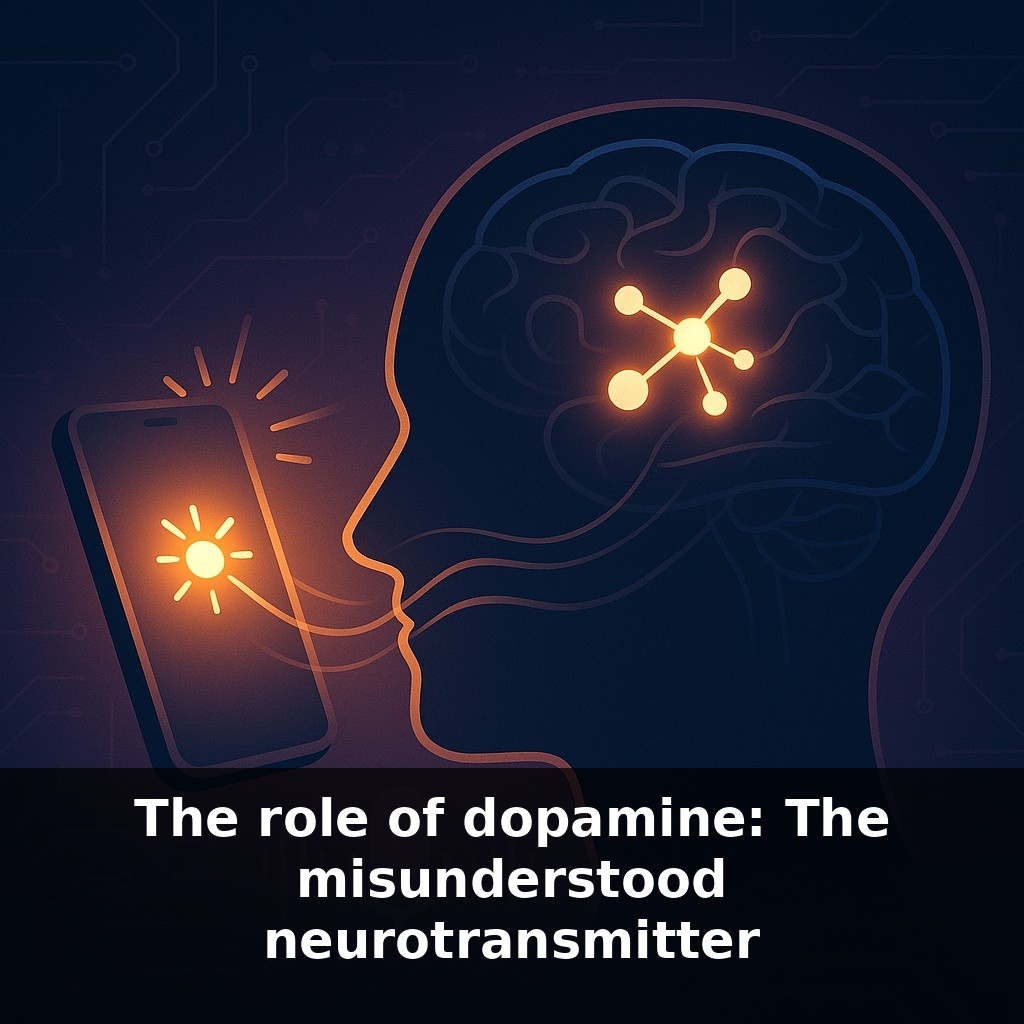
Right now, the chemical most blamed for pleasure isn’t actually designed to make you feel good. In one moment it’s quiet; the next, it spikes when your phone lights up or your boss says your name. Why does the brain’s “motivation messenger” react more to a hint of reward than to reward itself?
A molecule that powers only about 0.01% of your brain’s neurons can still rewrite how you spend your days. That’s dopamine’s real trick: reach a few key hubs, and your priorities, habits, even your sense of “this matters” start to shift. In this episode, we’ll zoom in on what those shifts actually look like.
Dopamine doesn’t just light up when something feels good; it quietly tracks *what led up* to that good thing, then tags those steps as worth repeating. Grab a snack while stressed, get a small wave of relief, and dopamine starts boosting the mental “shortcut” that links stress → snack. Repeat that loop enough, and it can outcompete your original goals, like finishing a project or getting to bed on time.
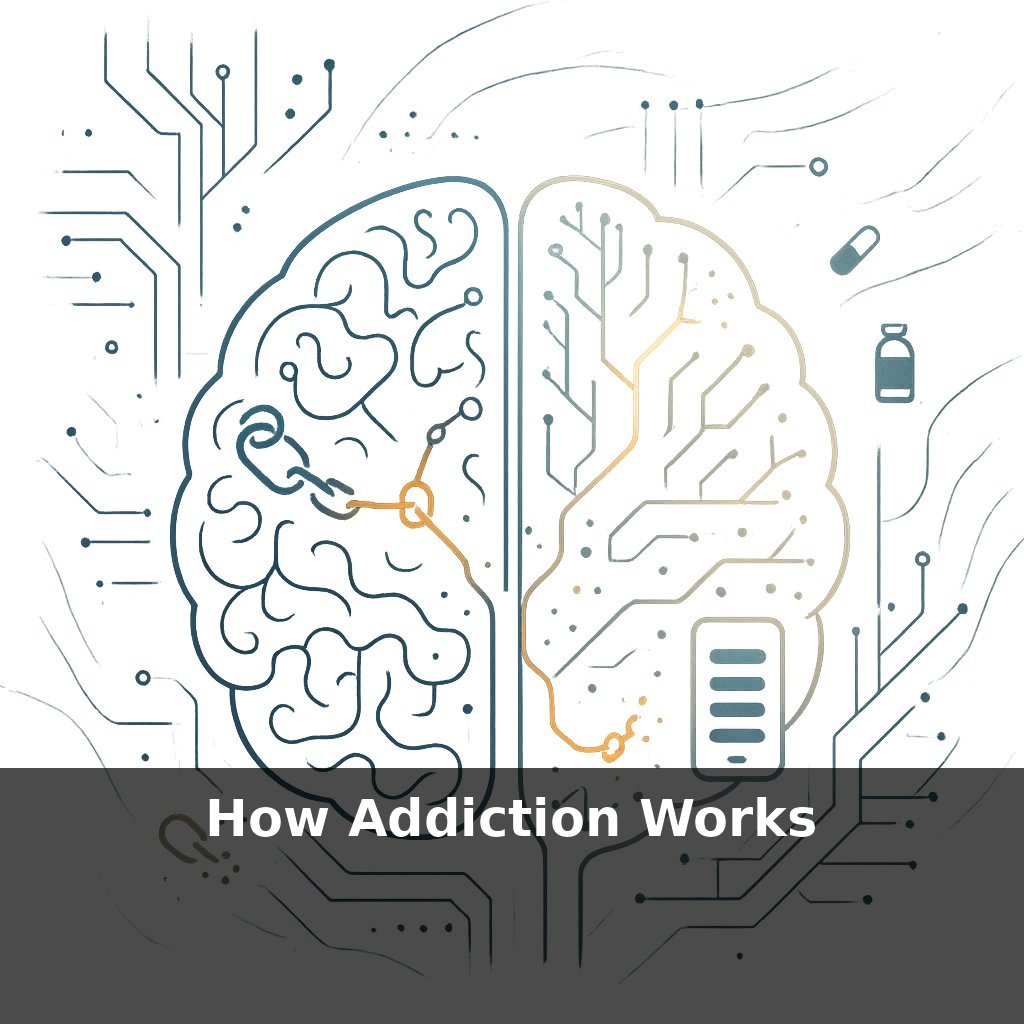
This is why addiction isn’t just about liking a substance. It’s about a learning system that’s been hijacked—efficiently, mechanically, and at scale.
But the brain isn’t just tracking “good things happen here.” It’s constantly updating *how surprising* those good (or bad) things are. Order takeout from a new place and it’s amazing? Big update. By the fifth time, the same meal barely moves the needle—your system has learned what to expect. This is where dopamine really shapes addiction and habits: drugs don’t just feel intense once; they repeatedly yank the system above its normal range, like turning a casual playlist into a blaring, stuck-on-repeat track that starts drowning out quieter, healthier signals competing for your attention.
A burst of cocaine can push dopamine in the nucleus accumbens to roughly 350% of baseline, while a good meal nudges it to about 150%. That gap isn’t just “more pleasure”—it’s a massively louder teaching signal about what deserves your energy. And because only about 0.01% of neurons use dopamine, those few cells act less like party hosts and more like air-traffic controllers, quietly re-routing flows of attention, effort, and memory across vast brain networks.
One of the most important quirks here is timing. When dopamine neurons fire in quick bursts—on the order of 200 milliseconds—they’re perfectly aligned with the receptors that sit downstream, especially the D1 and D2 receptors in places like the striatum. That tight timing window lets each burst leave a physical trace at synapses: some connections get strengthened, others weakened. You don’t feel that process happening, but it reshapes which actions feel “natural” to initiate next time a similar situation appears.
This helps explain why cues gain such power. Brain imaging shows that in people who’ve stopped using a drug, seeing a lighter, a bar sign, or a social media logo can still trigger dopamine release months into abstinence. The original chemical or behavior may be gone, yet the network of cues that predict it continues to light up. Each cue says, in effect, “This used to matter a lot,” and the system responds as if the old priorities are still current.
Clinical cases drive home how strongly this signal targets “wanting.” In Parkinson’s disease, dopamine loss in movement circuits is treated with dopamine agonists. Motor symptoms improve—but in about 14% of patients, those same medications unleash new compulsions: hours of online gambling, binge shopping, hypersexuality. The objects of pursuit aren’t unusually pleasurable; the drive to obtain them is.
Think of those 200-millisecond dopamine bursts like a conductor’s downbeat in an orchestra: brief, precise, and decisive about when different sections should come in. When the downbeat is exaggerated or keeps arriving for the wrong passages, the entire performance—the flow of choices, efforts, and attention—shifts, even if the instruments themselves haven’t changed.
You can watch this in small, everyday choices. Say you’re working late and a colleague offers you a quick “energy boost” drink. You’re tired, behind schedule, and you accept. Later, your memory of that night isn’t just “the drink tasted okay,” it’s “that was the night I pushed through and finished.” The brain quietly files the drink under “tools that help me hit deadlines,” and next crunch time, that option pops up faster than going for a walk or stepping away from the screen.
The same thing happens in tech design. A product team doesn’t only A/B test what users *like*; they track what keeps them coming back, clicking, and scrolling. Subtle shifts—where the notification appears, when a progress bar fills, how often a “you’re almost there” message shows up—can tilt which actions users repeat.
In a very different arena, casino layouts, loyalty cards, and near-miss sounds are tuned to keep behavior looping, not just to make any single win feel good.
Future tools may tap into these signaling circuits with far more care: closed‑loop brain implants that adjust stimulation only when risky patterns emerge, or drugs that quiet specific receptor subtypes instead of muting the whole system. That precision could reshape treatment—more like tuning an instrument than rebooting a computer. At the same time, AI systems trained on similar principles may force society to ask who controls these levers, and how tightly they’re allowed to steer our choices.
The next step isn’t to mute this signal, but to work with it. Designers, clinicians, and you all sit at the same control panel, tweaking when and where that “this matters” tag appears. Like choosing which tabs to keep pinned in a browser, deciding which goals deserve that tag may be one of the most powerful forms of digital self‑defense.
Before next week, ask yourself: 1) “Looking at today, which activities gave me a brief dopamine ‘spike’ (scrolling, snacking, checking notifications) and which ones felt like slower, more satisfying ‘baseline builders’ (deep work, exercise, meaningful conversation)—and what’s one I’m willing to swap tomorrow?” 2) “If I tracked just one habit that reliably boosts healthy dopamine—like a 10-minute morning walk in sunlight or a consistent bedtime—how would I make it almost impossible to skip for the next three days?” 3) “When I catch myself chasing quick hits (dopamine ‘pinging’), what specific pause routine could I use—like taking three slow breaths and asking, ‘What long-term reward am I actually craving right now?’”