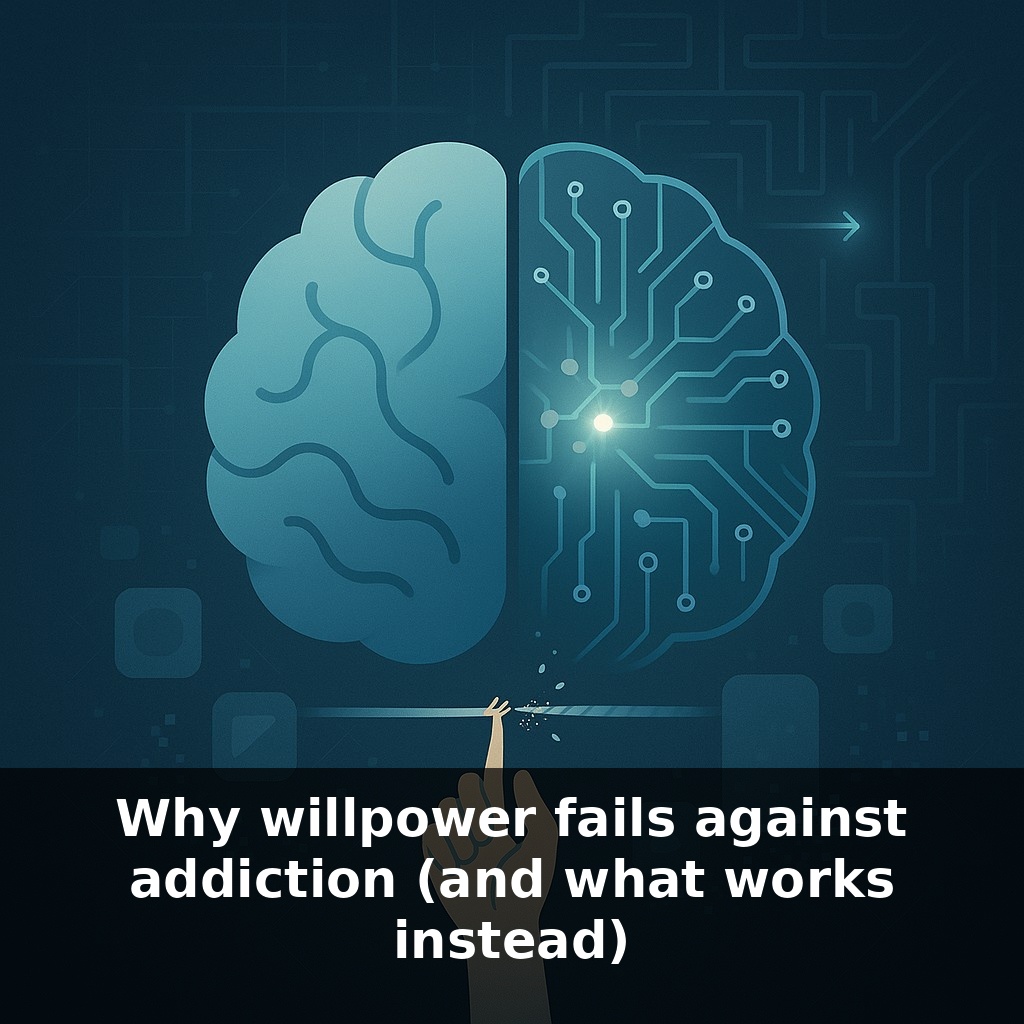
Right now, somewhere, a person is white‑knuckling their way past a craving—and losing. Not because they’re weak, but because the very part of the brain that uses willpower has been rewired. So if more effort isn’t the answer… what actually is?
Maybe you’ve tried to “just stop” before: deleted the app, poured the bottle out, promised yourself this time would be different. For a few days, it even worked. Then a stressful email landed, or you walked past that familiar corner store, and suddenly it felt like your body had already decided before your mind caught up.
That whiplash—the sense of, “Why am I doing this when I *know* better?”—isn’t just frustration, it’s a clue. It tells us this isn’t a simple bad-habit issue; it’s a whole-system problem involving stress, environment, relationships, sleep, even how you structure your day.
In this episode, we’ll zoom out from “try harder” and look at what actually shifts the odds: practical supports for your biology, tools for your thinking, and changes to the spaces and people around you that quietly nudge your brain toward recovery instead of relapse.
Think of this episode as stepping backstage of the “just quit” story and looking at the machinery that keeps the show running. There’s the cue that quietly sets things in motion, the rush of expectation, the automatic script you’ve followed a hundred times. None of that cares about your latest promise to yourself. What we’re interested in is how to interrupt that sequence—not by shouting over it—but by changing the script, the stage, and even the timing of the performance so the old act simply doesn’t land the same way anymore. That means getting concrete about triggers, cravings, and what actually competes with them in real life.
Here’s the uncomfortable truth: by the time something feels like “addiction,” the part of your brain that does long‑term planning is badly outgunned by the part chasing immediate relief or reward. So instead of asking, “Why don’t I just stop?” the more useful question becomes, “What would make *not* using feel more rewarding, more often, to more parts of my brain?”
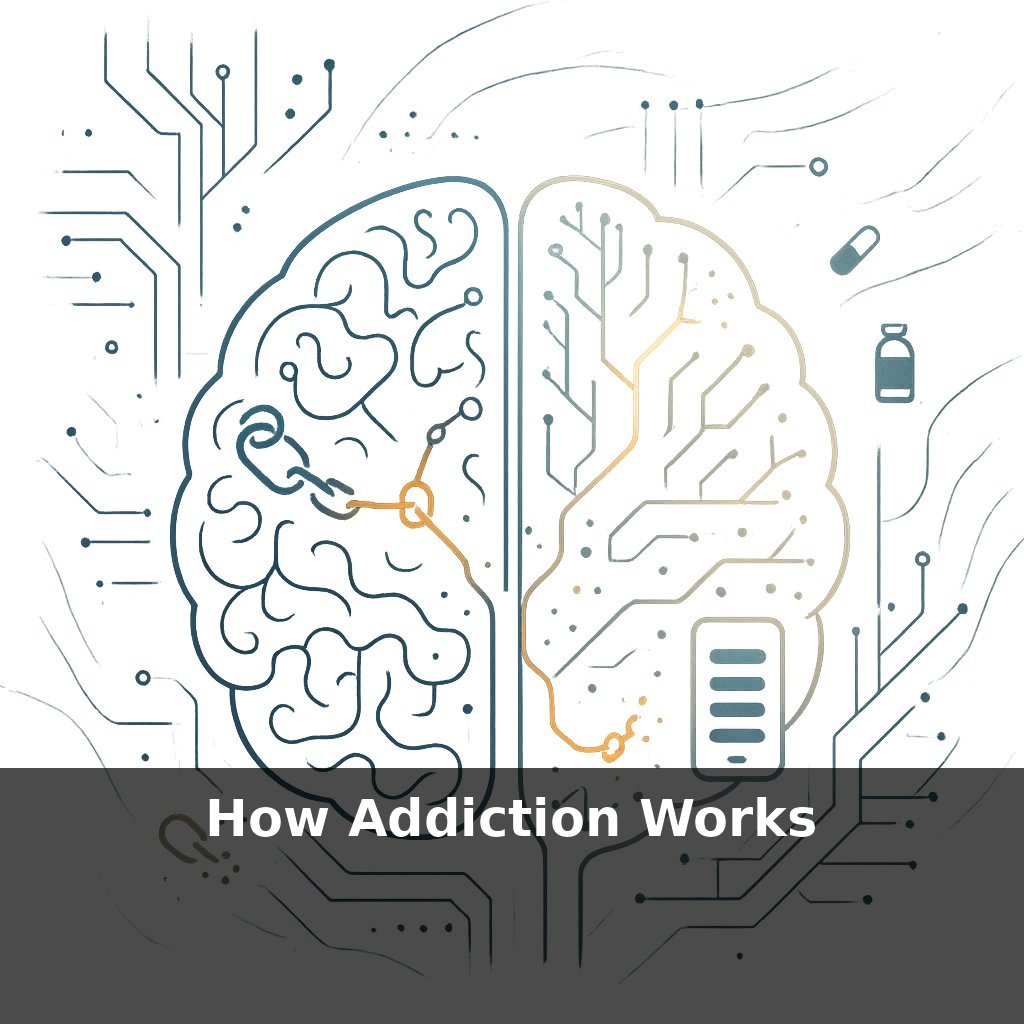
On the biological side, substances and addictive behaviours have essentially negotiated VIP access to your dopamine system. They don’t just feel good; over time, they start to feel necessary. Sleep debt, lousy nutrition, chronic stress and inactivity all tilt the negotiation in favour of the addiction. When you’re exhausted and wired, your brain is biased toward fast comfort. That’s why things like regular movement, stabilising blood sugar, and getting even one more hour of sleep aren’t “self‑care extras”—they’re leverage. They raise your baseline so cravings don’t arrive to a brain already on its knees.
Then there’s the “decision architecture” of your day. If your phone is the first thing you touch in the morning, the app or site you’re trying to cut down on is already one tap away before you’ve remembered your intentions. If the bar is across the street from work, drinking is the path of least resistance at 5 p.m. You can feel that pull and label it “weakness,” or you can redesign the path. Route your commute differently. Move the alcohol out of the house or to a hard‑to‑reach place. Use blocking software that requires someone else’s password. These tweaks sound small, but they quietly change a hundred micro‑decisions you never notice.
Psychological tools add another layer. Cognitive‑behavioural strategies don’t just say “don’t drink” or “don’t click.” They break down the specific thoughts that precede use (“One won’t hurt,” “I already blew it today”) and give you rehearsed alternatives. Mindfulness‑based approaches like the ones in that 12‑week study train you to notice the surge of wanting, feel it in your body, and ride it like a wave that peaks and falls, instead of treating it as an emergency you must obey.
Finally, relationships matter more than motivation. Recovery outcomes are consistently better when people have at least one person who both understands the pattern and won’t cosign the old solutions. That might be a therapist using contingency management (where you earn real, tangible rewards for staying on track), a sponsor, or simply a friend who agrees to be your first call before you act, not your clean‑up crew afterward.
Notice how none of this depends on you waking up magically “stronger.” The game shifts when the systems around you start working *with* your brain instead of leaving it to battle alone.
Think of how a touring musician survives months on the road. They don’t “hope” they’ll remember every lyric under pressure; they build a setlist, rehearse transitions, and arrange the stage so the next instrument is always within reach. Recovery routines work the same way: you don’t wait for a craving and then improvise, you pre‑decide the “setlist” of moves you’ll run when it shows up.
For someone trying to drink less, that might mean texting a specific friend before 6 p.m., having a non‑alcoholic drink you actually like already chilled, and booking something mildly social—but alcohol‑free—right at your usual danger hour. For someone hooked on late‑night scrolling, it could be charging the phone in another room and queueing a podcast on a dumb speaker as the new wind‑down.
Over time, these pre‑loaded options become muscle memory. You’re not fighting the old pull so much as giving your brain a smoother track to slide onto when it needs it most.
Recovery’s future may look less like boot camp and more like a personalised studio. Genetically tuned meds could act like custom EQ, dampening only *your* most reactive channels. Phones might quietly learn your relapse “weather”—sleep dips, movement slumps, isolation—then nudge you hours before a storm hits. Psychedelic‑assisted sessions could serve as rare, deep “remixes,” helping people stuck in loops hear their own lives with unfamiliar clarity. The big shift: from blaming individuals to redesigning the whole soundtrack.
So rather than chasing a single “fix,” you’re curating a toolkit, the way a home cook collects spices. No one ingredient changes everything, but the right mix shifts the whole flavor of a day. The experiment isn’t “Can I be perfect?” but “What tiny upgrade makes tomorrow 2% easier?” Recovery grows from those small, repeatable wins, stacked until they feel ordinary.
Before next week, ask yourself: “In the exact 10 minutes before my last relapse/urge (time of day, place, people, emotions), what was really happening—and what pattern do I notice across the last 3–5 times?” “If I completely stopped relying on ‘I just need more willpower’ and instead changed one environmental cue (apps on my phone, where I keep alcohol, who I text when cravings hit), what would I change today—and how, specifically, will I set that up before tonight?” “When the next urge shows up, if I treated it as a wave to surf for 15 minutes instead of a command to obey, what could I physically do during those 15 minutes (walk outside, call a specific person, start a pre-chosen task) and how will I remind myself in the moment to do it?”