About half of what you did today was automatic—habits on autopilot. Now, here’s the twist: your creativity can work the same way. You’re at your desk, blank page, ticking clock… nothing. But in the shower or on a walk, ideas flood in. Why there, and not when you need them most?
About 40% of what you’ll do tomorrow is already decided—not by motivation, but by habit loops your brain has rehearsed thousands of times. The opportunity isn’t to “feel more inspired,” but to quietly hijack part of that 40% and dedicate it to creative work.
The data is blunt: in one study, people needed an average of 66 days for a new behavior to become automatic. That means a two‑month window where your brain is deciding whether your “daily sketch,” “idea walk,” or “song draft” is optional… or non‑negotiable.
This is where structure beats willpower. Twenty focused minutes, done at the same time, in the same place, with the same simple trigger, can beat a three‑hour “creative binge” that happens twice a month. Over weeks, your brain starts pre‑loading focus when the cue appears—before you even begin.
In this episode, we’ll turn that science into a concrete, daily creative protocol you can actually stick to.
Here’s the catch: most people try to “be creative” in blocks that are too big, too vague, and too rare. “Write more,” “design daily,” “practice piano” are goals that collapse the moment your day gets messy. What works is making your practice so small and so clear that skipping it feels stranger than doing it. Think 15 lines of writing, 1 thumbnail sketch, 10 prototype names, or a 20‑minute “idea walk.” Neuroscience backs this: brief, intense bouts of divergent thinking, followed by real breaks, train your brain faster than marathon sessions. Today we’ll turn that into a step‑by‑step, 30‑day build‑up plan.
Start by accepting a constraint most people fight: you’re unlikely to protect a 3‑hour “creative block” every day, but you can almost always protect 20 minutes. The goal is not heroic sessions; it’s a predictable, repeatable circuit your brain can rely on.
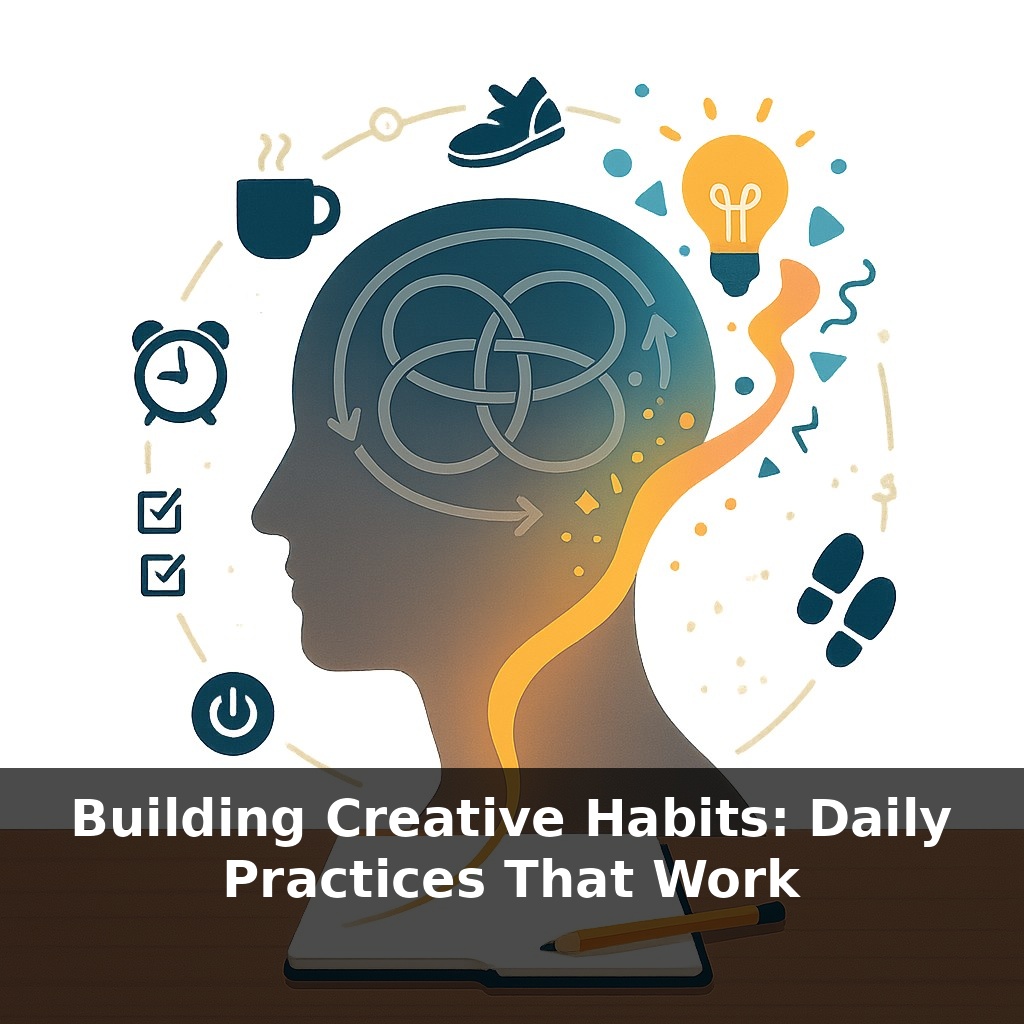
Use a simple 4‑part structure:
1) **Cue** (1–2 minutes) Pick 1 sensory signal you’ll use every time. Example: sit in the same chair, put on the same instrumental playlist, set a 20‑minute timer. Don’t vary this for at least 30 days. The consistency is more important than the specific choice.
2) **Warm‑up: Divergent Sprint** (5 minutes) Do a tiny task that requires quantity, not quality. Examples: - List 15 alternate headlines for a blog post. - Sketch 10 rough logo shapes. - Generate 12 variations of a melody or rhythm. Hold yourself to a number (10–20). Stop when the timer dings, even if you’re “on a roll.” You’re training speed and flexibility, not polishing.
3) **Main Creative Block** (10–12 minutes) Now shift to one concrete micro‑goal tied to a real project. Examples: - Write 200 words of dialogue. - Refine 2 of yesterday’s thumbnail sketches. - Build 1 small interaction in your app prototype. Make it binary: either it’s done or it’s not. Avoid vague targets like “make progress.”
4) **Cool‑down: Capture & Close** (3 minutes) When the timer ends, jot 2–3 bullet points: - One idea worth revisiting tomorrow. - One obstacle you hit (“stuck on chorus hook”). - One tiny next step (“try a slower tempo version”). Then shut everything down deliberately—close the notebook, save the file, turn off the music. This “clean exit” teaches your brain that the loop has a beginning and an end.
Here’s the 30‑day ramp:
- **Days 1–7:** 10 minutes total (2 cue, 3 warm‑up, 3 main, 2 cool‑down). - **Days 8–14:** 15 minutes (keep structure, add time to main block). - **Days 15–30:** 20 minutes (5 warm‑up, 10 main, 5 cool‑down).
Keep it at roughly the same time each day. If you miss, never miss twice; do a “minimum viable session” of 5 minutes the next day to keep the chain alive.
Consider three quick case studies. A songwriter set a rule: every weekday at 7:10 p.m., she writes exactly 4 lines of lyrics, then stops. After 60 days, she had 48 starts, 11 finished songs, and—crucially—she no longer negotiated with herself about “whether” to write, only “what” to write. A junior designer blocked a recurring “idea lap” at 3:00 p.m.: one lap around the building while listing 10 variations for a single screen on his phone. In 30 workdays, he logged 300 variations and shipped 3 noticeably bolder concepts that came directly from those walks. A founder used a simple spreadsheet with 3 columns: date, micro‑goal, and “next day seed.” After 45 entries, she noticed Tuesdays and Thursdays produced nearly 2× more usable concepts than Mondays, so she moved heavier creative work to those days. That’s the real power of daily practice: it gives you data about when, where, and how you personally create best—data you can actually act on.
Daily creative reps will soon be measured like steps or heart rate. Expect tools that log your “creative minutes” and surface patterns: which 90‑minute window gives you 40% more usable ideas, which playlist shortens ramp‑up by 3 minutes, which collaborators triple your breakthroughs. Treat yourself as a research project: run 4–6 week experiments, change one variable at a time, and keep a simple dashboard so your routines evolve as your projects—and life—change.
Track output, not hours. After 4 weeks, compare: on days you log 1 session vs. 2, how many usable ideas did you keep—5, 9, 12? Note which 3 patterns appear most often: time of day, energy level, or location. Then upgrade 1 variable for the next 14 days. You’re not chasing perfection; you’re running small, repeatable experiments.
Start with this tiny habit: when you sit down with your morning coffee, open your notes app and type a single, weird “what if” question inspired by something you saw yesterday (like “What if my neighbor’s dog secretly ran the building?”). Don’t outline, don’t brainstorm—just one sentence and close the app. Then, when you plug in your phone to charge at night, reread that one question and add exactly three more words to it—no more. This way you’re touching your creativity twice a day without pressure, just quick, playful check-ins.