In most long‑running democracies, the U.S. way of electing leaders is the *rare* exception, not the rule. A voter in New Zealand, Ireland, or Germany walks into the booth with more choices, more voices on the ballot, and a very different idea of what “winning” an election means.
Seventy‑eight percent of wealthy democracies use some form of proportional or ranked voting, yet U.S. debates still treat winner‑take‑all as the “default setting.” Step outside that frame and the map of possibilities gets much bigger, very fast. In Germany, voters routinely back a small party knowing it can still shape the national agenda. In New Zealand, communities that used to be “permanent minorities” now see their parties at the table after election night. Ireland’s voters even rank candidates from the same party against each other, nudging out complacent incumbents without abandoning their broader tribe. Across these systems, the ballot becomes less like a single bet and more like a playlist: you can back a favorite track, but you’re also curating the whole mix of voices that will have a say in governing.
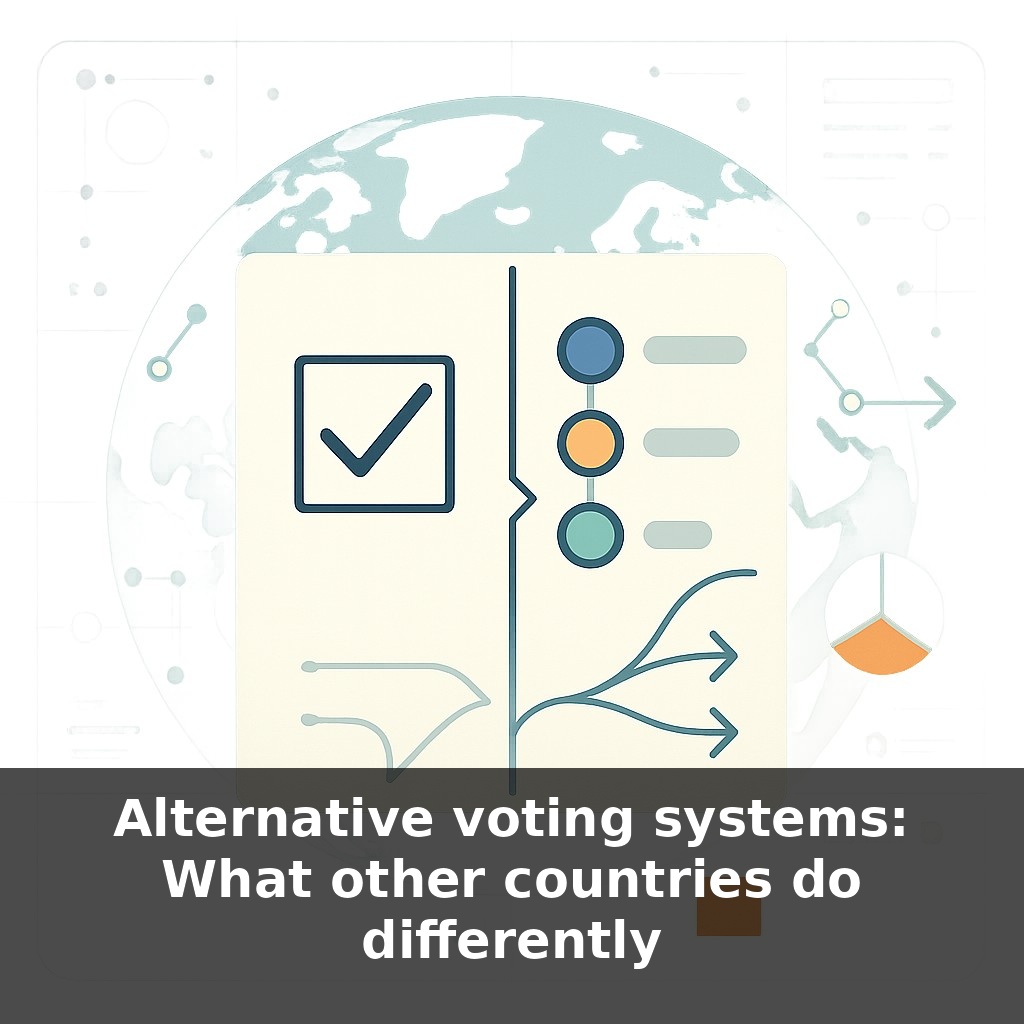
In this episode, we’ll zoom in on *how* other countries actually do it. Think of three broad “families” of rules. First, systems where each area elects several lawmakers at once, so a party’s seat share closely tracks its vote share. Second, hybrids that let you pick a local representative *and* influence the overall balance of power in parliament. Third, methods that let you support more than one option, so backing a long‑shot favorite doesn’t mean forfeiting a say in the real contest. We’ll look at New Zealand, Germany, and Ireland as real‑world test labs, not utopias, to see what trade‑offs they’ve chosen—and why.
In practice, those three “families” look less like abstract formulas and more like distinct political cultures.
Start with countries that elect several lawmakers per area. In Denmark or Spain, you don’t just send “the one winner” from your town; you help decide *which mix* of parties fills a small cluster of seats. That small change reshapes campaign strategy: parties hunt for every extra percentage point, because even a modest share can tip them into another seat. Voters, in turn, are less pressured to desert their first choice just to block their least favorite. Surveys across Europe find far fewer people saying they voted “against” someone rather than “for” someone.
New Zealand sits in the hybrid camp. Voters tick one box for a nearby representative and another for their preferred party. That second mark is the real engine: it adjusts how many total seats each party should get, then “tops up” under‑represented parties from national lists. After the 1990s shift, parties had to learn new moves. Big-tent groups suddenly needed coalition partners; smaller ones had leverage to demand policy concessions in areas like environmental rules and indigenous rights. Yet elections remained recognizably local—constituency contests still matter, they’re just not the whole story.
Germany runs a similar blend but adds an engineering twist. It routinely enlarges parliament slightly to keep the overall result aligned with the popular vote. That quirk gets headlines, but the deeper effect is on party behavior: parties know they can’t win durable power by chasing narrow geographic strongholds alone. They invest heavily in national brands, internal discipline, and long-term platforms, because they expect to negotiate governing agreements after nearly every election.
Then there are systems that change *how* you back candidates rather than *how many* are elected per area. Australia’s federal contests, for instance, ask you to number contenders in order. That encourages more civil campaigning—if a rival’s supporters might rank you second, attacking them viciously can be self-defeating. Ireland layers this structure onto multi-seat districts, which pushes parties to run multiple contenders without splitting their base. Constituents often cultivate direct links with several local politicians, knowing any of them might depend on transfers from their neighborhood to stay in office.
Across these cases, the mechanics differ, but a pattern emerges: when rules lower the risk of “wasting” a ballot, people tend to express their real preferences more openly, and parties have to get better at sharing power instead of treating elections as cliff‑edge showdowns.
In practice, these systems feel less like abstract math and more like different “house rules” that change how people play the same game. In Germany, a party like the Greens can negotiate cabinet posts and specific climate policies even if it never comes close to first place nationwide. Voters see that pattern repeat, so casting a ballot for them isn’t a protest; it’s a strategy with visible payoffs. In New Zealand, Māori and other historically sidelined groups have watched niche parties win concrete gains on issues like treaty obligations and local services—without having to become the biggest force in parliament. Ireland’s setup, meanwhile, has quietly reshaped how politicians treat their own supporters: local clinics, neighborhood meetings, and constituency casework matter because several representatives from overlapping areas are all competing to prove they’re the one who truly “shows up.” The ballot rules don’t change human nature, but they do change whose effort actually gets rewarded.
In tech terms, changing the rules is less like swapping the “skin” on an app and more like rewriting the back‑end that routes traffic. Different rules shift who even bothers to “log in” to democracy: young people, third‑party supporters, and communities burned by broken promises respond strongly when their choices start to matter reliably. As ballot‑scanning, cryptographic audits, and open‑source tally tools mature, the practical barrier to experimenting with new rules keeps shrinking. The real bottleneck becomes political will, not software.
Taken together, these rule sets hint at a practical question, not a theoretical one: what problems are you actually trying to solve—low turnout, narrow choices, brittle majorities? Other countries treat their systems like software receiving periodic updates. The next frontier is piloting those “beta versions” locally, then scaling the ones citizens actually enjoy using.
Before next week, ask yourself: “If my city switched from our current system to ranked-choice voting like in Australia, how would that change the way I’d rank the actual candidates on our last ballot—and what surprises me when I try to list them in order?” “Looking at a recent election result I care about, how might the outcome differ under proportional representation (like in Germany or New Zealand), and which party or viewpoint that’s currently ‘shut out’ would likely gain a real voice?” “If I had to explain, in 3 minutes to a skeptical friend, why something like approval voting or single transferable vote might be fairer for *our* community, what concrete local example (a split vote, a ‘lesser of two evils’ race, or a wasted third-party vote) would I use?”