About half of people say a song has given them literal chills in the past week—goosebumps, racing heart, the works. You’re on a bus, in a store, or scrolling your phone, and suddenly a single chord flips your mood. How does a vibration in the air hijack your emotions that fast?
Nine percent. That’s roughly how much your brain’s dopamine levels can jump when your favorite musical moment hits. Not from food, not from winning a prize—just from a particular chord progression landing exactly where (or how) you didn’t quite expect. In this episode, we’re zooming in on how your brain learns to *predict* music, and why those tiny games of expectation and surprise feel so big inside your body.
We’ll move from the limbic “emotion hubs” into the circuits that quietly keep score: which rhythms usually follow, which melodies tend to resolve, which harmonies mean “home” or “danger.” Over time, your playlists become a kind of emotional fingerprint. Two people can hear the same track; one feels nostalgic, the other restless. The difference isn’t in the sound waves—it’s in the predictions their brains have been training for years.
As those prediction circuits keep firing, culture quietly edits the rulebook. A suspenseful rising line in a Hollywood trailer might signal triumph, while a nearly identical shape in a lullaby means safety. Your brain tags these patterns through repetition: wedding marches, funeral hymns, game soundtracks, protest chants. Even silence gets coded—think of the breath before a beat drops in electronic music versus the hush before a string quartet enters. With each context, your auditory cortex updates its “emotional dictionary,” so the same interval or rhythm can later feel cozy, sacred, or ominous.
Your brain doesn’t just *react* to music; it constantly takes tiny emotional bets on what comes next—and updates the odds in real time.
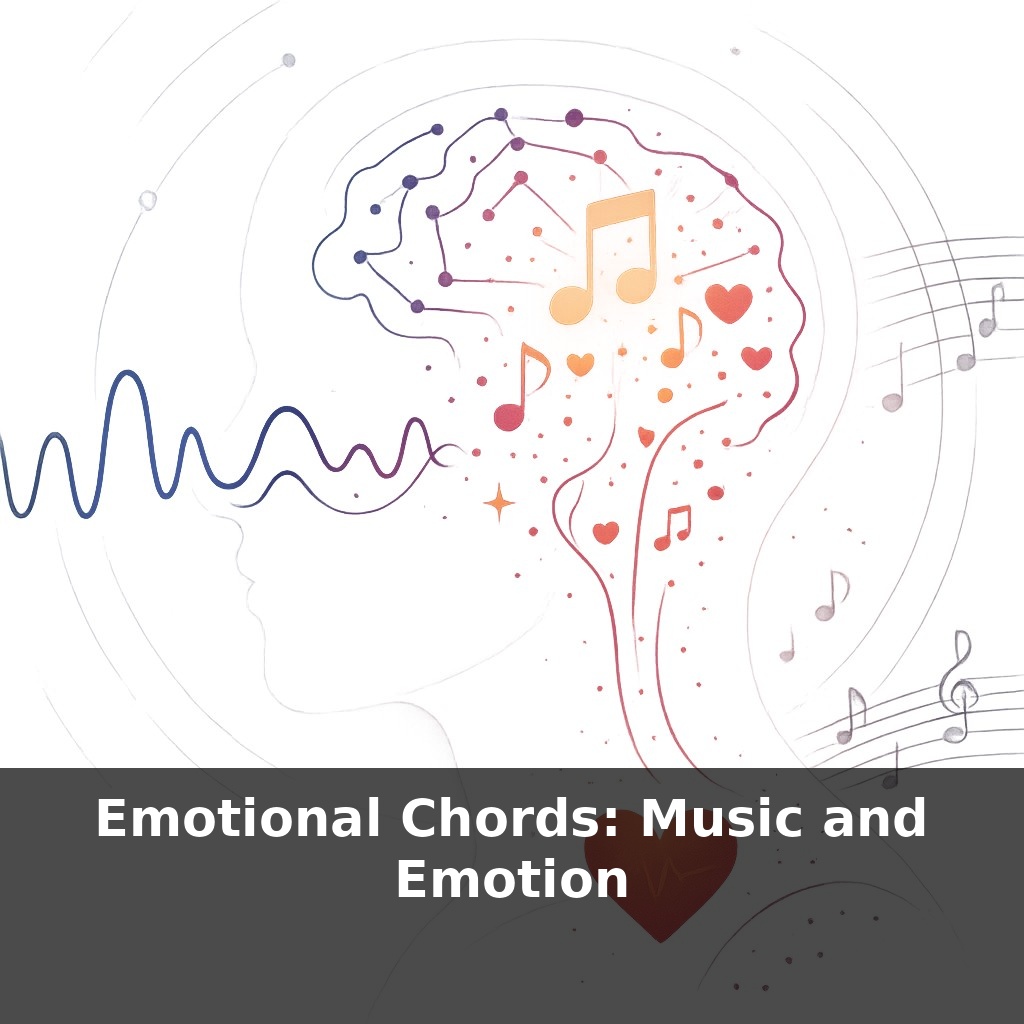
One key player is the amygdala, which isn’t just about fear. It tags sounds as important or not, fast. A sudden key change, an unexpected drum entrance, even a voice cracking on a high note can all trigger an “attention spike” there. Meanwhile, the hippocampus quietly links those sounds to memories: the synth patch that “feels like” high school, the organ tone that “smells like” your grandparents’ house. That’s why a song you’ve never heard can still feel eerily familiar—or strangely unsettling—if its ingredients echo something your memory system already filed away.
But the real emotional drama often happens in how music bends your internal sense of time. Rhythms that lock to your heartbeat can make you feel steady and grounded; push the tempo just a bit faster than your resting pulse and you get a subtle lift in arousal. Slow, sparse rhythms tend to leave more room for reflection, while dense, syncopated patterns pull your attention outward. Composers, beatmakers, and film scorers lean on this constantly: they can tilt you toward tension or calm just by shifting how tightly the groove grips your physiology.
Harmony adds another layer. Your brain gets used to certain chord “paths” through cultural exposure, so when a song lingers on a dissonant chord, or dodges the most obvious resolution, you feel that as emotional suspense. Move unexpectedly to a bright, consonant harmony and you might get relief; slide into a darker color instead and the same melody turns bittersweet. Producers exploit this with “fake endings,” deceptive cadences, or that final chord that doesn’t quite close the loop, leaving you hanging a little after the track stops.
Over years of listening, genres become emotional dialects your brain learns to speak. A distorted guitar might read as rebellion in one listener, spiritual intensity in another. Neither response is random—it’s a negotiated truce between your biology’s sensitivity to pattern and your history of what those patterns have *meant* so far.
A horror soundtrack doesn’t scare you just because it’s “creepy”; it works because your brain has learned that certain cues mean “something’s coming.” A single held high note over a pulsing low drone can feel like walking alone down a hallway where one light keeps flickering. That tension isn’t random: those sounds have been paired with jump scares in films and games so often that they now carry a forecast of threat.
Flip to a stadium anthem: a unison chant on a simple beat can weld thousands of strangers into one vocal body. Your sense of “me” blurs into “we” as your motor system, breath, and timing lock to everyone else. Protest songs, soccer chants, even nursery rhymes all use this collective synchrony to turn individual feelings into shared momentum.
And then there’s silence as a tool, not an absence. Drop everything out for a beat before the chorus and the sudden vacuum snaps your attention to full alert. That tiny gap lets your mind lean forward—and when the sound rushes back, the emotional swing hits harder than any single note could.
A 9% dopamine bump from a favorite hook is tiny compared to what’s coming. As wearables stream heart rate, sleep, and stress data, music platforms could tune songs to your body like a thermostat trims room temperature—nudging you up or down without you really noticing. That’s powerful for rehab, focus, or burnout recovery, but also for ads and politics. Your challenge this week: notice when music seems “too perfect” for your mood and ask, “Who benefits if I feel this way right now?”
So as your brain keeps “betting” on songs, it’s also quietly training you for life outside your headphones. Noticing rises and falls in a soundtrack can sharpen how you track shifts in conversations, news, or your own moods. Your challenge this week: once a day, mute the music and ask, “What emotional ‘score’ was this moment already playing?”