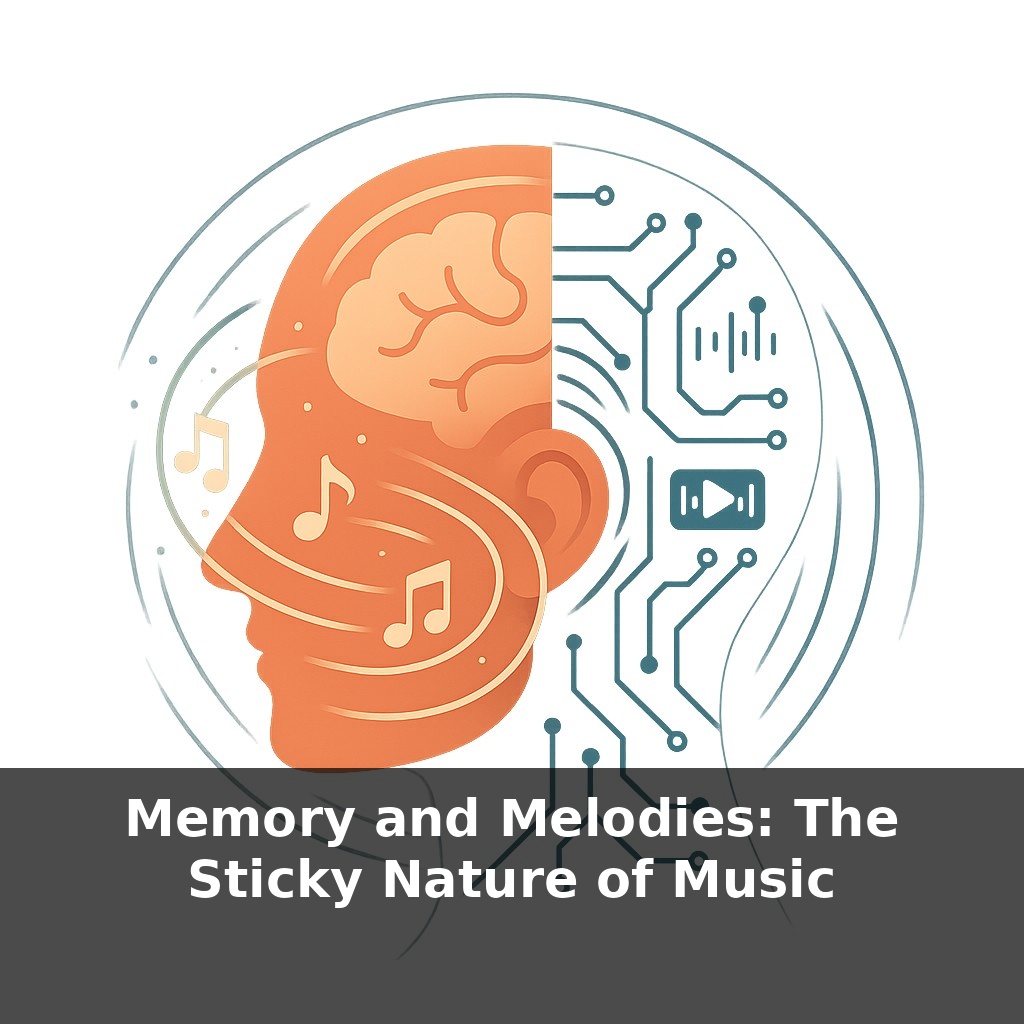
About nine out of ten people get mentally hijacked by the same thing each week—and it isn’t social media. You’re washing dishes, crossing a street, or half-asleep in bed when a tiny slice of a song barges in, repeats on loop, and refuses to leave. Why does your brain do that?
Most people treat these musical intrusions as glitches—annoying side effects of catchy songs or overplayed ads. But those stubborn snippets are actually evidence that your brain is doing something it’s very good at: spotting patterns, ranking them by importance, and keeping them close at hand. When a tune keeps resurfacing, it’s a clue that your auditory system and memory system have quietly teamed up, flagged that sound as “high priority,” and filed it near the top of the stack.
This is the same machinery that helps you recognize a friend’s voice across a noisy room or recall the rhythm of your password as you type. The short loop that won’t let go is a byproduct of a useful skill: your brain is constantly rehearsing what it thinks you might need soon. Today we’ll dig into why certain songs climb to that “front of the line” position—and how your own habits help them stay there.
But “priority” in your head isn’t random—it’s negotiated moment by moment between what you hear, how you feel, and what you’re doing. A jingle might skim past you in a busy supermarket, then later latch on while you’re walking at the same tempo or scrolling in silence. Your inner soundtrack leans toward simple, singable lines that match your pace and mood, the way your eyes gravitate to headlines instead of footnotes. And context matters: the chorus from a breakup song heard on a first date will linger very differently than one you caught in an elevator.
When researchers scanned people’s brains during one of these “stuck on repeat” episodes, they saw something odd: the machinery for hearing was active even though the room was silent. The auditory cortex was behaving as if the song were still playing out loud. Nearby, memory regions like the hippocampus were lighting up too, as if stamping this tiny musical fragment with a “don’t lose this” note.
What pushes a tune into that zone? Its structure matters. Many sticky songs sit in the same tempo band as your walking speed—around 80–120 beats per minute. That makes them easy for your body to “carry” without effort; your steps, your breathing, and the pulse of the music can quietly sync. Simple, repetitive contours help too: a clean, singable line is easier for your brain to sketch and refill later than a dense, intricate solo.
But pure simplicity isn’t enough, or every nursery rhyme would dominate your day. The hooks that cling often include a small surprise—an unexpected leap up in pitch or a twist in the harmony—followed by a satisfying return. That little jolt-plus-resolution combo tickles your reward system, the same circuitry we met when we talked about emotional chills in the last episode. Your brain treats that resolution like a mini payoff, and so it “reinvests,” replaying the phrase until it fully predicts it.
Lyrics layer on another level. Familiar words give the melody extra anchor points, tying sound to language networks. And then context quietly weights the whole package: the chorus that played during a first kiss, a hospital waiting room, or a big win at work gets bound to those feelings. Later, a single line can pull the entire scene back into view.
All of this replay changes the wiring. Each time the loop resurfaces while you’re daydreaming at your desk or staring out a train window, the connections between those auditory and memory cells strengthen. Over hours and days, the tune becomes cheaper for your brain to reconstruct than to ignore, so it keeps coming back—even when you’d rather it didn’t.
You might notice that the tunes that cling hardest aren’t your all‑time favorites, but the ones you’ve brushed past repeatedly: a chorus from your commute playlist, a game theme, a snippet from TikTok. That’s because your brain quietly tallies “recent and frequent,” not just “beloved.” Advertisers exploit this by designing ultra-short hooks that fit inside a few heartbeats, then blasting them across stores, pre‑rolls, and rideshares until they’re practically baked into your “mind‑ear.”
Context can bend what resurfaces, too. If you often work to a certain lo‑fi playlist, a single chord shape from it can pop up later when you settle into a similar posture at your desk—even if you’re in silence. Your brain has linked that sound to “time to focus,” so it preloads it.
An earworm is like a travel route your mind keeps bookmarking: walk the same musical “path” often enough—same tempo, same setting—and your brain upgrades it from scenic detour to default road, ready to re-open whenever the scenery matches.
Around 92–98% of us get musical snippets stuck weekly, so designers and clinicians are starting to treat them less as quirks and more as tools. Pairing names, faces, or rehab exercises with tiny melodic tags could help patients “bookmark” new skills, like sticking color flags in a dense book. Marketers are already nudging this further; ultra-catchy AI hooks might turn public spaces into sonic billboards. The open question is how to harness that stickiness for help, not just for profit.
Your challenge this week: when a tune pops up uninvited, don’t swat it away. Ask: what was I doing, feeling, or deciding just before it arrived? Treat it like a weather vane for your mood or stress. Over several episodes, you may notice patterns—certain riffs clustering around deadlines, long walks, or big choices—quiet cues your brain has been tracking all along.