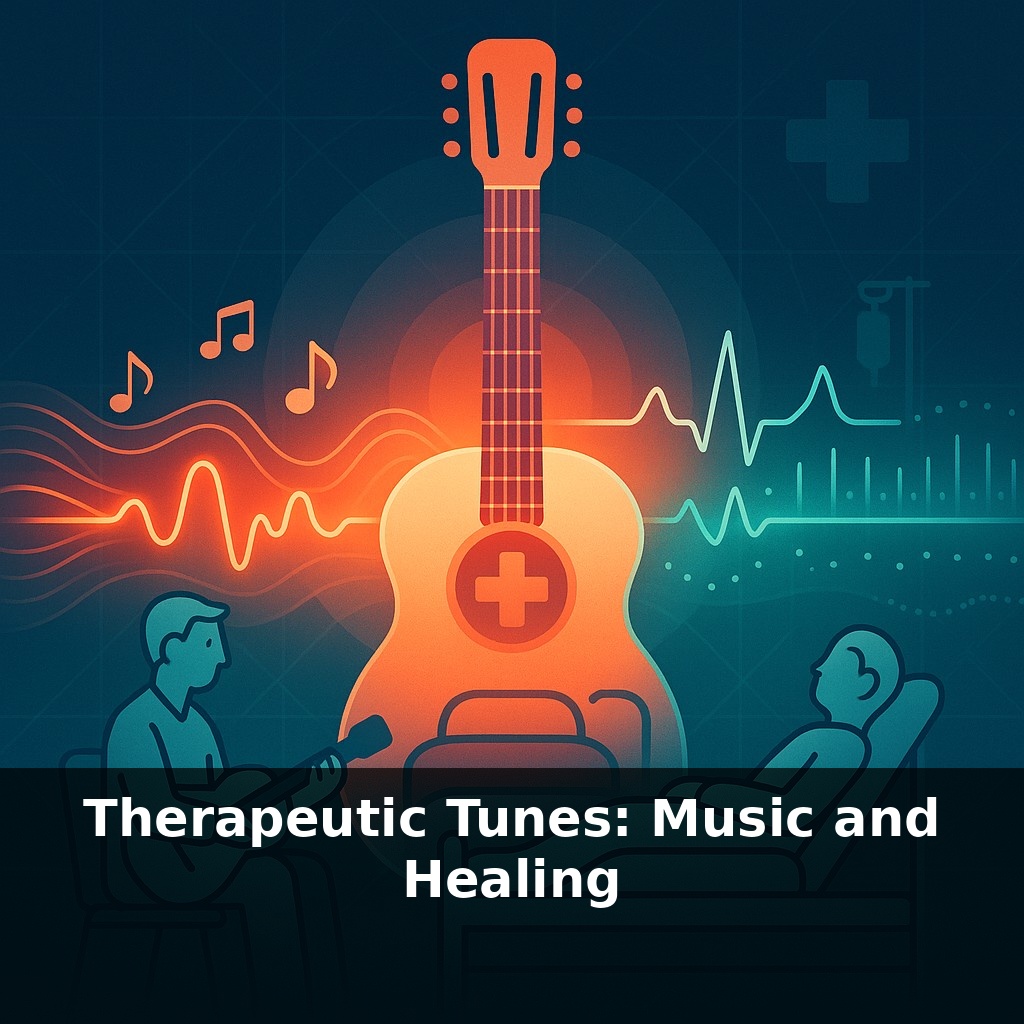
Right now, somewhere in a hospital, a therapist is treating a patient’s pain with a guitar instead of a pill—on purpose, and with data to back it up. In this episode, we’re stepping into that room to ask a simple question: how can sound act like medicine?
A 2022 analysis of patients with depression found that adding music therapy to standard treatment didn’t just nudge symptoms—it nearly doubled the improvement compared with usual care alone. And this isn’t limited to mood. Premature infants hooked to monitors, stroke survivors relearning to walk, Parkinson’s patients trying to keep their balance: across these very different situations, carefully structured music is quietly reshaping outcomes that used to belong only to drugs and devices.
In earlier episodes, we focused on how music grabs your emotions and sticks in your memory. Here, we zoom in on how those same brain circuits can be steered on purpose. Clinical music therapists don’t just “play something relaxing”; they calibrate tempo, rhythm, and even lyrics the way a physical therapist adjusts weights or reps—changing musical parameters to shift heart rate, ease breath, sharpen attention, or time each step of a fragile gait.
In hospitals, this can look almost mundane: a therapist matching a teenager’s favorite hip-hop tracks to breathing exercises, or timing a stroke patient’s steps to a metronome beat woven into a song they love. Underneath, something precise is happening. Different musical ingredients—steady pulse, predictable phrasing, emotional lift—tap into overlapping brain circuits for movement, reward, and prediction. It’s less like background music, more like a customized playlist for your nervous system, nudging it toward calmer, smoother patterns one phrase at a time.
Clinical results show three big “levers” music therapists keep pulling: rhythm, expectation, and identity.
Rhythm is the most obvious, but it goes far beyond tapping your foot. In motor rehab, therapists don’t just set a beat and hope; they tweak it session by session to match a patient’s nervous system. For someone with Parkinson’s whose steps freeze in doorways, a rhythmic cue can act like a temporary external “clock,” helping the next step happen before the brain’s internal timing slips. Over weeks, the nervous system starts to lean on that external structure less, as new, more stable timing patterns are practiced into the circuits that control gait.
Expectation is quieter but just as powerful. Music constantly sets up predictions: where the phrase will end, when the beat will drop, which harmony comes next. Each fulfilled prediction gives the brain a tiny reward hit; each gentle surprise resets attention. Therapists exploit this by shaping songs so that effortful moments in therapy—reaching higher, walking farther, tolerating discomfort—land on especially satisfying chords or choruses. The brain gets a built‑in “keep going” nudge exactly where the work is hardest. In premature infants, that same predictability and gentle surprise pattern seems to help stabilize fragile rhythms of sleep, feeding, and arousal.
Identity is the lever people underestimate. The genre, artist, even the era of the music can decide whether a session feels like “treatment” or like reclaiming part of yourself. For a depressed adult who feels flat and disconnected, using their own preferred tracks—sometimes ones that seem dark or aggressive from the outside—can be the doorway into emotion, not a barrier. The therapist might start by validating whatever the music matches in the person’s mood, then slowly introduce songs that carry a hint of energy, agency, or bittersweet hope. The shift is subtle: not forcing positivity, but widening the emotional palette the brain is willing to enter.
Taken together, these levers turn sessions into structured experiments: adjust the beat, reshape the musical “payoffs,” align the soundtrack with the person’s story, then watch—in heart-rate traces, gait videos, mood scales—as biology responds.
A good way to see these levers in action is to zoom into specific moments. In a burn unit, for instance, dressing changes can be excruciating. Some teams now bring in a music therapist who co‑creates a playlist with the patient where the most intense part of the procedure lines up with a favorite chorus. The “here comes the hook” anticipation doesn’t erase pain, but it can tilt the balance just enough that fewer sedatives are needed.
In neurorehab, a therapist might turn a dull hand‑strength exercise into a call‑and‑response drumming game. Instead of “squeeze the ball ten times,” it becomes “answer my rhythm,” and the patient’s focus shifts from effort to timing. Reps climb almost by accident.
Think of it like a smart savings plan in finance: tiny, consistent musical tweaks compound over dozens of sessions, eventually “paying out” as smoother movement, steadier mood, or shorter hospital stays—returns that are hard to get any other way.
As hospitals adopt EEG‑guided playlists and VR soundscapes, “music dose” could become as adjustable as IV flow. Algorithms might learn your nervous system the way maps apps learn traffic, nudging tension down before you even feel it. At home, smart speakers could shift from entertainment to quiet co‑therapists, weaving subtle musical cues into your routine like trail markers, steering you toward sleep, focus, or rehab goals without a single pill or pep talk.
So where does this leave you? Not just as a listener, but as a future “patient” or caretaker. The same playlists that soundtrack your commute could one day sit in your medical chart, tuned like a favorite running route: different paths for pain, focus, or recovery. The frontier isn’t louder gadgets—it’s learning how to ask better questions of your own soundtrack.
Before next week, ask yourself: “When I’m feeling stressed or low, which 3–5 songs genuinely shift my mood or calm my body, and what is it about the lyrics, tempo, or memories attached to them that seems to help?” “If I experiment with a 10-minute ‘music check‑in’ each evening—lying down, slowing my breathing, and listening to one instrumental or gentle vocal track—what changes do I notice in my body (heart rate, muscle tension, breathing) by the end of the week?” “Are there any songs or genres that actually ramp up my anxiety or sadness, and how might I gently swap just one of those tracks for something more soothing or empowering during my commute, workout, or wind‑down time?”