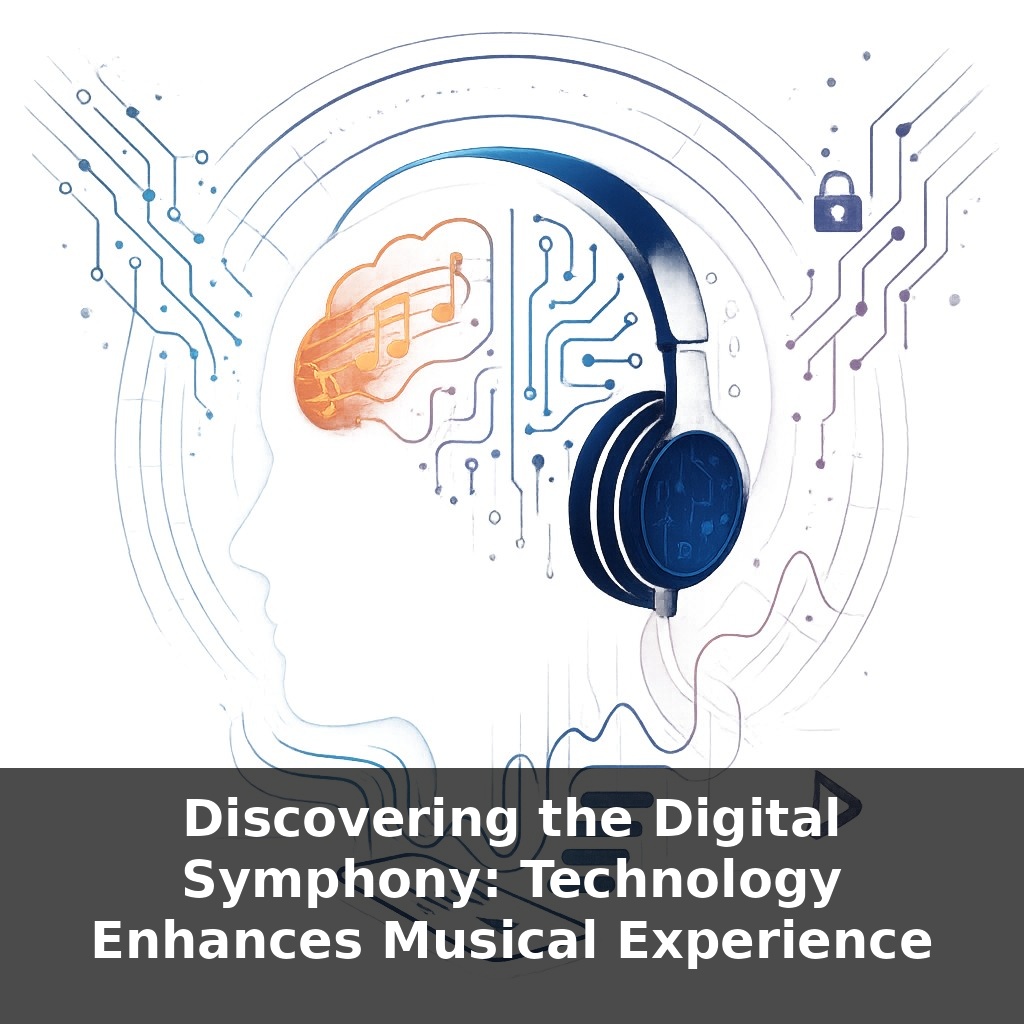
A few seconds ago, an algorithm quietly chose your next song. Not a DJ, not a friend—code. You tap play, and it feels like fate. Same mood, perfect tempo, lyrics that hit suspiciously close. Is this still *your* taste in music… or is your taste being composed for you?
Eighty‑four percent of global recorded‑music revenue now comes from streaming, yet what you “own” is barely more than a password and a history of plays. That history is gold. Every skip, replay, and late‑night listening binge feeds systems that quietly reshape what reaches your ears next. Your favorite playlist isn’t just a list of songs; it’s a living dossier on your moods, routines, and micro‑obsessions.
Meanwhile, the music itself is changing. AI tools can spit out tracks in the style of thousands of artists, and labels are signing algorithms as if they were people. Add immersive formats like Dolby Atmos, and your headphones become less a speaker and more a stage. You’re not just choosing music anymore—you’re stepping into a constantly shifting digital concert hall that has started to learn you better than most of your friends.
Now zoom out from that digital concert hall to the machinery humming behind it. Those personalized streams don’t just respond to you in real time; they also nudge entire genres, careers, and even songwriting itself. When platforms favor tracks that hook you in under 10 seconds, choruses creep earlier and intros shrink, like novels rewritten so every chapter starts with a cliffhanger. Labels study skip‑rates the way traders watch stock graphs, adjusting promotion, release timing, even track length to match the graphs’ curves. In this episode, we’ll step through how those hidden incentives quietly retune the music you love.
If you zoom in on a single song’s journey through this system, the “digital symphony” starts to look less like magic and more like a chain of negotiated compromises.
It begins in production. A lot of tracks that end up on your release radar never touch a traditional studio. They’re built on laptops with software instruments, sample packs, and sometimes AI-assisted tools that can suggest chords, drum grooves, or vocal harmonies. That doesn’t mean the human disappears; it means the human now pilots a cockpit of options far larger than any single musician could play alone. The pressure isn’t just “is this good?” but “will this survive the first 10 seconds in a feed of infinite songs?”
Next comes distribution. Once, an artist fought to get CDs onto a shelf. Now the fight is to convince digital gatekeepers—editorial teams, trending charts, recommendation systems—that a track deserves exposure. High‑bandwidth delivery means you can hear a new release simultaneously with millions of others, in lossless quality, on a phone. But the same pipes carry tens of thousands of new tracks every day. Attention, not storage, is the scarce resource.
Discovery is where your brain and the code really start dancing. That quiet handoff from one track to the next is informed by a huge network of behavioral patterns: people who replay this late at night also tend to like that; listeners in your city are looping this new ambient record; fans of a niche subgenre are suddenly clustering around an artist in another country. One click on a friend’s shared link can send you down a path that thousands of others will later follow, because the system noticed you stuck around.
Perception itself is being tuned. Spatial mixes, adaptive volumes, and smart crossfades make transitions feel almost cinematic. Some wellness apps generate soundscapes on the fly, altering tempo and texture based on time of day or even biometric data. The boundary between “song” and “sound environment” starts to blur as certain tracks are designed less as narratives and more as tools—to help you focus, sleep, or stay in a flow state.
And hovering underneath all of this is a messy economic question: when a single tap can trigger payments to songwriters, performers, labels, and platform owners across borders, who actually wins from your next three minutes of listening?
OpenAI’s Jukebox hints at one extreme: type in a style, mood, or even a fictional artist, and you can summon minutes of “new” music that no human ever played. At the other extreme, apps like Endel quietly sculpt endless soundscapes around your heart rate, weather, and calendar, never repeating the same track twice. Between those poles sit artists who study platform dashboards as closely as practice scales—tweaking release days, cover art, and even song keys after watching which experiments travel furthest through recommendation feeds.
Dolby Atmos adds another twist. A pop song can ship in one version for phones, another mixed so backing vocals hover above you on high‑end headphones, and yet another tuned for cars, where bass is king. When labels see that immersive versions keep people listening longer, future tracks may be written with “where will this float in 3D space?” in mind. In a sense, songs are becoming portfolios of variants—different “edits” optimized for workouts, study sessions, or late‑night drives—each one waiting for the right context to surface.
As soundscapes start reacting to your pulse, commute, and mood, the question shifts from “What do you want to hear?” to “How much control do you want to hand over?” Curation might feel less like browsing shelves and more like walking through weather you partly chose. We may soon “tune” our day the way we adjust lighting at home—crisper for focus, warmer for calm. But when every moment can be sonically optimized, quiet itself becomes a rare luxury worth protecting.
Your digital listening life is edging toward a kind of sonic “credit score”: patterns from your workouts, commutes, even sleep sessions can feed future soundscapes. As more devices listen back—cars, TVs, wearables—music may trail you like a custom climate system. The open question is how often you’ll step outside that comfort zone on purpose.
To go deeper, here are 3 next steps: 1) Explore interactive listening by opening the NY Phil’s “Digital Archives” or the Berlin Philharmonic’s “Digital Concert Hall,” then pick one piece you love and follow along with the on‑screen score or multi‑camera angles to notice details you’d normally miss. 2) Experiment with AI‑assisted music creation using a free tool like Soundtrap or BandLab: load one of their sample loops, then let the AI suggest harmonies or drum patterns and tweak them until it feels like *your* mix. 3) Read a chapter of David Byrne’s *How Music Works* or Craig Anderton’s *The Musician’s Guide to Recording* while you have a streaming platform open, pausing to immediately try one production or listening tip they mention on a track you already know.