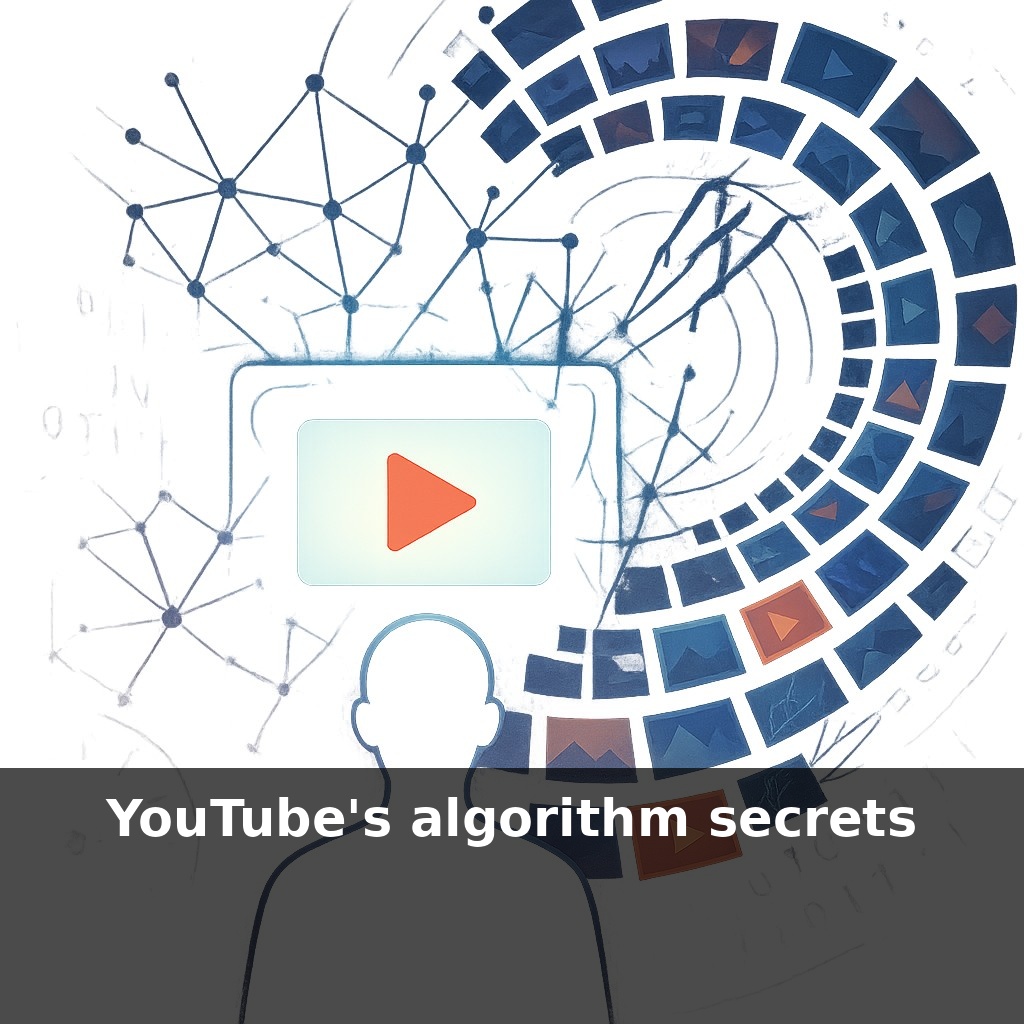
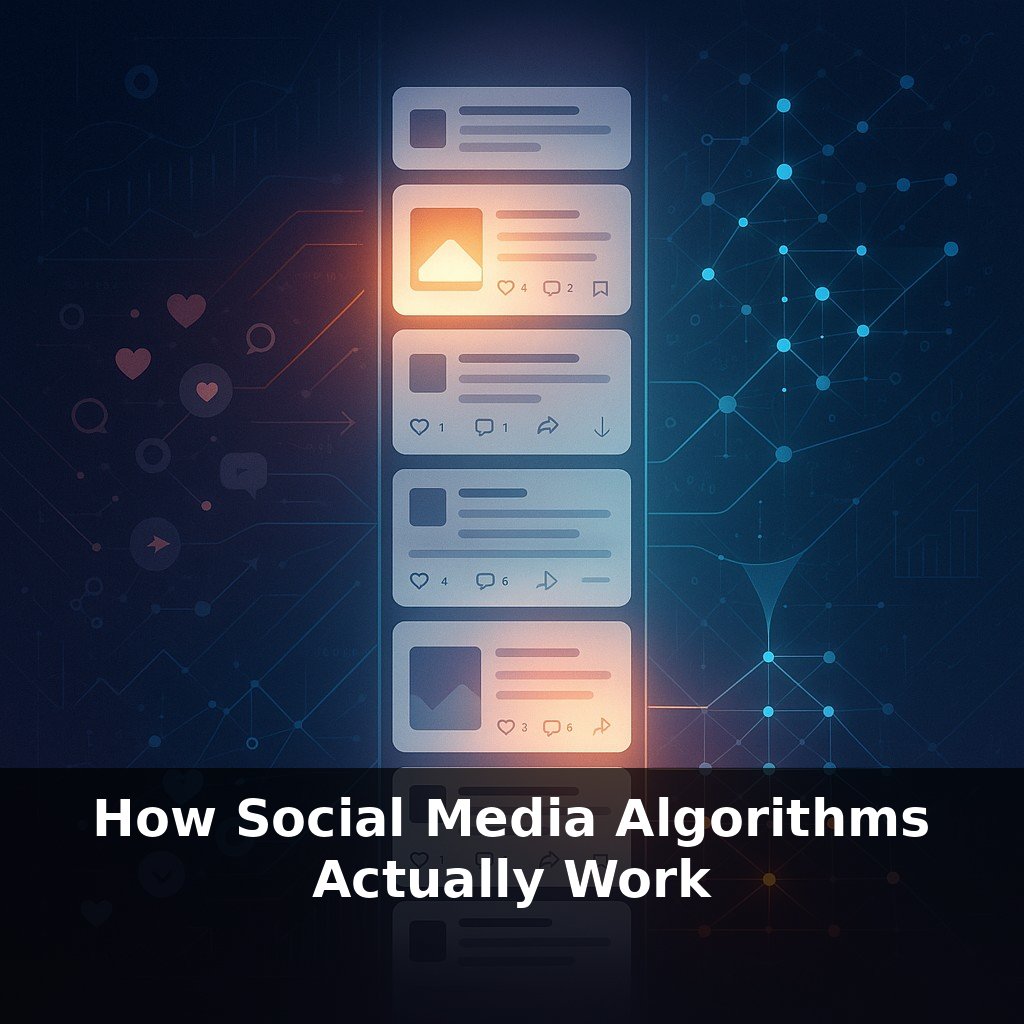
Right now, most of the videos people watch on YouTube are chosen by a system nobody can see. You tap one harmless clip… and suddenly it’s two hours later. In this episode, we’re going to trace that invisible path and ask: who’s really choosing your “next up” — you, or the machine?
Over 70% of what people watch on YouTube doesn’t come from search; it comes from recommendations the system quietly lines up for you. That means most of your “choices” are actually responses to options you never decided to see in the first place. And those options aren’t random. Behind every suggested clip is a prediction: not just “will you click?” but “how long will you stay, and what will you watch after this?”
This is where YouTube stops being a simple video site and starts acting more like a long-term strategist, optimizing your entire viewing session rather than any single play. It studies tiny patterns most of us never notice—how fast you scroll, which thumbnails you pause on, when you tend to quit the app—and updates its strategy in real time. In this episode, we’ll unpack how those predictions are built, why watch-time became the key metric, and how that decision quietly reshaped both YouTube’s business and the videos creators make for you.
To understand what’s really happening, we need to zoom out from “You clicked a video” and look at how YouTube treats your entire visit as a long, evolving story. Behind the scenes, it isn’t just lining up random candidates; it’s juggling different goals at once: keeping you interested now, tempting you with something slightly new, and avoiding suggestions that might make you bail altogether. One moment it favors safe, familiar channels; a few minutes later it may test something unexpected, like a genre you rarely watch, just to see if your tastes are shifting in real time.
Zoom in one layer, and you hit the first big machine: candidate generation. For every moment you’re on YouTube, this stage scans through billions of possibilities and pulls out just a few hundred that might plausibly fit “you, right now.” It leans heavily on your past behavior—channels you return to, topics you binge on, even how your tastes differ from people who look similar on paper. It also taps into what’s trending broadly, so if a major event is unfolding, related videos suddenly become more “eligible” for your shortlist.
But that shortlist is still way too big. So the second machine—ranking—takes over. This is where the system stops asking “could you watch this?” and starts asking “how likely are you to feel this was worth your time?” It layers in signals you never explicitly give: whether you usually finish videos from this channel, if you tend to abandon a certain style of thumbnail, whether similar viewers came back to YouTube more often after watching a particular creator.
To calibrate that sense of “worth it,” YouTube doesn’t just look at engagement; it quietly samples your mood. Post-watch surveys—those little “Are you satisfied with this recommendation?” or “Is this video valuable?” pop-ups—feed labels back into the model. A video with modest views but very high satisfaction scores can be pushed more aggressively, while a viral clip that leaves people feeling misled can have its reach throttled over time.
The system also experiments constantly. It will slip in a risky candidate—an unusually long documentary, a niche tutorial, a language you don’t usually watch—to test if your habits are shifting. If enough people with your pattern respond well, that style of content gets a statistical “green light,” and creators who make it may see sudden growth they can’t quite explain.
Crucially, this isn’t one global brain deciding what’s “good.” It’s millions of tiny, personalized bets. Two viewers who both watch tech reviews may be steered in completely different directions: one deeper into polished product breakdowns, the other toward scrappy teardown channels and engineering explainers. The same upload can behave like a blockbuster for one cluster of viewers and background noise for another, because the ranking system is tuned to your likely reaction, not some universal notion of quality.
Creators feel this system most when a single upload behaves like three different videos at once. Post a 3-minute clip, and one cluster gets it on the home page within minutes, another only via Shorts remixes a week later, and a third barely sees it unless they search your channel directly. Same file, three distribution curves.
You can watch this in action with breaking news versus deep-dive explainers. A 2-minute “what just happened” recap might spike instantly, then fade. A 45-minute analysis on the same topic may smolder quietly, then catch fire weeks later as the model discovers a niche audience that finishes long-form content on similar subjects.
Here’s where it gets stranger: your off-platform life can echo inside YouTube through timing alone. Search for a product on Google, then open YouTube that evening, and you’re more likely to see adjacent categories—reviews, “best of” lists, teardown videos—surfacing near the top, even if you never typed that product’s name into YouTube itself.
Lawmakers and researchers are now probing *who* gets surfaced by this system: do small creators and minority voices get buried when models lean too hard on “more of the same”? Regulators in the EU and elsewhere are pushing “meaningful choice,” like feed filters that emphasize recency or subscriptions over opaque ranking. For creators, this nudges a shift from pure click appeal toward building loyal niches—more like a touring band cultivating true fans than chasing one viral hit.
The real tension is that this system isn’t just reacting to your taste; it’s quietly training it. Niche hobbies can snowball into full-blown obsessions, while other interests fade like songs you stop replaying. Your challenge this week: each time a recommendation feels oddly “perfect,” pause and ask, “Did I choose this lane, or did I just stop noticing the exits?”