A century ago, a single dollar could buy a week’s worth of groceries. Today, that same paper bill barely covers a quick snack. You’re earning more, prices are higher, yet your life doesn’t feel richer. How can everyone make “more money” while feeling like they have less?
Here’s the twist: prices don’t just rise randomly—they move in patterns that quietly reshape your daily choices. When rent, food, and transport all creep up together, you might skip dinners out, delay a trip, or put off a big purchase. That’s inflation reshuffling your priorities, even if your paycheck grows on paper. Businesses react too: a café might shrink portion sizes instead of raising the sticker price, or a streaming service might add a “premium” tier while making the basic one less attractive. Governments and central banks watch these shifts through data like the CPI and wage reports, then adjust interest rates or taxes in response. In other words, what looks like “just higher prices” is really a tug‑of‑war between households, companies, and policymakers over who absorbs the squeeze—and who quietly passes it on.
Now zoom out from your own wallet. Inflation also reshapes how whole generations behave. When everyday prices climb faster than pay, younger people may delay milestones—moving out, having kids, buying homes—because long‑term commitments feel riskier. Older savers, watching fixed incomes stretch less each year, might cut back on travel or gifts. Businesses, too, rethink plans: a factory upgrade, a new store, or extra staff all look different when tomorrow’s costs are fuzzy, like planning a road trip with gas prices changing every few miles. That uncertainty, not just higher prices, is what really unnerves an economy.
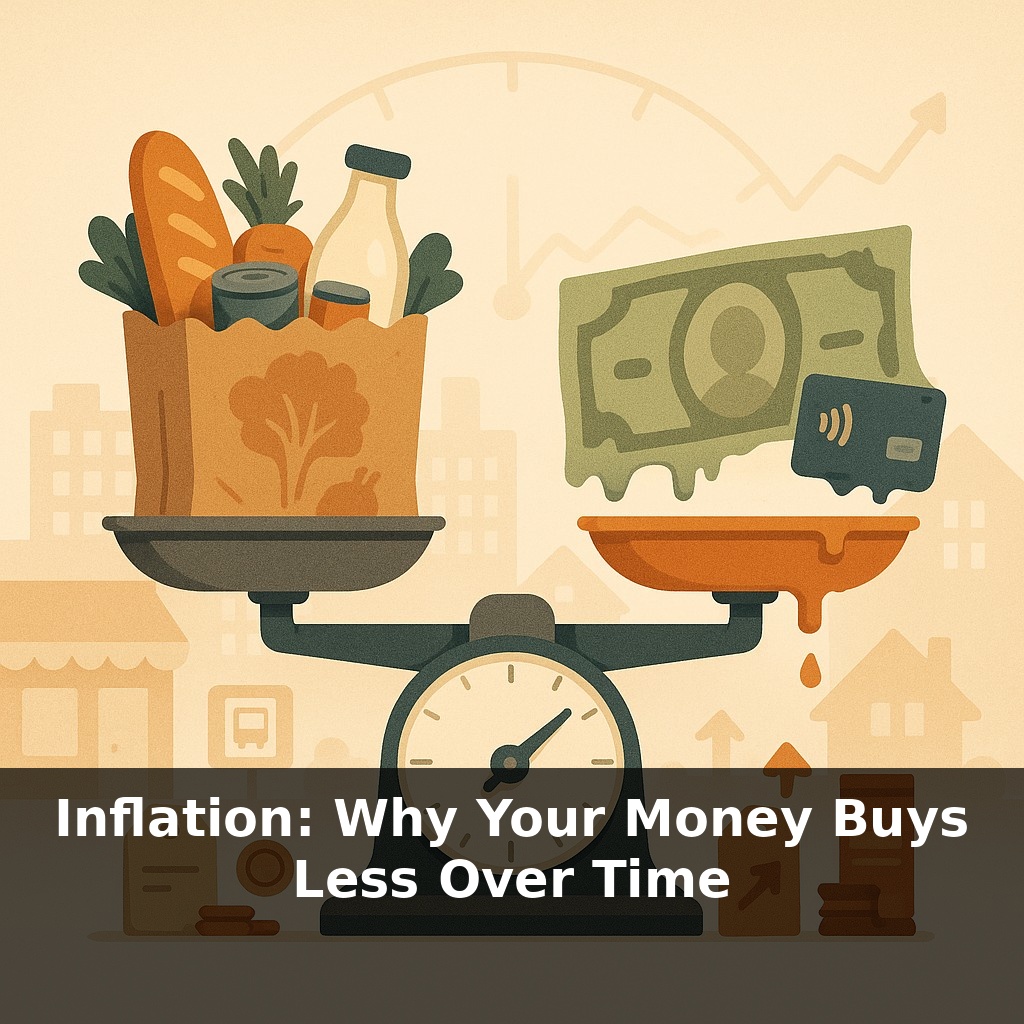
A $1 bill from 1913 has the same ink, the same basic design, the same promise from the U.S. government—but it buys about 1/13th of what it used to. The paper didn’t shrink. The number “1” didn’t change. Yet its power in the real world quietly dissolved.
To see why, follow where newly created money actually flows.
When credit is easy and money is cheap, households swipe cards more freely and firms borrow to expand. That extra spending often hits certain sectors first—housing, education, healthcare—pushing those prices up faster than the official average. That’s why your rent may rocket while your streaming bill barely moves. The overall number moves slowly, but your personal “inflation rate” can feel brutal.
On the production side, firms face their own squeeze. Energy spikes, shipping snarls, or a weak currency can all raise their costs. Some companies pass this through openly with higher price tags. Others respond more quietly: smaller packages, lower-quality ingredients, fewer customer‑service staff. You’re paying roughly the same, but getting less value. Economists call it “shrinkflation” or “skimpflation”; you just experience it as a slow downgrade of everyday life.
Expectations add another layer. If workers think prices will keep climbing, they push for cost‑of‑living adjustments. If businesses think their suppliers will hike prices, they preemptively raise their own. This can create a feedback loop: expectations of higher inflation help bring higher inflation into being, even if the original shock fades.
Policy choices can amplify or dampen all of this. A government running big deficits during a boom risks pouring fuel on an already hot economy. A central bank that keeps money too loose for too long can let asset prices—stocks, houses, crypto—outrun incomes. That feels great on the way up, until younger or poorer households find that the “entry ticket” to wealth has moved out of reach.
Your own balance sheet sits right in the crossfire. If your savings sit in cash while prices rise faster than your interest, you’re quietly taxed. If you owe a fixed mortgage and your income keeps pace with prices, your debt shrinks in real terms. The same inflation that punishes one side of a contract can reward the other, redistributing wealth not by law or vote, but by math.
A grocery receipt tells this story better than any chart. In 2020, you might have filled a cart with chicken, rice, eggs, and vegetables for $60. A few years later, you buy almost the same list and it’s $85—so you swap branded cereal for store brand and skip dessert. Nothing dramatic, but your “standard” quietly shrinks. Restaurants do a similar dance: a burger that once came with a side now costs extra, or a lunch special disappears. Airlines drop free snacks, then charge for seat selection, then add “fuel surcharges” when costs jump. Each move is small, but together they shift how far your paycheck stretches in daily life. Over time, you adapt without quite noticing: you drive a bit less, share subscriptions, buy used instead of new. Now flip it: landlords with fixed mortgages might raise rents faster, not just to cover higher expenses, but because they sense tenants have adjusted to rising numbers. Your adaptation becomes their signal to push a little further.
Aging societies may lean toward slower price drift as retirees spend differently from younger workers, yet shocks from climate damage or trade rifts can still jolt bills at the gas pump or supermarket. Digital cash issued by central banks could act like a thermostat, letting officials “tune” money conditions more finely—but a misstep might overheat or chill activity. For households, learning basic hedges—like inflation‑linked bonds or smarter wage talks—becomes part of financial self‑defense.
Think of this as learning the “exchange rate” between your time and the world around you. Instead of fixating on headlines, you can track the trend in your own staples: rent, transit, groceries, childcare. That personal map lets you choose which goals to defend first, which luxuries to pause, and when it’s worth trading convenience today for resilience tomorrow.
Before next week, ask yourself: 1) “If everyday prices keep rising like this for the next 5–10 years, which 3 expenses in my life (like rent, groceries, childcare, subscriptions) are most at risk of squeezing my budget, and what could I realistically change about each one starting this month?” 2) “Looking at my checking, savings, and any investment accounts today, where is my cash actually losing value to inflation (for example, just sitting in a low-interest account), and what specific move could I make this week to shift a portion into something that at least has a chance to outpace inflation?” 3) “If my income stayed flat while inflation kept creeping up, what concrete skills, side income ideas, or career moves could I begin exploring now so I’m not relying only on ‘cutting back’ to cope with higher prices?”