Tonight, your blood sugar can change before you even touch a fork. One bad sleep or a stressful argument is enough to nudge it up, quietly, in the background. So here’s the puzzle: if food isn’t the only trigger… how much of your prediabetes is coming from your pillow?
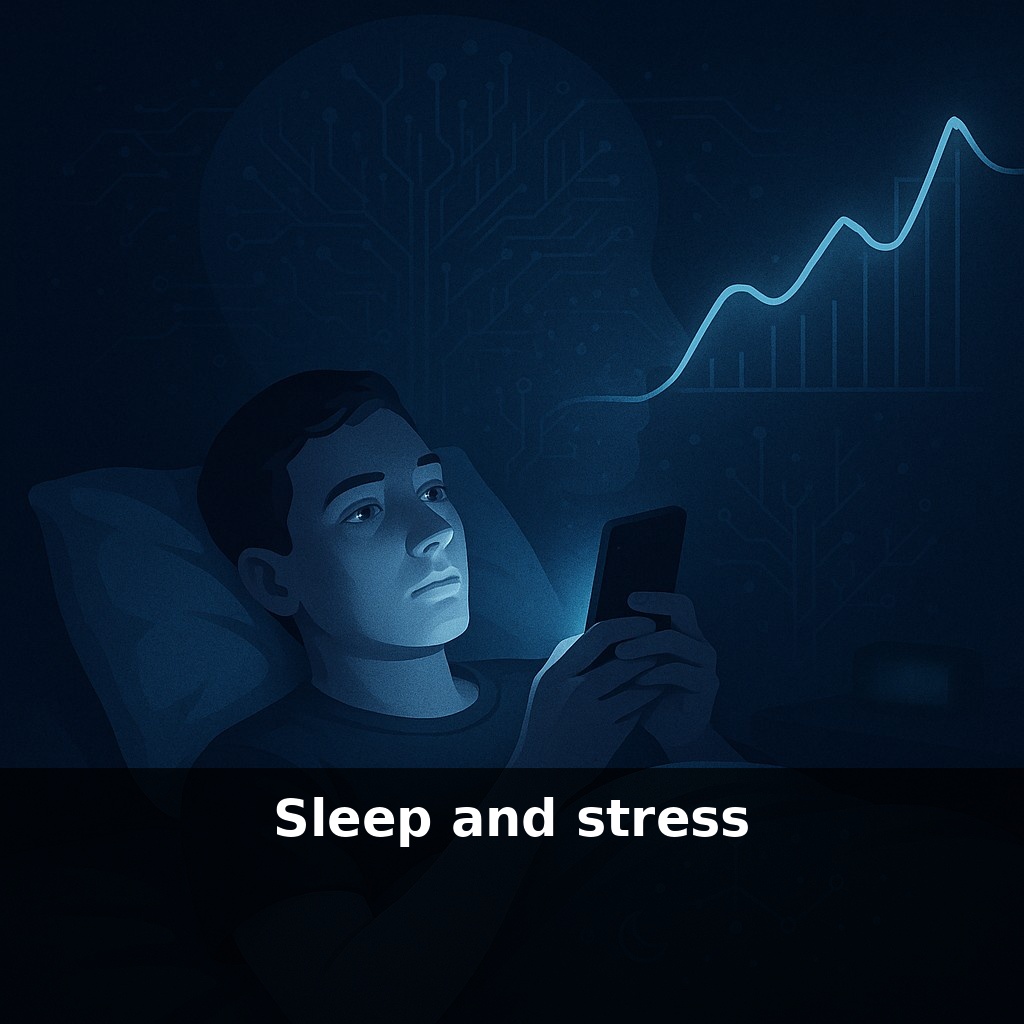
Here’s where it gets sneaky: your body can “look” calm while your biology is wide awake and on edge. You might be lying in bed, lights off, scrolling your phone, thinking you’re winding down—but your brain is getting daylight-level stimulation, your stress systems are humming, and by morning your labs can look like you ate a dessert you never touched.
This is where routines, not willpower, start doing the heavy lifting. Think about musicians: the best performances are boringly rehearsed backstage long before the spotlight. In the same way, the hour before bed and the way you “close” your day emotionally are quiet levers that can shift your numbers.
In this episode, we’ll dig into how technology, habits, and tiny environment tweaks can nudge your sleep and stress into a range where your metabolism finally cooperates with you.
So instead of obsessing over macros or step counts, we’re going to zoom out and look at the “control room” behind your numbers: your 24‑hour rhythm. Light, timing, and tension all feed into that system. The same phone that keeps your brain on high alert at midnight can, if used differently, coach your breathing, dim your lights, and cue your brain that it’s safe to power down. Think of this as designing a nightly “landing pattern” rather than hoping to crash‑land into rest. We’ll explore how to use apps, wearables, and tiny habit tweaks to quietly retrain that rhythm in your favour.
Here’s where the data gets uncomfortably concrete. Two nights of 4 hours sleep can slash whole‑body insulin sensitivity by about 25%. That’s not “a bit tired”; that’s your muscles and liver reacting as if you suddenly moved several steps closer to Type 2 diabetes—after a single bad weekend or a couple of late‑night Netflix binges.
What’s worse is how ordinary this pattern looks from the inside. You stay up late a few nights to meet a deadline, grab an extra coffee or two, maybe feel a bit wired but “fine.” Under the hood, cortisol is elevated, your sympathetic system is pressing the gas pedal, and your pancreas is working harder just to get the same glucose response. You might only see it as a slightly higher fasting glucose—5–15 mg/dL—but your biology sees it as a new normal.
Now layer in chronic stress. Arguments that never quite resolve, a boss who messages at 10 p.m., constant news scrolling—each of these is a tiny nudge to your glucose, your blood pressure, your sleep depth. Over weeks, those nudges accumulate into a very real HbA1c shift. That’s why structured approaches like Mindfulness‑Based Stress Reduction can move HbA1c by 0.5–0.7% in just 8 weeks. You’re not “thinking positively”; you’re literally changing hormone patterns and nerve activity often enough that your average 3‑month glucose shifts.
Timing matters too. Shift workers, whose sleep and meals are constantly misaligned with daylight, have a 30–40% higher risk of developing Type 2 diabetes. It’s not only what they eat on night shift; it’s that their internal clocks never get a stable signal. Meals land when melatonin is high and insulin action is blunted, so the same food leads to more glucose exposure.
Even within “normal” schedules, both short sleep and regularly sleeping in very late or very long tend to show up as poorer glucose tolerance. The sweet spot—7–9 efficient hours at roughly the same times each day—lines up with the best β‑cell responsiveness in most studies. Your pancreas essentially anticipates when it needs to be sharp.
One useful way to think about this: high‑quality sleep is like updating medical software on a clinic’s computers overnight, while unmanaged stress is the background process that keeps crashing the system. You can run the clinic on outdated, buggy software for a while, but errors multiply—and eventually, lab results (like your fasting glucose and HbA1c) start reflecting the chaos.
Think of three very different evenings.
In the first, you’re answering “just one more” work message in bed. Your jaw is clenched, shoulders raised, mind rehearsing replies. You fall asleep late, wake up groggy, and need stronger coffee and sweeter snacks just to feel normal. You might not connect that chain to tomorrow’s lab result—but your numbers will.
In the second, you stop screens 45 minutes before bed, set your phone to Do Not Disturb, and use a breathing app for 5 slow minutes. You still have deadlines, but you’ve put a fence around when they’re allowed into your nervous system. Over weeks, you notice fewer 3 a.m. wake‑ups and less afternoon crash.
In the third, your schedule is chaotic—late workouts some days, heavy dinners at 10 p.m. on others, weekend sleep shifted by hours. Nothing feels “wrong,” yet your energy is unpredictable.
These aren’t moral choices; they’re inputs. Tech can keep frictionless access to stress… or act like a dimmer switch you design on purpose.
Insomnia apps, smart alarms, and work chat all tug on the same limited resource: your attention before bed. The future twist is that your devices will argue back. A watch that’s seen three late nights and a rising glucose trend may dim notifications like a stage manager killing the house lights before a performance, nudging you toward quiet. As these nudges personalize, “sleep hygiene” stops being a poster on a clinic wall and becomes something your tech quietly defends in real time.
Your nights don’t need to be perfect; they just need to be more predictable than chaotic. Think of tonight as a tiny vote for the biology you want three months from now. Your challenge this week: pick one lever—bedtime, light, or a 5‑minute wind‑down—and treat it like a non‑negotiable meeting with your future lab results.