Right now, more than two-thirds of all humans carry a device that can ping any corner of the planet in seconds. Yet a delayed shipment in one small port can still empty shelves in cities you’ve never seen. How did “far away” become “right here” without most of us noticing?
Globalization isn’t just about goods racing across oceans; it’s about expectations racing across minds. A teenager in Lagos and one in Lisbon might scroll past the same meme, want the same sneakers, stream the same song—then step outside into entirely different job markets, prices, and politics. That gap between shared desires and unequal realities is one of globalization’s quiet pressure points.
At the same time, power is shifting in less visible ways. When a messaging app update in California changes privacy settings, protest organizers in Tehran, farmers in India, and nurses in Brazil may all feel it overnight. Decisions made in corporate boardrooms and distant parliaments ripple outward like a sudden change in the wind, forcing millions to adjust course whether they voted on it or not. Understanding globalization means tracing those ripples—who sends them, who rides them, and who gets pulled under.
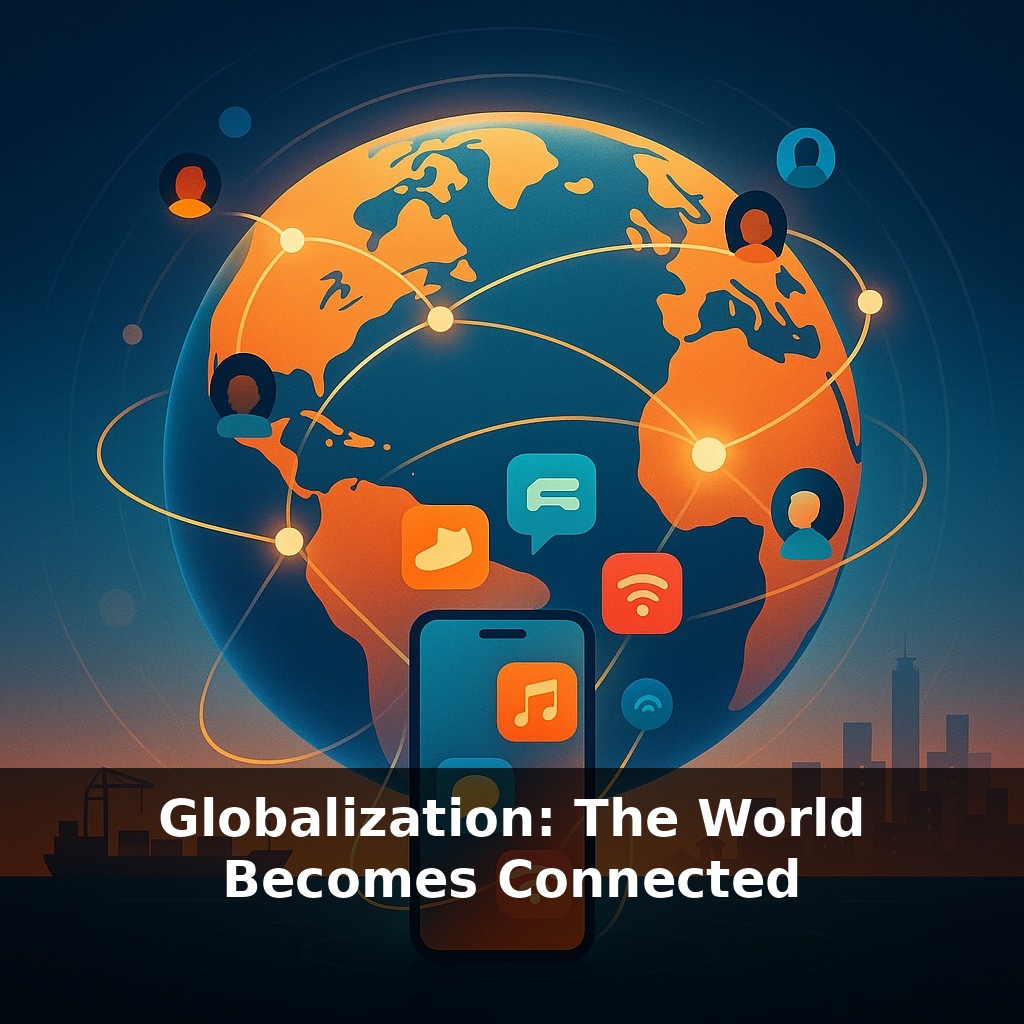
That web of connections rests on a few powerful channels: trade, money, people, and information. Cargo ships move more than products; they carry entire business models, from fast fashion to just‑in‑time manufacturing. Financial flows mean a pension fund in Canada might bankroll a factory in Vietnam. Migrants don’t just send remittances home; they bring back skills, habits, and political ideas. And every tap on a screen helps platforms map our desires, then sell those insights worldwide, like a chef testing one new spice in millions of kitchens at once.
Follow the threads a bit further and the picture gets stranger. Those trade, money, people, and information channels don’t grow in a straight line; they surge, stall, and sometimes snap. The late 19th century saw steamships, telegraphs, and mass migration knit continents together so tightly that many elites assumed war between great powers had become “impossible.” A few decades later, two world wars and the Great Depression shattered that confidence. Borders hardened, tariffs spiked, and millions discovered that being plugged into global markets could mean importing crises as easily as prosperity.
What feels new today isn’t connection itself but the speed and density of it. When world merchandise trade hits tens of trillions of dollars, and foreign investment towers at a hefty share of global GDP, the scale alters politics at home. Factory towns can rise on a wave of export demand—then struggle when a cheaper producer appears on the other side of the planet. Voters blame “foreigners,” “globalists,” or distant institutions, but the real story is usually buried in long supply chains, procurement algorithms, and tax rules shaped by years of quiet lobbying.
Meanwhile, migration and remittances quietly rewrite family strategies. A nurse in Manila or a construction worker in Dakar doesn’t just send money home; they influence what relatives study, which news sources they trust, even which politicians they believe will keep borders open. Those flows are now larger than all formal aid, which means development plans made in national capitals must reckon with millions of private decisions made in kitchens and dorm rooms abroad.
Culture travels on these routes too—but not as a one-way stream. English may dominate web content, but most of the growth now comes from other languages, turning the “global” internet into a patchwork of overlapping communities. Music, gaming, fashion, and food keep mutating as they cross borders: a Korean beat, Nigerian rhythm, and Brazilian dance challenge can merge into a single viral trend. Instead of one global monoculture, you get countless hybrids, each mixing pride and anxiety: pride in visibility, anxiety about dilution.
Here’s your challenge this week: pick one ordinary object you use every day—your T‑shirt, your phone case, your breakfast cereal—and trace it back as far as you realistically can. Check the label, the brand’s website, customs data if it’s public, even news stories about where key components come from. Each day, add one more layer: the raw materials, the design decisions, the financing behind the company, the ports or data centers involved. By the end of seven days, write a short note to yourself answering two questions: which part of that chain surprised you most, and where in that chain do you personally carry risk—price spikes, shortages, lost jobs, or new opportunities?
A good way to see these forces up close is to watch how one choice in one place rearranges lives in others. When a streaming platform bets on a low‑budget series from Seoul or Madrid and it explodes in popularity, suddenly subtitling firms in Cairo hire overnight, fashion brands in Los Angeles rush to copy outfits, and tourism boards scramble to market filming locations. None of those players sat in the same room, yet their fortunes knot together around a storyline that didn’t even exist a few years earlier.
Something similar happens when a food trend takes off. A viral recipe using a particular spice or grain can nudge farmers in Ethiopia, packaging firms in Poland, and delivery riders in Jakarta into a new, shared rhythm of work. The trend may fade, but the loans taken, skills learned, and expectations raised often remain. Like a shift in weather that starts as a barely noticeable breeze, small changes in taste, policy, or technology can grow into storms that rearrange entire regional economies.
Borders may look fixed on a map, but in practice they’re getting blurrier and stricter at the same time. Data, design, and services hop borders like steam, even as governments add new rules on chips, carbon, and content. Think of cities acting like experimental kitchens: one tweaks work visas, another tests digital taxes, a third offers “nomad” visas. Over time, those policy recipes spread, favoring places that blend openness with shock absorbers for workers, local culture, and the climate.
Global ties aren’t just “out there”; they’re in your rent, your playlists, your grocery bill. Policies on carbon, chips, or visas can nudge what shows up on your plate as surely as a new recipe does. The open question is how much say you’ll have in those menus. Paying attention to where your options come from is the first step to reshaping them.
Start with this tiny habit: When you check the news on your phone, tap once into the “World” or “International” section and read just one headline from a country you usually ignore. Then, take 10 seconds to say out loud how that story might connect—even loosely—to your own life (your job, the products you buy, or the tech you use). If you shop online today, scroll to the product details and notice where just one item was made, then imagine the journey it took to get to you. This tiny pause is enough to start training your brain to *see* globalization instead of letting it stay invisible in the background.