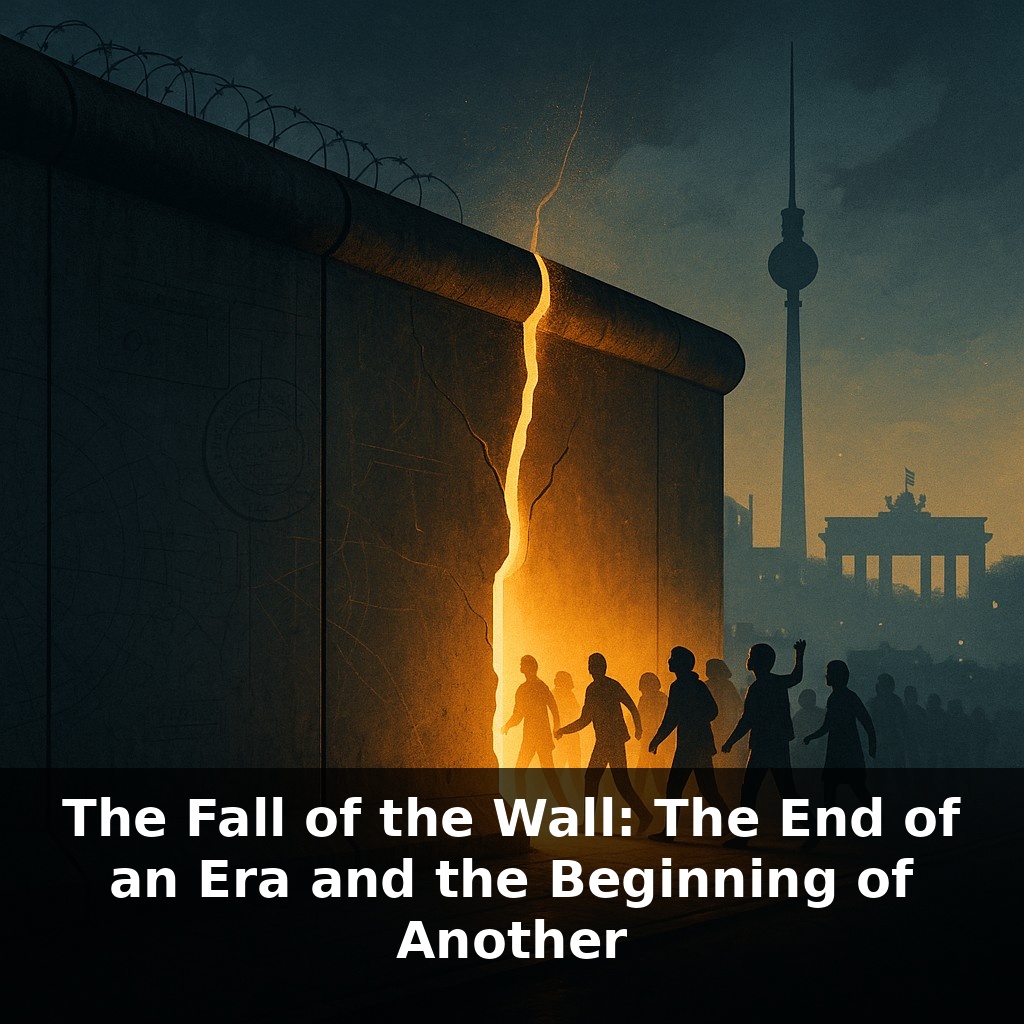
A concrete wall, wired with alarms and guarded by rifles, once split a single city so deeply that families on opposite sidewalks were treated as citizens of different worlds. One cold November night, a confused press conference turned that silent border into a roaring human river.
For decades before that November night, the Wall’s concrete was backed by something less visible: a system running on fear, paperwork, and secrets. East Germans needed permits to travel, special stores to buy Western goods, and often a quiet agreement not to ask too many questions. Yet by the late 1980s, hairline cracks were forming. Western TV beamed across living rooms like a forbidden second opinion. Factory shelves emptied while leaders still promised a bright socialist future. And in churches, on Monday evenings, citizens started gathering with candles and slogans instead of weapons. The Wall still stood, but its story was slipping out of the government’s control. When neighboring countries loosened their borders, thousands of East Germans quietly tested the exits, turning side doors and back roads into a growing vote of no confidence.
Leipzig’s marches swelled first by dozens, then thousands, like a weekly rehearsal for a future no one dared name. Police still ringed the streets, but orders grew hesitant; no one wanted another Tiananmen. At the same time, the GDR’s budget was bleeding. Western loans propped up subsidies and aging factories, much like software patches keeping an obsolete system running just long enough to hide how fragile it was. Fax machines, foreign radio, and relatives’ letters stitched East Germans into a wider conversation their leaders could no longer mute, even as official slogans stayed frozen in an earlier decade.
On paper, the GDR still claimed to be a sovereign, confident state. In practice, it was cornered. By 1989, roughly 40,000 people a month were slipping out through newly opened routes in Hungary and Czechoslovakia. Trains packed with East Germans heading west turned stations into emotional pressure cookers: crying relatives on the platforms, hurried goodbyes, and a growing sense that staying put meant betting on a losing ticket.
Inside the ruling Socialist Unity Party, arguments sharpened. Some hardliners wanted a crackdown; others feared that one more violent image on Western screens would turn the country into a pariah and scare off the Western credit they still needed. Moscow under Gorbachev was no longer promising to send tanks to bail them out. “Those who are late will be punished by life,” he warned East German leaders—a friendly phrase that sounded, to them, like a threat.
By early autumn, neighboring countries were effectively poking holes in the entire Eastern Bloc frontier. Hungary cut its border fences to Austria; Prague’s West German embassy filled with East Germans camping on its lawn, demanding passage. The Wall encircling West Berlin—155 kilometers of concrete, fences, and watchtowers—began to look less like an impenetrable line and more like a stubborn exception.
Then came 9 November. After days of internal meetings, the GDR leadership sketched out a cautious plan to *gradually* allow more travel. It was meant to be slow, supervised, and face-saving. At an evening press conference, spokesman Günter Schabowski, shuffling through his notes, announced new rules. When asked when they took effect, he glanced down, misread the briefing, and mumbled: “As far as I know… immediately, without delay.”
Those few words spread faster than any official correction could. West Berlin broadcasters repeated them within minutes. East Berliners, hearing that borders were “open,” headed not to consulates or offices but straight to the checkpoints. Border guards, underpaid and uninformed, faced swelling crowds demanding to pass. Their orders were vague; their superiors unreachable. Just before midnight, one commander at Bornholmer Strasse chose not to fire, not to push back, but to lift the barrier.
Once that first gate rose, others followed. In less than a day, a system designed to control 16 million people was being bypassed not by tanks or treaties, but by confusion, rumor, and the simple fact that thousands were now walking where, the night before, they could be shot for standing.
In the days after that first barrier lifted, the “rules” of Berlin life were rewritten almost in real time. Strangers handed each other flowers and champagne at checkpoints that, a week earlier, had separated comrades from “class enemies.” West Berlin bars started offering free drinks to anyone flashing an East German ID, not as charity but as a spontaneous welcome protocol. Currency exchange booths improvised rates for East marks; no one quite knew what anything was worth anymore, only that yesterday’s values felt obsolete. City planners who had spent careers drawing maps with thick, forbidden lines now found themselves sketching new subway links and bus routes across pages that suddenly looked blank. For many East Germans, first trips west weren’t to famous monuments but to supermarkets, where endless rows of brands felt like a bewildering software interface in a language they were still learning. Families that had adjusted to separation now had to learn the harder skill of everyday closeness.
The Wall’s collapse still shapes choices today. Debates over NATO borders echo arguments once held in smoky back rooms, now replayed in Brussels and Moscow. Online, “digital walls” try to fence in data like updated border posts, yet leaks and viral clips keep testing their strength. In eastern Germany, startups and factories grow where watchtowers stood, but shrinking towns struggle to keep their young. Museums and VR headsets now act as time machines, so a fading past can still interrupt scrolling presents.
Today, the vanished border lives on more like a software patch than a monument: it still shapes where highways run, which towns attract investors, and how people vote. Your challenge this week: notice the “invisible walls” in your own life—habits, maps, job paths. Ask, once a day: if this barrier vanished overnight, what new route would I try?