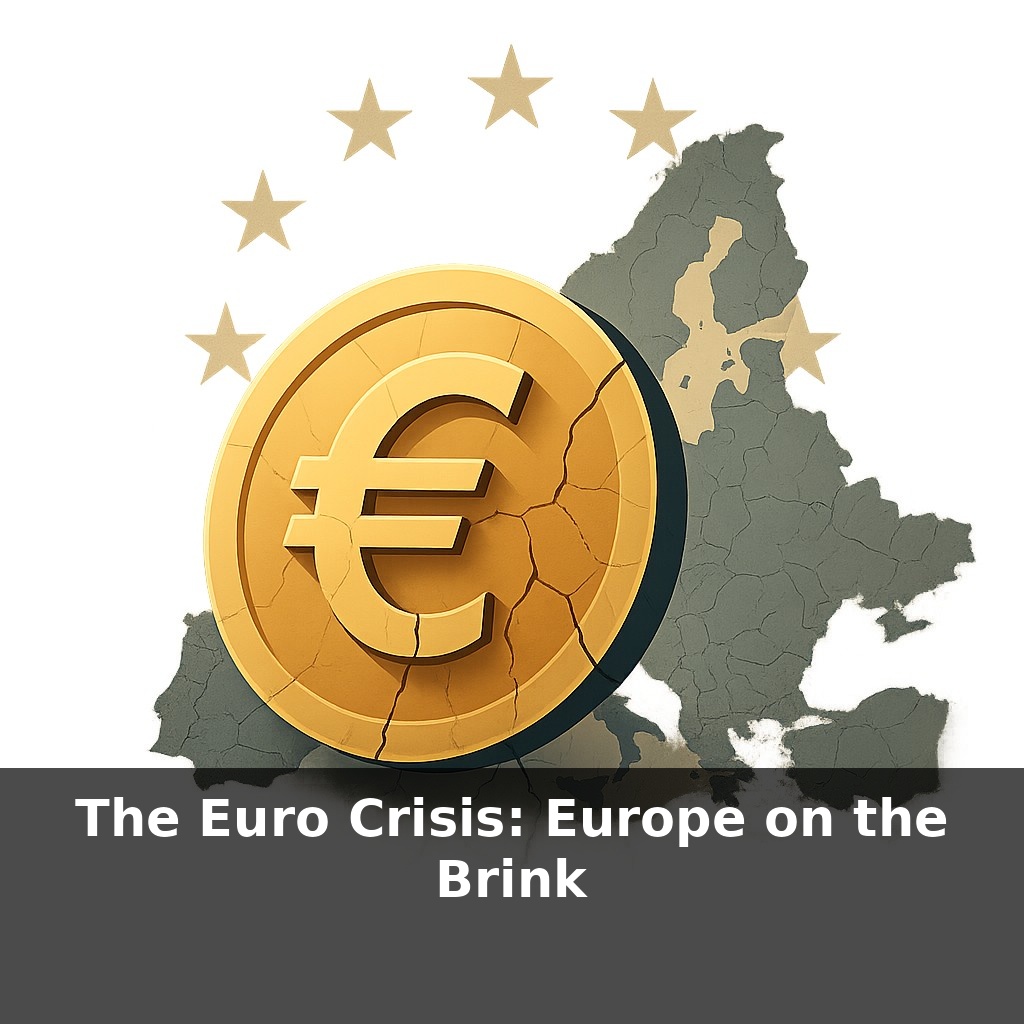
One summer morning, investors woke up to a paradox: a shared European currency that suddenly seemed to belong to no one in particular. As Greek ATMs ran low on cash and Spanish borrowing costs soared, a quiet question spread—can a money survive without a country behind it?
By 2010, the crisis wasn’t just about shaky banks or bad mortgages; it was about trust—between governments, markets, and European citizens. Bond traders began treating euro members as if they were separate risk categories again: lending to Germany stayed cheap, while borrowing for Greece, Portugal, and Ireland suddenly looked like a high‑stakes gamble. That split tore open an awkward truth: Eurozone countries had agreed to share a currency, but not the power to tax and spend together. When recession hit, national leaders reached for familiar tools—spending cuts, tax hikes, rescue loans—but those choices now rippled across borders. As protests filled city squares from Athens to Madrid, technocrats in Brussels, Frankfurt, and Washington tried to design fixes in real time, drafting new rules even as the system kept shaking.
Markets soon discovered that Eurozone rules looked precise on paper but blurry in practice. Deficit limits had been bent in good times, so punishing rule‑breakers in bad times felt selective and political. Investors began probing for weak spots, testing each country the way a climber tests loose rocks on a cliff face. As doubts spread, the cost of borrowing itself became the story: rising yields could turn a tough situation into an outright solvency scare. That feedback loop—fear driving costs up, costs confirming fear—forced leaders to confront questions they had postponed for a decade.
When Greece first admitted its numbers were worse than advertised, it did more than rattle statisticians. It told investors that Eurozone balance sheets might hide other unpleasant surprises. The panic quickly spread to Ireland, where the trouble hadn’t started in parliament but in property. Irish banks had gorged on real‑estate lending; when the bubble burst, Dublin guaranteed their debts, turning a banking bust into a sovereign headache almost overnight. In Portugal, years of low growth and weak productivity made existing debts suddenly look heavy, even before borrowing costs exploded.
Spain’s story was different again. Madrid had run budget surpluses before 2008, yet a massive housing boom had left banks stuffed with risky loans. When that boom reversed, unemployment soared and regional finances came under strain, feeding doubts about who would ultimately pay. Markets began drawing sharp lines between “core” and “periphery,” reflected in the widening gap between German and southern European bond yields. That divergence became a daily scoreboard of fear.
Under pressure, European leaders assembled ad‑hoc rescue funds, then turned them into a permanent mechanism with strict conditions attached. Enter the Troika, flying into capitals with spreadsheets, forecasts, and draft memoranda. Their message was blunt: support would come, but only in exchange for deep overhauls—pension reforms, labor‑market changes, privatizations, and rapid deficit reduction. Supporters framed this as necessary house‑cleaning after years of delay; critics saw external technocrats overriding democratic choices.
Meanwhile, the European Central Bank wrestled with its own limits. Its mandate focused on price stability, not backstopping governments. Yet as bond yields in places like Spain and Italy climbed toward levels that had toppled others, the ECB edged closer to the line. New lending programs offered banks cheap long‑term funding. Later, a conditional bond‑buying pledge signaled that self‑fulfilling panics would meet a powerful counter‑force.
Your challenge this week: watch a current headline about European budgets or debt and trace how many institutions are involved—national governments, EU bodies, central banks, courts. Count the layers. By the end of the week, ask yourself: who, if anyone, is clearly in charge when things go wrong?
Think of Eurozone crisis management like debugging a complex software platform built by many different teams. The core operating system (the ECB) can push updates and patches, but it doesn’t control all the apps running on top—those are the national governments, each with its own legacy code, election cycles, and user demands. When the system started throwing errors in 2010, emergency patches went out: the European Stability Mechanism as a new security layer, stress tests for banks, and tentative moves toward a banking union so failures in one “app” wouldn’t crash the whole system.
Concrete choices made this real. In Ireland, bank bondholders were largely protected, shifting costs onto taxpayers; in Cyprus, uninsured depositors were “bailed in,” taking losses themselves. The contrast raised awkward questions about fairness and predictability. Meanwhile, German courts, Finnish parliaments, and Slovak coalitions all had veto points over rescue terms. The result wasn’t a clean redesign, but a live system constantly refactored under load—kept running, but with deeper technical debt baked in.
The Euro Crisis left Europe with half‑finished safeguards: tougher budget rules, new rescue funds and early steps toward a banking union. Next time stress hits—whether from war, energy shocks or climate spending—these tools will be tested together. Think of today’s Eurozone like a stadium renovated in stages: the exits are wider and the roof stronger, but some pillars are still temporary. Whether fans trust it in a storm will shape if Europe dares move closer to a true fiscal union.
The Euro Crisis didn’t end with a neat closing bell; it faded into a long negotiation over what Europe wants to be when it grows up. As climate goals, defense spending, and aging populations strain budgets, the same fault lines will reappear in new form. The next crossroads won’t ask only “can the euro hold,” but “how much risk are Europeans willing to share?”
Here’s your challenge this week: pick one Eurozone country discussed in the episode (like Greece, Italy, or Germany) and spend 20 minutes today mapping how a euro breakup would affect three specific things in your own life: your job or industry, your savings/investments, and the price of something you regularly buy that’s imported from Europe. Then, choose one concrete step to “hedge” that risk before the week ends—for example, moving a small, fixed amount of savings into a different currency account or ETF, or switching one recurring purchase to a non-European supplier. Finally, write a two-sentence “if the euro cracks” plan that says exactly what you would do in the first 48 hours of a renewed euro crisis (e.g., limits on ATM withdrawals, where you’d move money, what news sources you’d monitor).