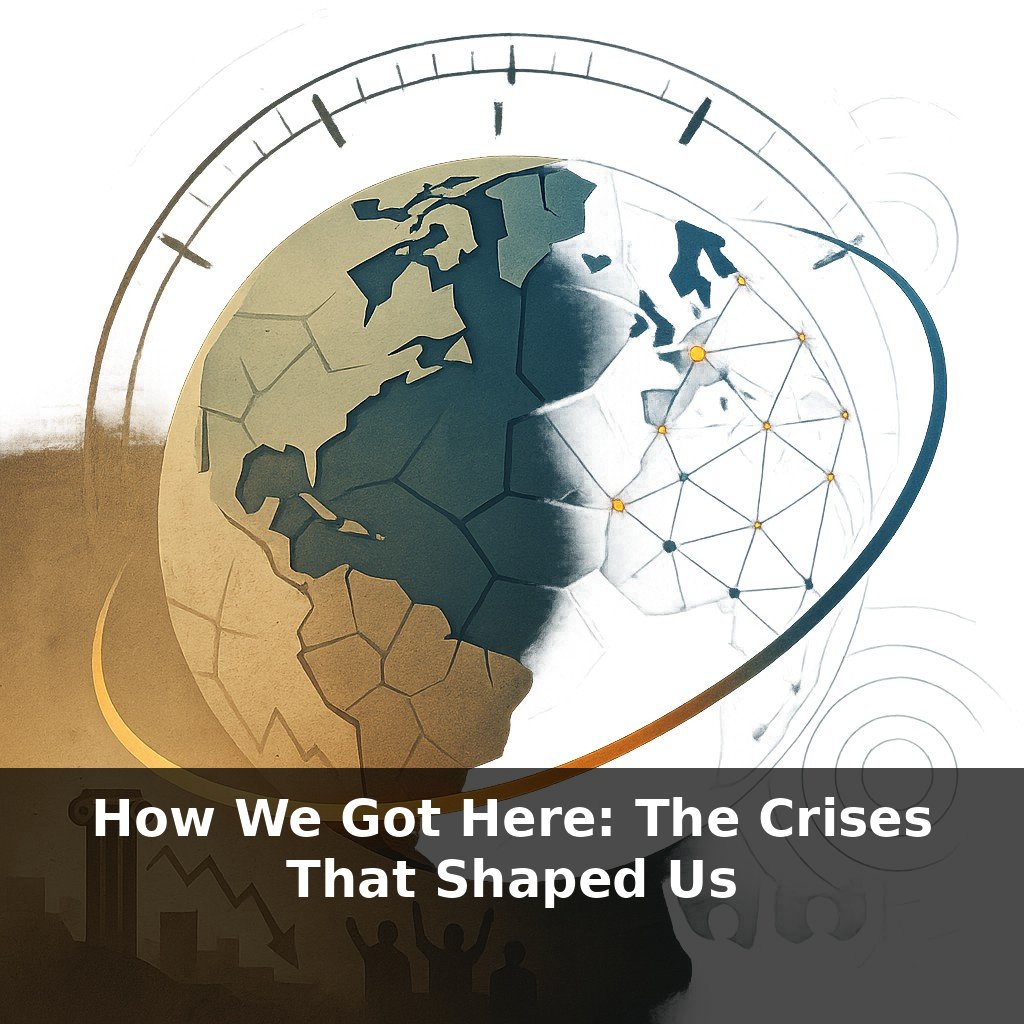
One year, nearly four billion people were told to stay home—and the planes, the traffic, even the office coffee runs went quiet. In that sudden stillness, some lives were saved, others shattered, and a simple question emerged: how does a planet hit “pause” and then learn to press “play” again?
Hospitals scrambled to turn cafeterias into ICUs, while living rooms quietly became classrooms, offices, and—sometimes—lonely waiting rooms for news that never came. Supply chains, once invisible, suddenly felt like a row of dominoes: a factory closure in one country could leave supermarket shelves half-empty in another. Governments weighed lives against livelihoods in late-night meetings, knowing every curve on a chart stood for people, not just numbers. Meanwhile, scientists in different time zones stared at the same viral code, racing not only a pathogen, but also the spread of rumor and denial. As days blurred, new habits crystallized: video calls instead of visits, masks at the door, headlines as alarm clocks. The world hadn’t just paused; it had been forced into a massive, messy, real-time experiment in how societies cope with shared risk.
Borders snapped shut, yet the virus moved faster than any passport control. Some countries sealed cities overnight; others waited, hoping to dodge both illness and economic shock. Workforces split in two: those who could log in from a laptop, and those who had to stand in checkout lines, hospital wards, and warehouses to keep everyone else going. Misinformation flourished beside real data, turning social feeds into tug-of-war ropes between fear and fatigue. At the same time, labs that once competed began sharing results like open‑source code, trying to turn scattered breakthroughs into a single, global exit strategy.
When the first case numbers appeared on screens, many leaders treated them like a bad weather forecast: inconvenient, but temporary. Yet within weeks, hospitals in places like Lombardy and New York were improvising triage in hallways, while other cities, watching the same scenes, slammed on the brakes earlier and harder. That timing turned out to be deadly serious. Countries such as New Zealand, South Korea, and Taiwan moved quickly with testing, tracing, and strict border controls, keeping overall deaths comparatively low and allowing shorter, more targeted restrictions. Others hesitated, reopening repeatedly and triggering wave after wave.
The scale of disruption was staggering. In 2020, global GDP shrank by 3.1%, wiping out years of growth in a single year. International air travel collapsed by 60%, a fall so steep that entire fleets were parked wing‑to‑wing on unused runways. Millions of workers in tourism, hospitality, and informal sectors lost livelihoods almost overnight, while a narrower band of tech firms, delivery companies, and online retailers saw demand explode. Inequality widened: people with stable internet and salaried jobs stayed home; those paid by the hour often faced a choice between exposure and eviction.
At the same time, science moved at a speed few thought possible. Once the viral genome was shared, researchers on several continents spent eleven months turning it into vaccines that could be manufactured at scale. The Pfizer‑BioNTech shot, built on mRNA technology, reached about 95% effectiveness in large trials and was authorized just 326 days after that genetic sequence went public. Yet scientific speed ran into political friction. Wealthy countries pre‑purchased much of the early supply, leaving lower‑income nations waiting months or years for widespread coverage.
Communicating risk became its own battleground. Early uncertainty about masks, surface transmission, and airborne spread collided with social media algorithms tuned for outrage, not nuance. Misconceptions flourished: some claimed COVID‑19 was “just a bad flu,” even as excess‑mortality data later suggested the real death toll was two to three times higher than official counts. Others insisted mRNA vaccines would rewrite human DNA, ignoring the basic cell biology that keeps that genetic material locked safely away.
Non‑pharmaceutical interventions—school closures, limits on gatherings, mask mandates—became political symbols as much as public‑health tools. Still, data from multiple regions showed that early, targeted steps reduced peak hospitalizations, giving intensive‑care teams room to work. Flattening the curve was like adding new servers to a platform under sudden load: the total number of users might end up similar, but preventing a single, overwhelming surge kept the system from crashing outright.
By late 2021, a new phase began. Vaccines and prior infections softened the worst outcomes in many countries, yet variants like Delta and Omicron proved that evolution doesn’t negotiate. Places that had escaped earlier waves were suddenly scrambling. Hybrid work stopped being an experiment and became policy in sectors that could support it; video meetings and telemedicine settled into routine. Governments rewrote playbooks, stockpiling protective gear and drafting flexible emergency laws, even as burnout spread among health‑care workers and teachers who had carried the heaviest load.
The pandemic’s ledger is brutally uneven: some businesses pivoted and prospered, while others vanished; some households discovered new closeness, while others fractured under stress. But beneath those differences, a common realization emerged: in a highly connected world, “their outbreak” can become “our crisis” in a matter of days. The question now is whether that memory fades faster than the virus itself—or whether this generation treats COVID‑19 not as an anomaly, but as a rehearsal for the next global shock.
Some of the clearest lessons come from places that treated COVID not as a one‑off disaster, but as a stress test they could learn from. Singapore invested early in playbooks and stockpiles after SARS; when COVID hit, that groundwork didn’t prevent crisis, but it shortened confusion. Rwanda used drones to deliver medical supplies and public‑health messages to rural areas, blending low‑tech community networks with high‑tech tools. Companies, too, began redesigning offices more like modular stadiums—sections that can open, close, or reroute flows depending on conditions, instead of one fixed layout.
Cities experimented with “15‑minute neighborhoods,” where essentials are reachable on foot or bike, making them less brittle when transit or fuel falters. Schools that had once banned phones started using them for attendance, homework, even counseling check‑ins. And across multiple countries, local mayors and health workers, not national leaders, often became the most trusted narrators, showing that in the next shock, credibility may matter as much as capacity.
As memories blur, the pandemic’s quiet rewrites linger. Cities are rethinking density like software patches—adding green corridors, outdoor classrooms, and flexible zoning that can toggle between cafés and care centers. Families are treating sick days less as weakness and more as firebreaks. Young people, having watched experts disagree in public, are more likely to track primary data themselves. And governments now game‑out “black swan drills,” rehearsing scenarios where the next shock isn’t a virus at all.
The next chapter won’t be about rewinding to a “before,” but about editing what we keep. Some communities are turning memorials into data labs, pairing names with maps, sensors, and stories to spot silent fault lines. Your challenge this week: notice one norm you’d keep in the next crisis—and one you’d retire—and ask someone else for theirs.