Satya Nadella quietly took over Microsoft—and within a few years, the company’s value multiplied several times over. No new badge of authority. Same logo on the building. So what actually changed? In this episode, we step inside moments where influence reshaped entire systems.
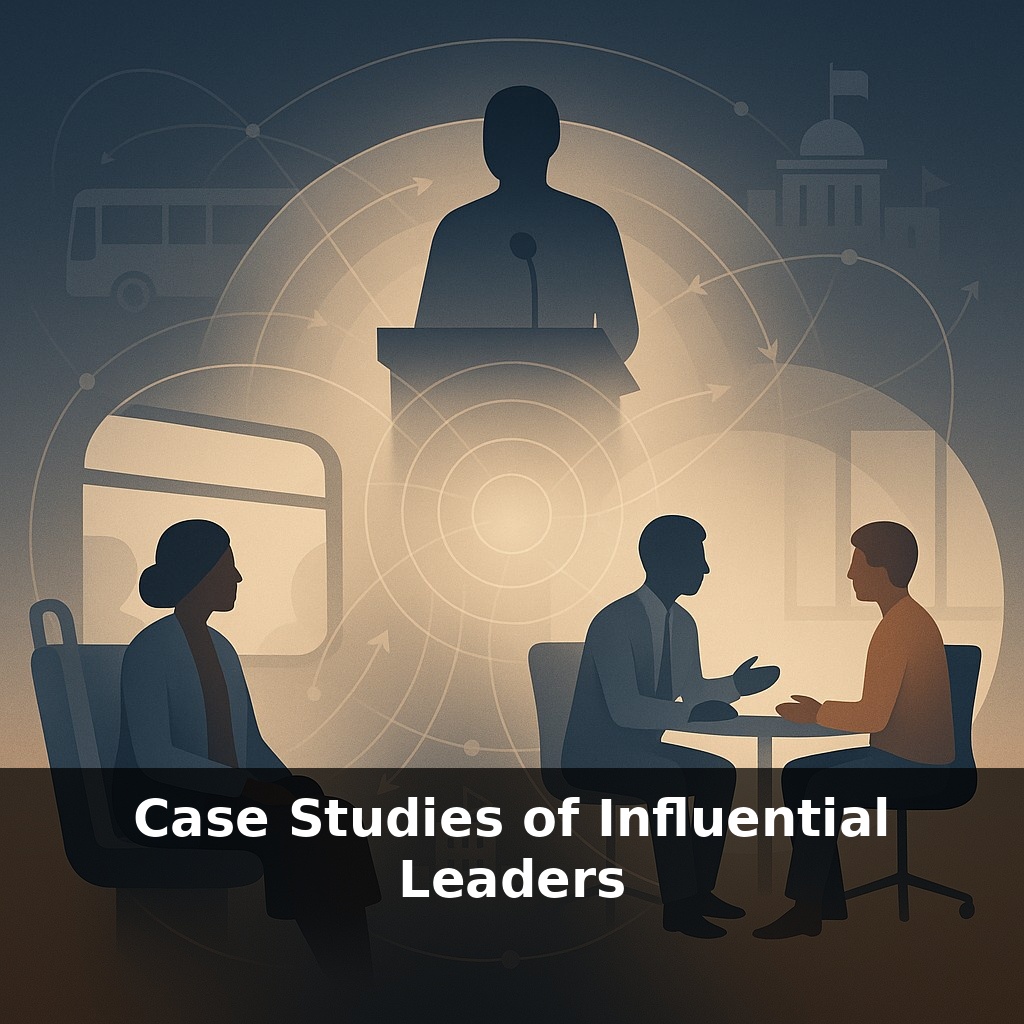
A civil rights icon sitting on a bus, a prime minister standing at a podium, a CEO in a quiet one‑on‑one: on paper, all three have “power.” Yet the real shift they created didn’t start with orders—it started with how people felt in their presence.
In this episode, we zoom in on *how* that happens.
Rosa Parks didn’t give speeches that day in Montgomery; her calm refusal gave others a story to stand inside. Jacinda Ardern didn’t have more legal authority than other leaders facing COVID; her steady, empathetic briefings made frightened citizens feel seen and willing to act together. Satya Nadella didn’t rewrite everyone’s job descriptions; he changed what felt safe to say in meetings—and suddenly new ideas could breathe.
Think of these as live case files. We’ll dissect what they did *moment to moment* so you can adapt the same moves in your own relationships.
Watch closely and a pattern appears: influential leaders work less like solo performers and more like careful editors. They don’t rewrite everyone’s lines; they adjust the “rules of the scene” so different choices become possible. Nadella asked engineers, “When was the last time you changed your mind?” Ardern regularly admitted uncertainty, then showed her decision logic. Parks had spent years quietly training in collective action. None of that was accidental. Each move was a deliberate choice about what to normalize, reward, and quietly retire in their environment. That’s the level we’re exploring next.
“Introverts can’t lead,” “charisma is everything,” “authority does the real work”—the three case studies you just met quietly dismantle all of that.
Look at what Nadella, Parks, and Ardern *actually* did, underneath the headlines.
Nadella inherited a company famous for internal rivalry. Instead of storming in with demands, he asked unusual questions in rooms that were used to defensiveness: “Whose perspective are we missing?” “What did we learn when this failed?” Those questions weren’t small talk; they were levers. Over time, they rewarded curiosity more than point‑scoring. Engineers who once guarded information began sharing prototypes across teams. That cultural rewiring is what made a massive cloud pivot possible—not a single memo about “being collaborative.”
Rosa Parks appears in history as a single, iconic moment. In reality, that moment rested on years of showing up in rooms where strategy was hammered out: training sessions, quiet meetings, organizing conversations after long workdays. She built trust long before she needed it. So when she was arrested, people didn’t just admire her—they believed her, and they believed *with* her. That credibility is what turned one act into a 381‑day commitment.
Ardern faced a different challenge: decisions that would upend daily life. Notice the mechanics of her briefings. She didn’t just announce rules; she explained trade‑offs, acknowledged sacrifices, and repeated a simple shared identity (“the team of five million”). That consistency let people predict how she’d respond tomorrow based on what she said today. Predictability, not volume, is what allowed her influence to travel through thousands of separate households.
In all three stories, influence behaves less like a lightning strike and more like compound interest in finance: small, repeated deposits of trust and clarity that grow into something vast over time.
For your own relationships, the transferable pattern is this: the most powerful moves usually happen *before* the visible turning point. The way you ask questions in routine meetings, how you respond to small mistakes, whether you follow through on minor promises—these are the quiet rehearsals that determine whether people will lean in or pull back when the stakes rise.
Nadella’s meetings, Parks’ organizing, Ardern’s briefings all share a quiet pattern: they *change what other people decide to do next* without pushing. To see this up close, shrink it to everyday scale.
Think of a teammate who always credits others in group emails: “This idea came from Alex, and Jordan spotted the risk.” Over months, that habit tilts the room—people start surfacing half‑baked ideas earlier, because they trust they won’t be undercut. No big speech. Just repeated proof that sharing is safe and rewarded.
Or picture a friend who, during conflict, says, “Here’s what I’m worried I might be missing—can you help me see it?” That single move often turns defensiveness into collaboration. They’re not avoiding disagreement; they’re shaping *how* disagreement happens.
The transferable question for you: in your family, team, or community, what is one tiny behavior you could repeat that would make it easier for others to choose courage over caution next time the stakes rise?
Authority will be the cheapest part of leadership in the next decade. As AI takes over monitoring, scheduling, and status‑tracking, your job shrinks to the hard pieces algorithms can’t touch: reading the room across a Zoom grid, telling a story that makes climate targets feel real, inviting pushback from people who disagree with you. Think of these as your “unautomatable assets”—skills that appreciate as routine control gets outsourced. In distributed teams, those assets are how you’ll lead people you may never meet.
The quiet test is this: when you leave a room, do conversations open up or shut down? Influence grows in your absence, not your spotlight. Notice who starts taking initiative, who connects with whom, what ideas surface later. Like code running on a server you no longer touch, your past choices keep executing in people’s minds—updating trust, courage, and what feels possible next.
Try this experiment: For the next 5 days, deliberately copy one concrete behavior from a different leader in the episode each day (e.g., Jobs’ “no-slide” whiteboard briefing, Mandela’s 3-minute listening rule before speaking, Indra Nooyi’s pre-meeting “why are we doing this?” check, etc.) and use it in a real interaction at work. Before you go in, decide exactly how you’ll use it (who you’ll do it with, in which meeting or conversation, and what “success” would look like—more clarity, less tension, faster decision). After each interaction, quickly score the behavior from 1–5 on three things: impact on others, how natural it felt, and whether you’d use it again. At the end of day 5, pick the one behavior with the highest total score and commit to using it every day for the next week as your “borrowed leadership move.”