In companies that restructure, most “official” leaders quietly lose influence within months. Yet a smaller group gains more trust, more access, and more say—right in the chaos. They’re not louder or higher on the org chart. They’re doing something else, almost invisibly.
Gallup’s data shows something most leaders underestimate: during major shifts, engagement can diverge by more than 50 % between teams in the same company—often with the same policies, tools, and strategy. The variable is how leaders *show up* in the disruption. Some double down on directives and status, assuming clarity comes from firmer orders. Others quietly pivot from “because I said so” to “here’s why it matters, and here’s how we’ll figure it out together.”
The second group leans into relational authority. They narrate their own learning curve instead of pretending to have all the answers. They invite people into problem-solving, not just into status meetings. And crucially, they create enough psychological safety that bad news travels quickly instead of hiding in inboxes, where it tends to grow teeth.
In this episode, we’ll unpack how to do that on purpose, even if you’re not the one announcing the changes.
In practical terms, this means your influence during change depends less on what you *announce* and more on what your team *experiences* with you in small, repeatable moments. Do you absorb uncertainty without sugarcoating? Do you share the “why” you know—and admit the “why” you don’t? Do people leave your 1:1s with more clarity and options, or just more tasks? Think of each interaction like updating software in the background: tiny patches that either increase stability or introduce bugs. Over a few weeks of upheaval, those micro-updates compound into a powerful reputation—for steadiness or for spin.
The leaders who grow their influence in turbulence tend to do three specific things differently: they make the *why* tangible, they make adaptation visible, and they make learning contagious.
First, they translate high-level “strategic rationale” into concrete stakes for their people. Instead of forwarding a slide about “market headwinds,” they say, “Here’s what this shift likely means for the customers we serve and the work on your plate in the next 90 days.” Gallup’s data suggests that clarity about purpose is one of the only levers that reliably stabilizes engagement when everything else is moving. Notice this isn’t about having *more* information than others; it’s about doing more with the information you have.
Second, they treat adaptability as a skill to be modeled, not a trait to be demanded. When McKinsey talks about “change muscle,” this is what it looks like on the ground: a leader saying, “Our first plan for this rollout isn’t landing. Let’s run a 2‑week experiment with a lighter version and see what actually works.” That kind of explicit course‑correction gives people permission to iterate instead of hiding missteps. It also signals that flexibility is part of the job, not a personal failing.
Third, they normalize stress without normalizing burnout. Techniques like quick “stress scans” in meetings (“Red, yellow, or green today?”), lightweight “resource maps” (“Who else could help you unblock this?”), and tiny “micro‑learning loops” (“One thing we tried this week that we’ll keep, one we’ll drop”) sound simple, but over time they create a shared playbook for coping. Teams that adopt practices like these tend to recover performance faster after big shifts, because they’re not reinventing their coping mechanisms every time.
Think of it like updating a shared digital workspace during a fast-moving project: the teams that label changes clearly, log decisions, and surface blockers early rarely move the fastest on day one—but they almost always ship a more coherent product, with less rework, sooner than the groups sprinting in five different directions.
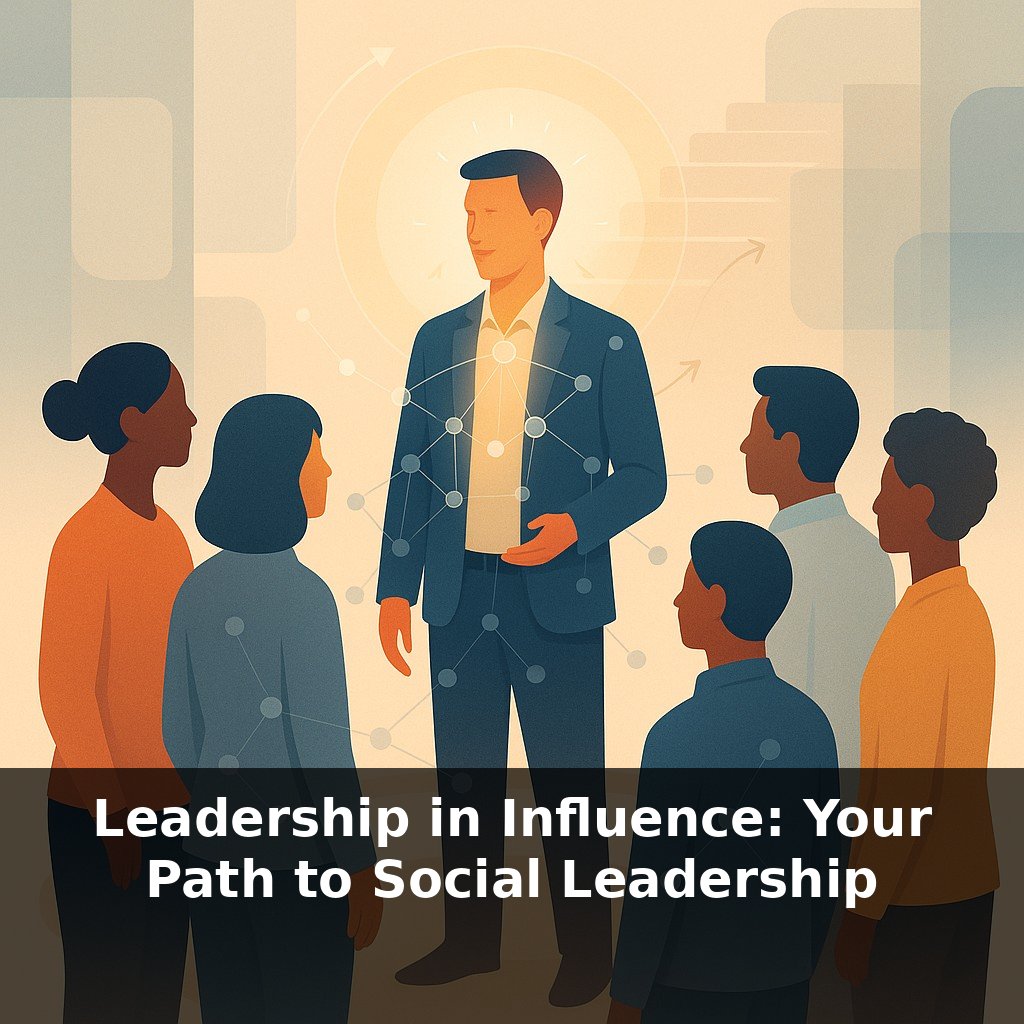
None of this requires a different job title or personality. It does require a shift from “I must protect my authority by appearing certain” to “I earn authority by helping us navigate uncertainty together.” Leaders who make that pivot become the people others seek out—not just to hear what’s happening, but to decide what to do next.
A practical example: a product director at a tech firm learns their roadmap will be overhauled midyear. Instead of vanishing into executive meetings, she opens a shared “experiment backlog” where anyone can propose small tests aligned to the new direction. Each idea gets a quick hypothesis, a 2‑week window, and a single owner. She reviews the list in a standing huddle, not a formal status meeting, asking, “What did we learn? What surprised us?” Within a month, the team has a portfolio of data‑backed options instead of one brittle plan.
Or take a regional manager in retail facing a sudden pricing shift. He pulls in three frontline employees to co‑design new scripts, then pilots them in just two stores. Their feedback shapes the playbook that later scales across the region. Notice what’s happening: by making learning public and shared, these leaders turn uncertainty into a searchable archive of decisions, experiments, and adjustments—something others can rely on when the next wave hits.
McKinsey estimates that in many sectors, major shifts now hit every 6–12 months, not every few years. That pace means “change” stops being a phase and becomes the default setting. Leaders who treat this like upgrading a phone only when it breaks will lag; the advantage goes to those who schedule regular “OS updates” for how their team communicates, decides, and resets. Expect roles like “head of adaptability” or “change architect” to become as common as HR or finance leads.
When disruption hits, the leaders people seek out next aren’t necessarily the bravest or the most charismatic—they’re the ones who turn confusion into a shared project. Think of it less like delivering a perfect speech and more like hosting an ongoing lab: you supply the conditions, invite experiments, and protect the space long enough for better answers to emerge together.
Start with this tiny habit: When you open an email or message about the current change, add exactly three words at the top of your reply: “What you gain: [1–3 words].” For example, “What you gain: faster approvals” or “What you gain: fewer meetings.” Don’t explain it, don’t overthink it—just force yourself to name one small benefit for them before you type anything else. This keeps you in “influencer mode,” framing change around their wins instead of your worries.