“People don’t quit companies, they quit conversations.”
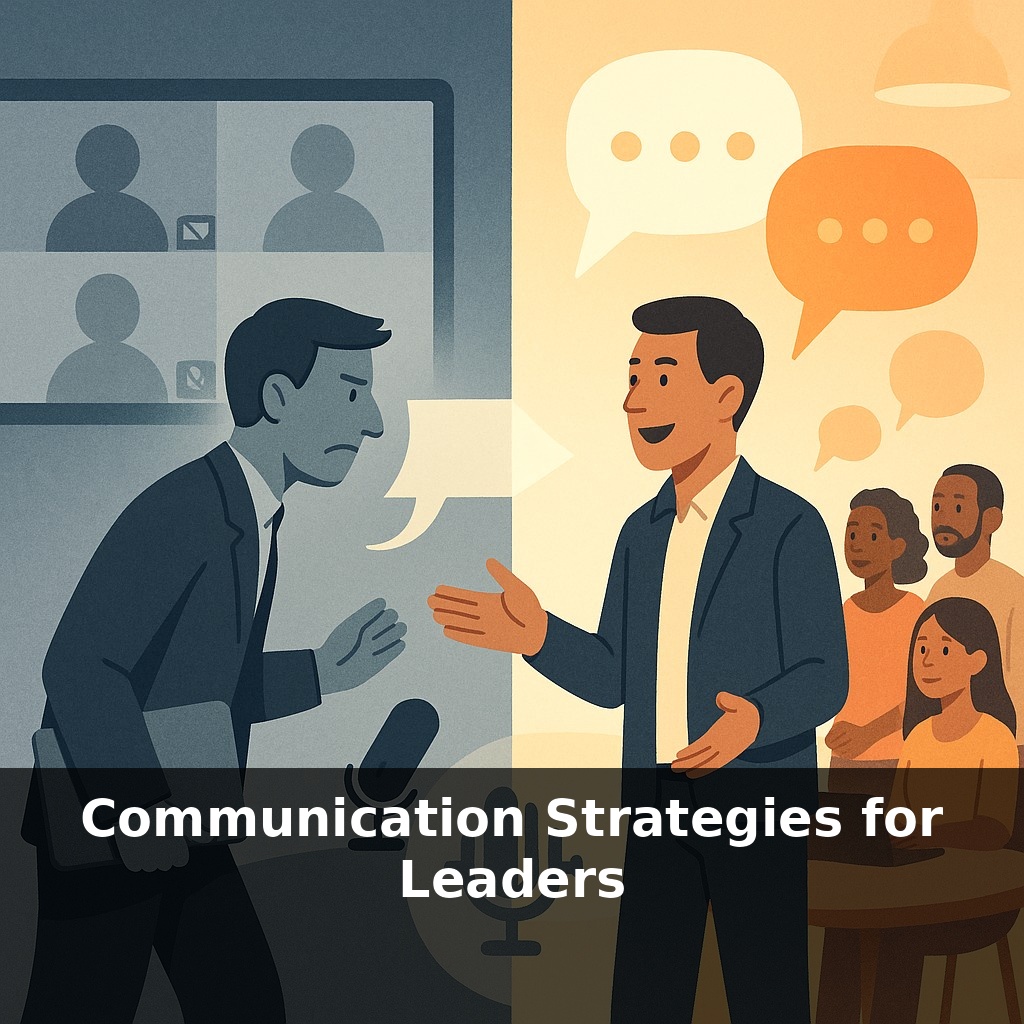
A manager rushes through a Zoom update, barely breathing between bullet points. Cameras stay off, no one asks a thing.
Now flip it: same goals, same people—but the room feels electric.
What actually changed in how that leader spoke?
“Employees who feel heard are 4.6 times more likely to perform at their best.” That’s not a feel‑good slogan—it’s a measured outcome across thousands of people.
So if you already know that conversation quality shapes engagement and retention, the next question is sharper: *Which specific moves separate leaders who unlock that performance from those who quietly drain it?*
Research across neuroscience and organizational psychology points to three, often invisible, habits: how you listen when stakes are high, how you shape messages for brains overloaded by screens and pings, and how your face and posture quietly confirm—or contradict—every word you say.
In this episode, we’ll zoom in on those habits so precisely that you can test them in your very next one‑on‑one, stand‑up, or exec review.
An odd tension shows up in the data: people beg for “transparent communication,” yet in debriefs they mostly recall **how** a leader made them feel while talking, not the precise words. That’s your clue. In practice, influence comes less from the all‑hands keynote and more from dozens of tiny, forgettable moments—how you respond when someone hesitates, how you handle a half‑baked idea, how you summarize a messy discussion. Think of this episode as zooming the lens from the big stage to the everyday “micro‑interactions” where trust, speed, and alignment are quietly built—or quietly eroded.
main_explanation: Here’s the twist most leaders miss: the moment you start talking, people quietly stop listening *to you* and start listening **for themselves**—for risk, relevance, and respect. Your job is to shape communication so their brain keeps saying “stay with this.”
Start with listening as a performance advantage, not a personality trait. High‑performing leaders use what researchers call *conversational turn‑taking*: they deliberately make space, then signal, “Your turn matters.” Practically, that sounds like: - “What are we not seeing yet?” (invites dissent) - “If this fails, where will it fail first?” (invites risk data) - “Whose workflow does this break?” (invites operational truth)
Notice the pattern: these aren’t generic “Any questions?” They’re targeted invitations that surface information fast and de‑personalize criticism. That’s one way great listeners speed up decisions instead of turning meetings into therapy.
Now layer on message design for brains that wander at the 8‑minute mark. On video especially, you’re competing with email, Slack, and mental to‑do lists. So leaders who communicate well don’t “cover everything”; they **sequence attention**: 1. **Headline first.** “In the next 10 minutes, we need to decide X.” 2. **Three anchors.** “We’ll look at impact, risk, and effort—nothing else.” 3. **Sharp closing.** “Here’s the decision, owner, and deadline.”
Try timing yourself: if you can’t state the point of your update in one breath, your team can’t either.
Finally, your body becomes a live fact‑checker. People constantly compare your words with your micro‑expressions: eyes when someone disagrees, shoulders when a delay is raised, hands when you say “I’m open to feedback.” Research on facial synchrony shows that when your face tracks the emotional tone of the room—concern when they’re worried, curiosity when they’re exploring—teams solve problems more creatively.
That makes cultural nuance non‑negotiable. In some regions, sustained eye contact signals confidence; in others, it reads as challenge. Strong communicators **ask**: “In our offices, what does ‘attentive’ look like in a meeting?” Then they adapt, instead of exporting one style everywhere.
A product VP reviews a launch delay with her team. Instead of opening with a speech, she draws a simple two‑column grid: “Signals we *heard* this sprint” vs. “Signals we *missed*.” Engineers fill the “heard” side with small red flags they raised; PMs confess to the “missed” side. No blame, just data. Over three retros, escalation time drops because people can literally *see* that surfacing bad news early is rewarded, not punished.
Now add message discipline. A COO bans 20‑slide updates and replaces them with a “3‑block brief”: one block for what changed, one for impact, one for a single requested decision. Teams grumble at first, then start arriving sharper, since they know exactly what they’ll be asked.
One more variant: a distributed leader records 90‑second Loom updates—always same structure, same background, same posture—so her tone and micro‑cues stay consistent across time zones, even when she’s exhausted in real life.
Leaders who thrive next will treat communication like a living prototype, not a finished product. As AI drafts more emails and slide decks, your edge becomes how quickly you sense misalignment and “push an update” to the narrative—like shipping a software patch after real‑world testing. Expect to routinely A/B test town‑hall formats, storylines, even your Q&A style, then use pulse data and candid back‑channels to refactor how you speak so people can actually move faster together.
Real influence grows in the moments after this episode—when you slow down before a tense update, shorten that rambling email, or unclench your jaw in a tough 1:1. Treat each interaction like tweaking a recipe: adjust one ingredient, taste the result, adjust again. Over time, tiny refinements compound into a communication style people actually trust.
Here’s your challenge this week: Before your next three team interactions (one 1:1, one team meeting, and one written update), deliberately use the “clarity–context–next step” framework from the episode: state the core message in one sentence, give 1–2 sentences of why it matters now, and end with a single, specific action you want from them. In each interaction, ask one open-ended question (“What’s unclear or missing for you about this?”) and don’t speak for at least 10 seconds after you ask it. By Friday, quickly rate each of the three interactions from 1–5 on two things—how clearly you think you communicated and how much your team actually engaged—and pick one tweak you’ll use in all your communications next week.