Only about a quarter of people at work feel truly engaged—yet those few drive most of the innovation and profit. A manager cancels one meeting, asks a different question, and suddenly a quiet analyst speaks up with the idea that changes everything. What shifted in their motivation?
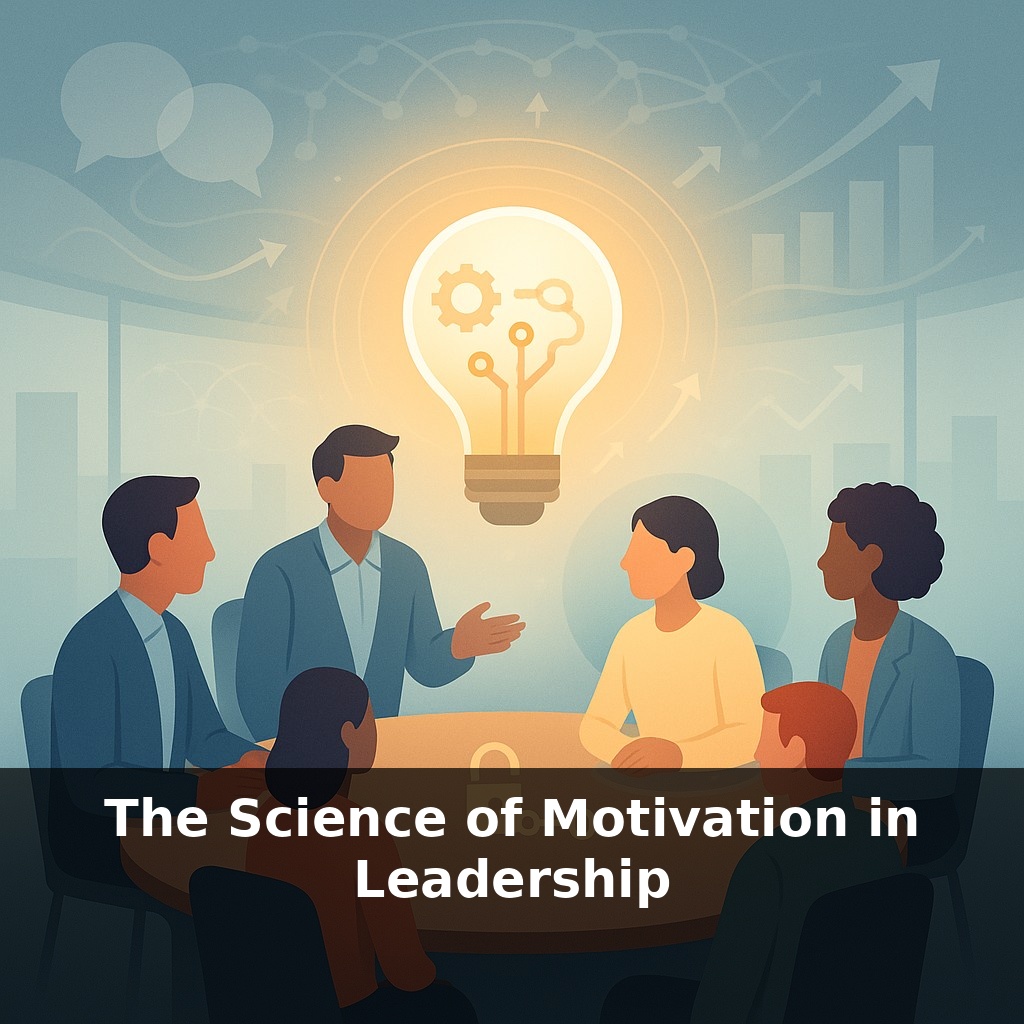
Most leaders still reach for the same levers: announce a stretch target, attach a bonus, maybe add a leaderboard. Yet research from motivation science keeps pointing somewhere else entirely: into the daily, often invisible design of the workplace itself. The way decisions are made. Who speaks in meetings. How mistakes are treated. These small patterns quietly signal to people whether they’re trusted, whether their skills matter, and whether they actually belong in the room. That’s where autonomy, competence, and relatedness either come alive—or slowly suffocate. And here’s the twist: you can’t “inspire” your way out of a system that drains these needs. In this episode, we’ll look at how leaders can redesign goals, feedback, and team norms so that motivation doesn’t depend on charisma, mood, or the next pay cycle.
Leaders often assume people are “naturally motivated” or “just not driven,” but research keeps pointing to something more uncomfortable: the same person can look lazy in one system and on fire in another. That means the system is the variable. Studies on psychological safety, purpose, and goal clarity show they can lift performance more reliably than personality, pep talks, or pressure. Think less about finding “high performers” and more about crafting conditions where average people routinely do excellent work. To do that, we’ll zoom in on how goals, rewards, and everyday language either unlock or choke off that potential.
“People are remarkably good at doing what they think they’re expected to do—and remarkably bad at doing what they think doesn’t really matter.” That quiet sentence from MIT’s Edgar Schein sits behind much of the modern data on motivation in leadership.
When you look at teams that sustain high performance, three patterns keep showing up: how goals are set, how progress is framed, and how leaders respond when reality doesn’t match the plan.
First, goals. In motivated teams, objectives are specific and visible, but they’re not handcuffs. Frameworks like OKRs work here not because they’re trendy, but because they combine clarity (“what truly matters now”) with discretion (“how we’ll get there”). The critical move is inviting people into the design of the “key results” instead of dropping them from above. That simple shift signals, “Your judgment counts,” which changes the energy in the work.
Second, progress. Leaders of energized teams obsess over showing movement, not just declaring targets. They surface small wins early, especially on messy, uncertain projects. This isn’t cheerleading; it’s information: “We tried X, it moved the needle this much, here’s what we’re adjusting.” People stay engaged when they can see cause and effect between their efforts and real-world impact.
Third, response to shortfalls. This is where psychological safety stops being a buzzword and becomes a decision. Under pressure, many leaders slip into blame, or quietly narrow the range of acceptable opinions. The short-term result is compliance; the long-term result is silence. Leaders who consistently ask, “What are we learning?” instead of “Who’s at fault?” create a radically different motivational climate, especially for complex, ambiguous work.
Notice what’s missing: heroic speeches, elaborate incentive schemes, or fear. Those can spike effort, but they rarely sustain it—especially when you need people to take intelligent risks, speak up about bad news early, or challenge your thinking.
Motivation, in this sense, becomes less about pushing people and more about structuring work so that doing the motivated thing is the most natural choice in the room.
A product lead at a fintech startup once changed just one ritual: instead of presenting a polished roadmap, she brought three half-baked options and asked engineers, “Which trade‑offs are we underestimating?” Within a quarter, two quiet mid-level devs were effectively co‑authoring strategy—and shipped a fraud-detection tweak that cut false positives by 18%. Nothing about their talent changed; only the expectations did.
Think of it like refactoring legacy code: you’re not rewriting the whole system, you’re changing interfaces so better behavior becomes default. When a sales manager opens pipeline reviews with, “Show me one deal you’re likely to lose and what you’re trying,” reps stop hiding risk and start swapping tactics. A hospital chief who ends every ops meeting with, “What got in your way this week?” often uncovers process fixes faster than any formal task force. The pattern: small, repeatable prompts that make speaking up, experimenting, and sharing partial ideas feel routine—not heroic.
By 2035, leaders may treat “motivational hygiene” like financial hygiene—continuously monitored, audited, and stress‑tested. Wearables and collaboration tools could flag overload or withdrawal the way dashboards flag cash‑flow risk. The frontier skill won’t be reading spreadsheets, but reading patterns in mood, trust, and energy. Expect boards to ask not just, “What’s our runway?” but, “What’s the human runway of this team if we hit three more shocks in a row?”
In the end, your influence comes from where you aim people’s attention. Treat culture like a product: prototype small shifts in safety, purpose, and challenge, then watch the “user data” of behavior, not surveys alone. Over time, those micro‑releases compound like interest, turning ordinary teams into places where stretch becomes the default, not the exception.
Try this experiment: For the next 5 workdays, open each team meeting by briefly stating the *why* behind one key task (link it to the team’s impact or customer outcome), then ask one person to rephrase that why in their own words. During the day, notice who seems more energized or proactive about that task—track specific behaviors like who volunteers ideas, who follows up unprompted, or who speeds up execution. At the end of the week, ask three team members, “Did this change how motivated you felt about this work?” and compare their answers to the behavior you observed, then decide whether to keep, tweak, or drop this “why-first” ritual.