 2min preview
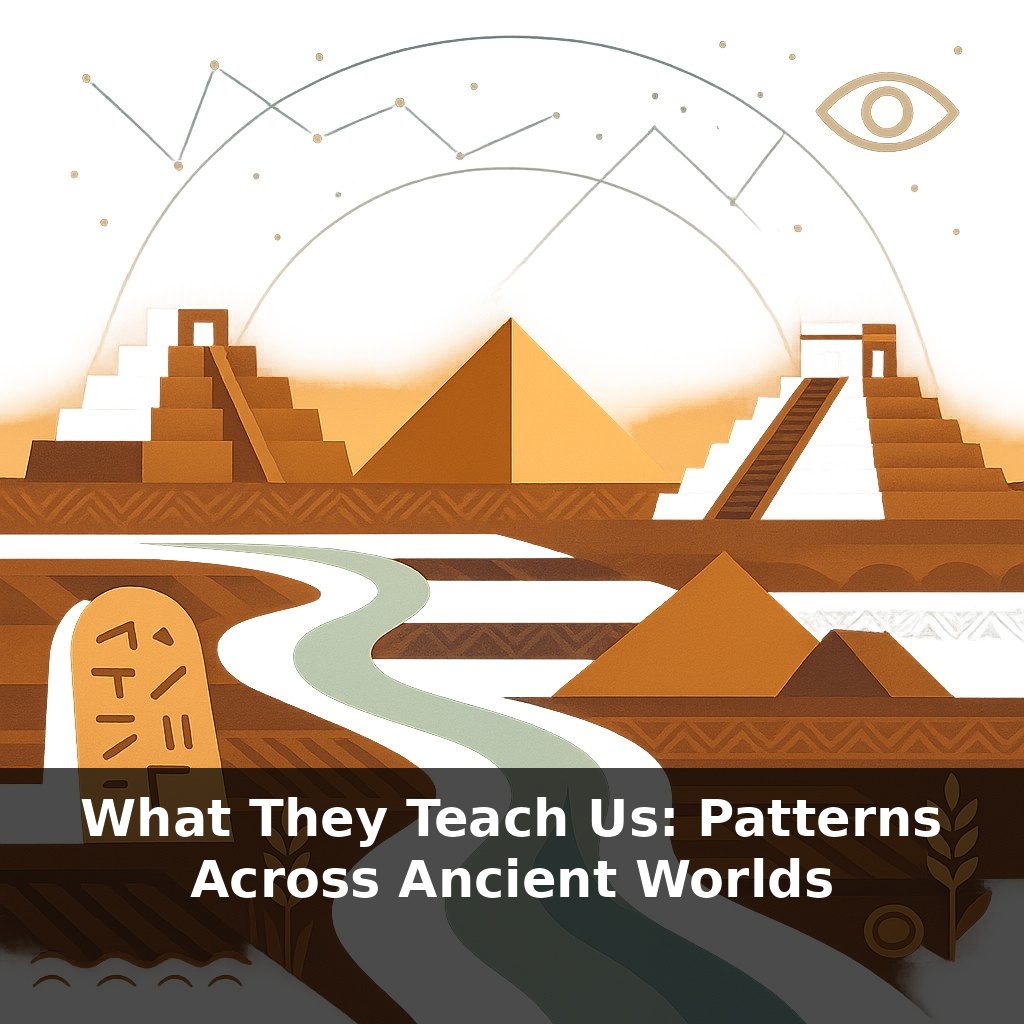
What They Teach Us: Patterns Across Ancient Worlds
📝 Transcript
A river in Egypt fails to flood on time—and bread prices in Rome suddenly spike. A king in Mesopotamia carves laws into stone, while, across the world, Maya priests watch the sky for omens. Distant worlds, no contact. So why do their civilizations rhyme so closely?
By the time rivers are channelled, fields laid out, and storehouses filled, something subtle starts to appear beside the granaries and docks: patterns of power. Across the ancient world, whoever could predict next year’s harvest, mobilize distant traders, or settle disputes reliably tended to rise—whether they wore a crown, a priest’s headdress, or both.
In Mesopotamia, temple complexes didn’t just collect offerings; they coordinated labor and recorded transactions, turning belief and bookkeeping into a single system. In the Indus cities, standardized weights and brick sizes quietly stitched hundreds of miles into one economic zone. Among the Maya, tracking cycles of rain and sky helped determine when to plant, when to tax, and when to go to war.
Subscribe to read the full transcript and listen to this episode
Subscribe to unlockSubscribe for $1.99/month to unlock the full episode.
From this course
Lost Civilizations: The Great Societies Before Rome
7 episodesUnlock all episodes
Full access to 7 episodes and everything on OwlUp.
Subscribe — $1.99/monthLess than a coffee ☕ · Cancel anytime