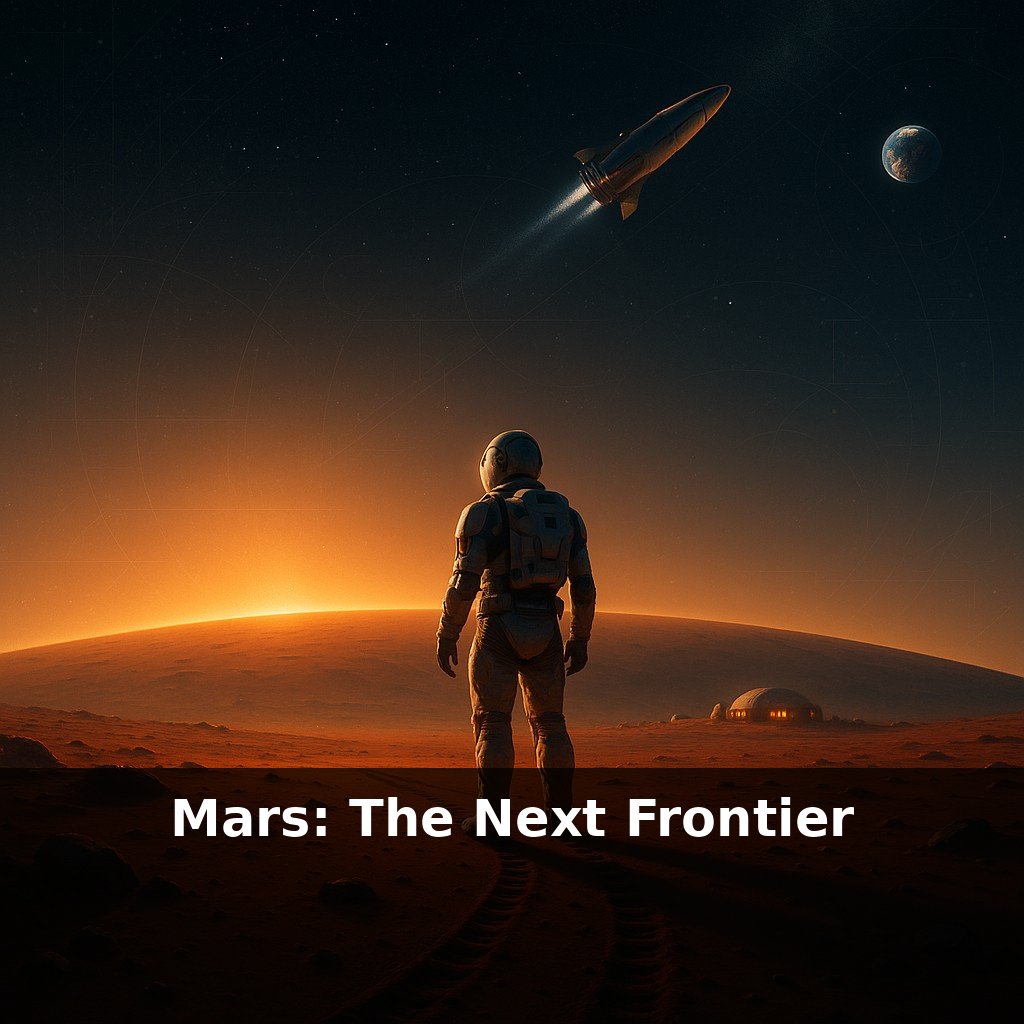
Mars is trying to kill you before you even land. The air is so thin your spacecraft’s parachute barely works, yet thick enough to whip up dust storms that can swallow the planet. So why are we still planning to go—and how do you survive where the sky itself is hostile?
On Earth, the atmosphere quietly does three jobs for us: it brakes incoming spacecraft, shields our DNA from radiation, and supplies oxygen on demand. On Mars, we lose all three safety nets at once. That forces engineers to stack multiple partial fixes together—like overlapping patches on a fragile balloon—just to make each phase of a mission possible.
For entry and landing, NASA is testing inflatable heat shields that bloom into giant discs to slow heavy cargo, and supersonic retro‑rockets that fire while still screaming through thin air. On the surface, MOXIE has already pulled oxygen from Martian CO₂, a tiny but historic proof that life support can come from local resources rather than constant Earth resupply.
And for long-term stays, design teams are sketching buried bases and ice‑reinforced shelters, turning Mars’ own soil and frozen water into armor against the sky.
On Mars, every design choice is a negotiation with the atmosphere. Spacecraft can’t rely on a single trick; teams layer solutions the way a composer layers instruments—each covers a weakness of the others. That changes what we even send first: not people, but cargo landers testing new EDL systems, weather scouts mapping pressure and dust patterns, and orbiters measuring radiation over entire Martian years. Engineers obsess over small details: how dust slowly erodes seals, how daily pressure swings stress habitat shells, how backup oxygen systems must survive months of cold darkness without a human hand nearby.
On Mars, “air” becomes a design variable, not a background condition. Because there’s so little of it, every mission has to bring its own pressure, its own weather, and its own margin for error.
Start with entry and descent. For crewed landers massing tens of tons, the landing sequence has to be choreographed down to fractions of a second. Guidance software must constantly update trajectory using real‑time pressure and density readings, because a tiny change in atmospheric thickness can mean missing the landing zone by tens of kilometers. Engineers now run entire “virtual Mars years” on supercomputers, seeding simulated weather with data from orbiters to map out the most forgiving seasons and locations to arrive.
On the surface, the ultra‑low pressure twists basic engineering instincts. Airlocks can’t just be small doors; they’re structural hot spots where the outward push of habitat air is fighting vacuum‑like conditions outside. Designers are experimenting with multi‑chamber locks, flexible fabric sections that can deform without cracking, and dust‑tolerant seals that still close after thousands of gritty cycles. Even simple tasks like venting a pipe or opening a sample container become safety‑critical operations, because any uncompensated leak is a direct path from shirtsleeve pressure to lethal near‑vacuum.
Radiation changes how we think about “indoors” and “outdoors.” Mission planners talk in dosimeters and “storm shelters,” scheduling EVAs for times of lower radiation and reserving heavily shielded nooks for solar events. Surface vehicles may double as mobile bunkers, with tanks of water or waste shielding built into their walls to stretch safe driving time.
Then there’s long‑term habitability. Medical teams model how years of elevated radiation and altered day‑night cycles might impact cancer risk, immune systems, and even how wounds heal. Instead of a simple “go/no‑go” threshold, they’re building dynamic risk budgets: if a crew gets hit by an unusually active solar year, that might shorten their allowed stay or trigger earlier rotation home.
Your challenge this week: pick one everyday object that relies on Earth’s air—your bike, a window, a balloon, a door—and sketch how it would need to change to work on Mars. Not just “make it stronger”: where would pressure, radiation, and dust force you to redesign it from the inside out?
On Earth, you “design with the grain” of the atmosphere; on Mars, you’re working against it. Think about sound. Music in your room relies on air to carry vibrations smoothly; with so few molecules on Mars, speakers would sound oddly thin and quiet, even inside pressurised habitats that try to recreate Earth‑like conditions. Instruments might need redesigned bodies and resonant chambers just to feel familiar to play.
Travel changes too. Aircraft that glide gracefully here would stall almost instantly there—wings need far higher speeds or radically different shapes to generate lift. That’s why Mars helicopters look more like ultra‑light spinning blades than tiny versions of terrestrial choppers.
Medicine feels the atmosphere shift as well. Nebulisers, ventilators, even simple IV drips assume a certain background pressure. In Martian clinics, clinicians have to recalibrate everything: how fast fluids flow, how lungs inflate, how sterilisation works when boiling points drop and gases behave differently.
Mars’ atmosphere problem doesn’t end with survival; it reshapes industry and policy too. Factory-style ISRU plants could become the “power stations” of Mars, feeding rockets, habitats, and rovers the way data centers feed today’s internet. Nations that master this may set standards for interplanetary trade. Even Earth benefits: hypersonic decelerators and radiation-hardened systems tested on Mars could turn future cargo returns into something closer to reliable overseas shipping than one-off stunts.
Each workaround we invent for Mars’ hostile sky quietly rewrites our rulebook for living in extreme places. The same tricks might one day support cities on the Moon, floating labs in Venus’ clouds, or sealed habitats in Antarctic winters—like learning one difficult song on an instrument and discovering it unlocks a whole new genre of music.
Before next week, ask yourself: 1) “If I had to spend 24 hours outside on Mars with only the tech we have today—pressure suits, inflatable habitats, limited oxygen—what would actually fail first for me, and why?” 2) “Looking at one specific challenge from the episode (like radiation, dust storms, or ultra-thin atmosphere), which existing Earth technology or natural system (submarines, Antarctic bases, high-altitude labs) gives me the best real-world analogy for how we might survive it?” 3) “If NASA handed me a modest budget and said, ‘Pick one atmosphere-related problem on Mars to help solve this year,’ which single problem would I focus on, and what’s the very first experiment or prototype I’d push them to run in a lab or desert test site?”