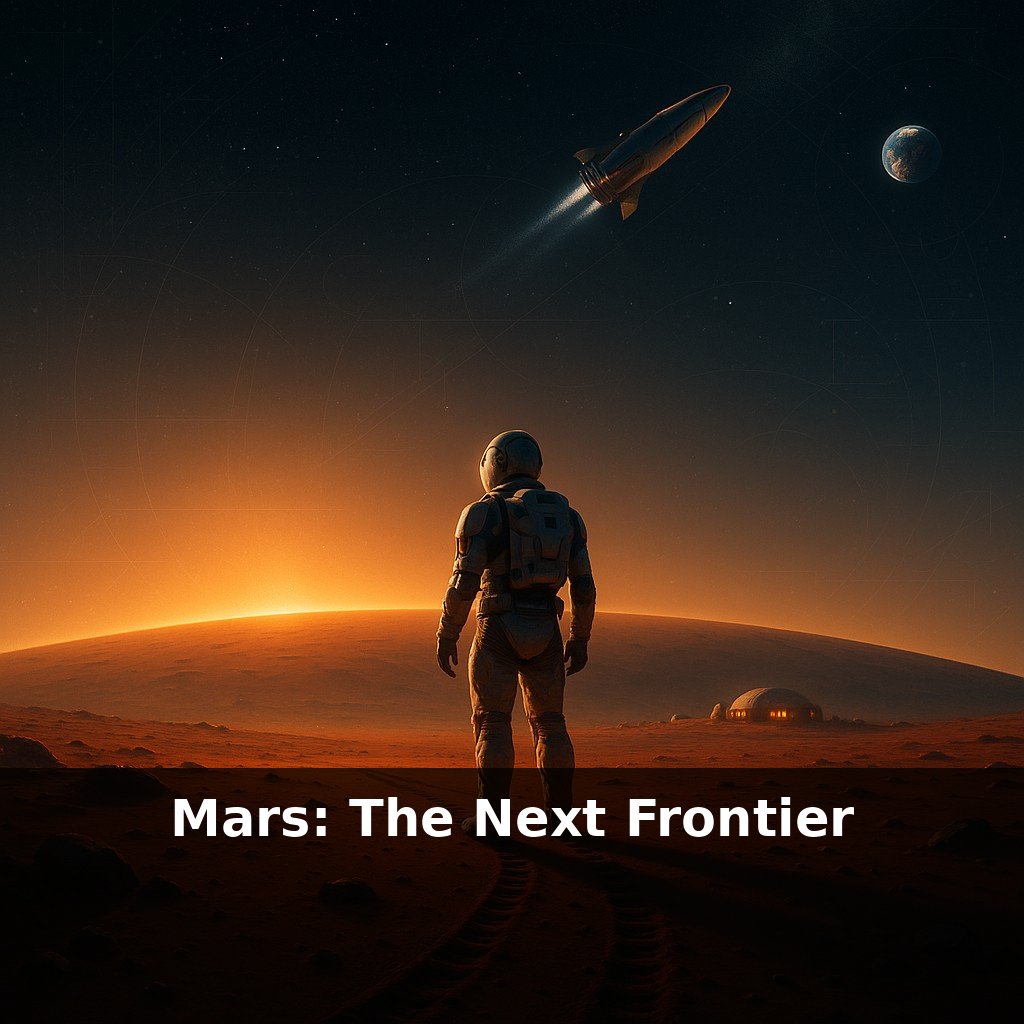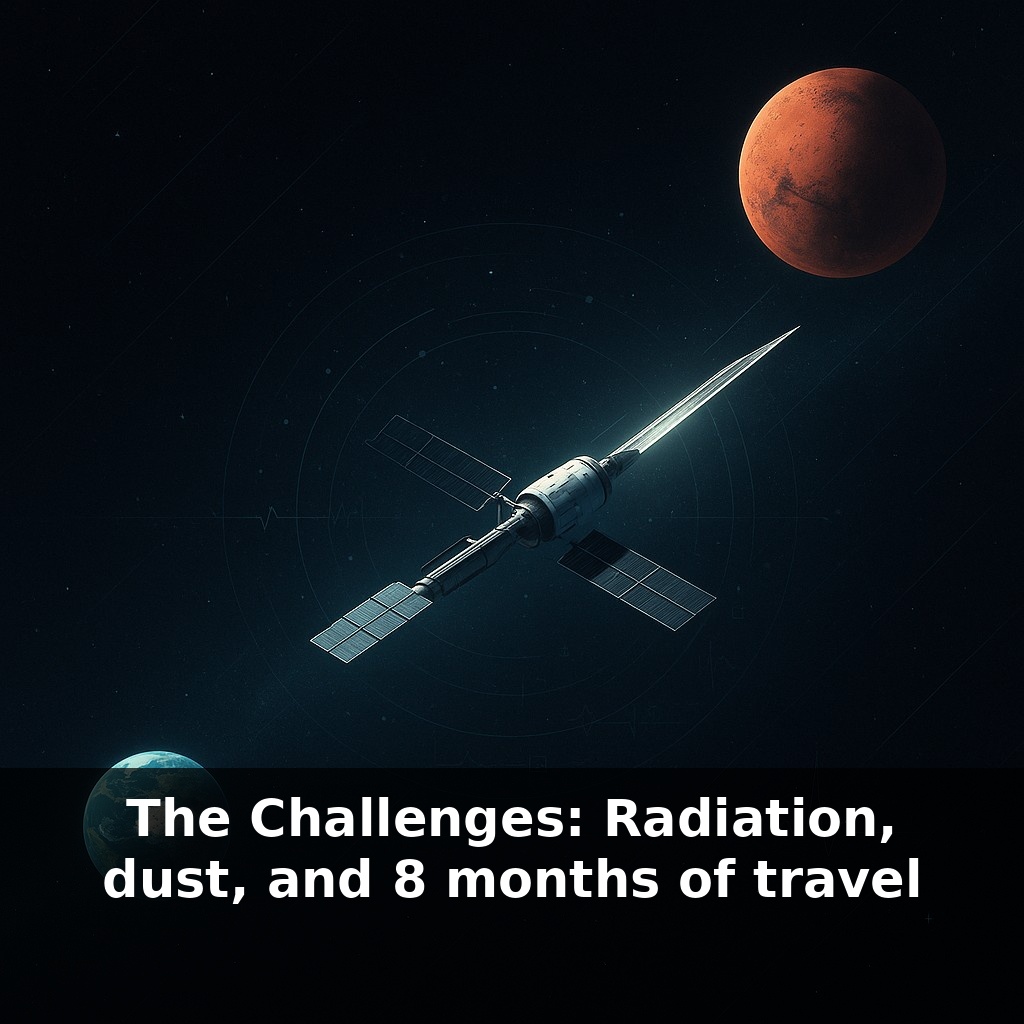
Halfway to Mars, there is no safe room, no hospital, and no quick U‑turn. Just a small crew, months from home, with invisible radiation, razor-fine dust, and a ship that absolutely must not fail. Today, we’re stepping into that silence between Earth and the Red Planet.
NASA’s own numbers quietly reveal how extreme this journey is. An astronaut on the ISS gets about 0.16 sieverts of radiation per year; a Mars crew could take four times that in a single round trip. And that’s before living on the surface. Add in eight cramped months of travel, confined with the same few people, and a world where dust storms can swallow the entire planet every few years, and “going to Mars” stops sounding like a trip and starts sounding like a full-body, full-mind stress test.
Engineers and scientists are racing to bend these odds. Faster propulsion could shave weeks off the voyage. Smarter shielding and medicines might let crews safely cross deep space. Dust‑tolerant joints, seals, and air filters are being designed so explorers don’t bring Mars into their lungs with every suit cycle. And onboard AI and autonomy aim to handle emergencies when Earth is a 20‑minute radio delay away.
On the way to Mars, the real difficulty isn’t any single threat—it’s how they stack. A long cruise means more time for radiation to chip away at cells, for dust‑contaminated systems to slowly degrade, and for small interpersonal tensions to harden into real conflict. Add in delayed communication with mission control and every routine task becomes a small test of judgment. This is why mission planners now treat crew psychology, medical resilience, and maintenance workloads as design inputs, not afterthoughts, tuning timelines and hardware like a conductor balancing sections of an orchestra.
The first surprise about a Mars trip is how “normal” everything can feel while your body is quietly drifting out of its comfort zone. After a few days, the launch drama is over. The ship hums. The view barely changes. Yet every 24 hours in deep space is nudging bones, eyes, immune cells, and electronics away from how they behave on Earth.
Microgravity is one of the slowest, most stubborn problems. Without weight on their legs, astronauts can lose 1–2% of bone density per month, and leg muscles shrink even with two hours of daily exercise. Blood and fluids shift toward the head, which is linked to vision changes some ISS veterans never fully shake. Future Mars transits may test rotating habitats or short‑radius centrifuges, spinning part of the ship to provide at least partial “down” for a few hours a day. It’s like giving the body scheduled “gravity doses” to remind it how to behave.
Then there’s the ship itself. Electronics in deep space age differently than on the ISS. High‑energy particles can flip bits in memory or quietly degrade solar cells. That’s driving interest in fault‑tolerant computers, self‑healing materials, and power systems designed to survive months of subtle damage before anyone notices a performance drop. Think of a long music tour where instruments must stay in tune across wildly different climates without a professional repair shop in sight.
The cruise out also doubles as a rehearsal room. Crews will likely practice landing sequences, emergency drills, and surface exploration plans again and again, refining roles and playbooks so that by the time Mars actually looms large in the window, the riskiest days of the mission feel almost routine. At the same time, they’ll be monitoring their own biology—tracking radiation markers, bone loss, sleep quality, even shifts in the microbiome—to feed data back into models that will shape the missions after them.
Dust and storms only truly matter when you arrive, but they reach backward into transit design too. Power margins, spare filters, even how much cargo is reserved for extra suit components all depend on how harsh engineers expect the environment to be over not just one landing, but an entire campaign. The eight‑month journey is where those bets, made years earlier on the ground, either start to pay off—or reveal gaps that the crew must creatively bridge with what they already have on board.
Think about how polar research stations operate through the dark winter. Crews rotate tasks, schedule “light” activities to break up heavy days, and lean on checklists not just for safety but to conserve mental energy. Mars transit planners study those patterns, then stretch them across hundreds of days with added layers: delayed messages, no quick evacuations, and hardware that can’t be swapped out by the next flight.
Submarines offer another clue. On long patrols, crews live in a sealed metal world where air, water, and morale are all recycled. Commanders micromanage sleep cycles and noise levels because small stresses accumulate silently. For Mars, similar thinking drives experiments in analog habitats like HI-SEAS in Hawaii or HERA at NASA, where volunteers live in isolation for weeks or months, testing schedules, leadership styles, and conflict‑resolution tools.
Your daily routine, in that context, becomes a mission system: something designed, tested, monitored, and updated as carefully as any piece of flight hardware.
Mars transit tech will quietly reshape life on Earth. Systems built to stretch every gram of water, food, and spare part can spill into cities that must do more with less. Mission planners are already eyeing “closed-loop” farms, ultra‑durable electronics, and habitats that adjust light, air, and noise the way a sound engineer tunes a studio. Your challenge this week: scan everyday devices and ask, “Would this still work after 240 days with no resupply?”
Mars travel tech won’t stay in space. Sensors that track crew health could become wristbands that flag illness days early. Life‑support tuning airflow and light may guide how offices fight fatigue. As engineers learn to stretch every gram and watt, they’re sketching blueprints for cities that cope with scarcity, like learning to play a complex score on a single violin.
Try this experiment: Turn a room in your home into a “Mars transit simulator” for one evening to feel the real constraints astronauts face. For 2 hours, limit your “communication with Earth” by only checking your phone or messages every 20 minutes to mimic delay and restricted contact, and note how it affects your focus and mood. While you’re in “transit,” give yourself a fixed “radiation budget” of screen time—say 30 minutes total—and see what you choose to spend it on, just like astronauts must prioritize limited exposure and power. Finally, add a “dust protocol”: every time you move from one seat or surface to another, pause and clean that small area first, imagining it’s Mars dust that could damage equipment, and notice how this changes your awareness of contamination and maintenance.