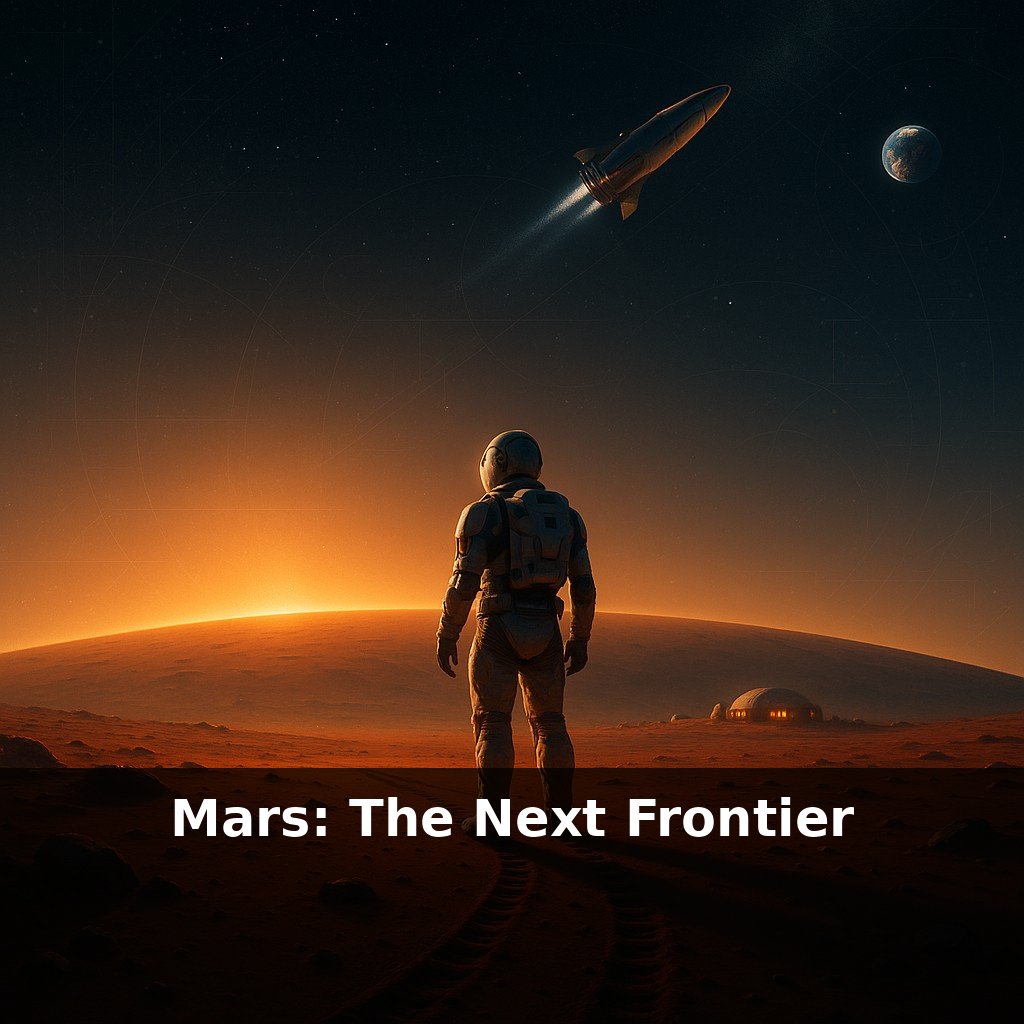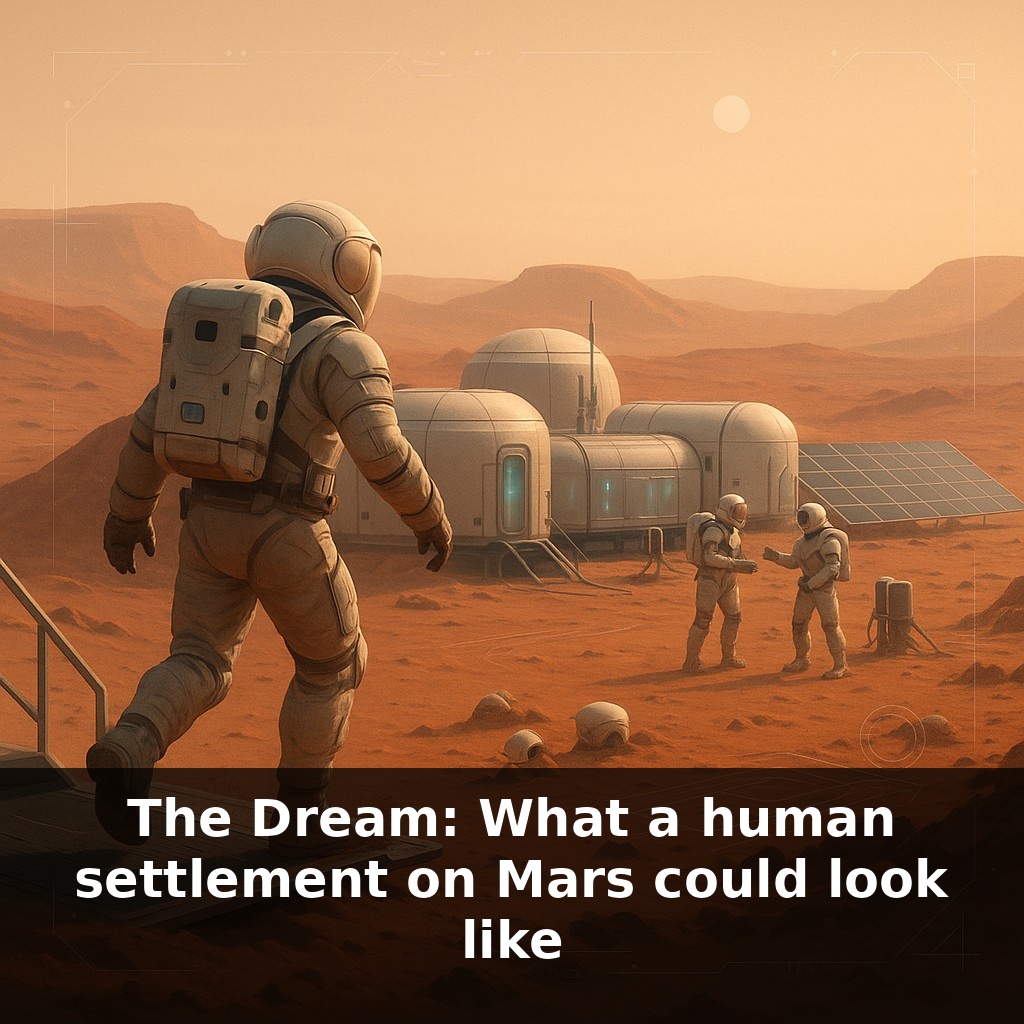
On Mars, noon sunlight can feel like a cloudy day on Earth—yet that dim glow might power an entire human outpost. A small crew steps from their lander into a buried habitat, knowing every breath, every sip of water, depends on machines…and on each other.
Mars gravity is just 38% of Earth’s, so your first step onto the settlement floor would feel wrong—your muscles expect weight that never arrives. Tools arc higher, footsteps are springier, and simple tasks need to be relearned, like switching to a new instrument where all the notes are shifted. Outside the pressure hull, the world is brutally cold and bone-dry, yet locked in the soil and ice are all the ingredients for air, water, and fuel. The habitat itself is more than shelter; it’s a tightly choreographed system where power, life support, and farming are woven together so that waste becomes resource. Crews won’t just “live” here; they’ll tune their routines, culture, and even celebrations around a 24-hour-and-39-minute day, delayed voices from Earth, and the quiet awareness that the nearest help is millions of kilometers away.
Food, work, and free time all bend around this new world. Greenhouses glow with LEDs tuned to coax crops from Martian dust amended with imported nutrients and recycled waste. Outside, tire tracks from construction rovers sketch the first “streets” between buried modules, labs, and fuel plants. Inside, schedules juggle maintenance shifts, science, and exercise to counter low gravity’s toll on bones and hearts. Delayed messages from Earth arrive like a slow, endless mail stream, while local chat pings instantly—seeding the first truly Martian conversations, slang, and in-jokes that won’t quite translate back home.
A steel airlock door thuds shut, and for a second there’s only the hiss of pumps and the creak of metal cooling in the thin Martian air. Then the inner hatch opens, and settlement life snaps back into motion: someone swapping out a clogged CO₂ scrubber cartridge, another printing a replacement valve body from regolith-based plastic, a third checking reactor readouts like a pilot scanning instruments in turbulence.
The “neighborhood” is compact: pressurized tunnels link sleeping quarters, labs, workshops, and a small gym into a walkable loop. Overhead, cables and pipes carry power, water, and data in color‑coded bundles; every junction has manual overrides, because a single failed valve is the kind of thing people will tell stories about for years. The walls double as storage: fold‑down desks, stowed EVA suits, emergency masks. Personal space is more like a train compartment than a house, customized with 3D‑printed panels, photos, and a few precious physical books.
Outside, infrastructure does the heavy lifting. A small modular reactor hums away under its own berm, backing up solar fields that track the weak sun. Nearby, ISRU plants split CO₂ for oxygen and combine it with imported hydrogen—or harvested ice—to make methane propellant. Dust‑streaked robots stack sintered‑regolith blocks into new berms and garages, pausing only to recharge or receive a software update beamed from a server rack rather than from Earth.
Daily work drifts between exploration and upkeep. One week, crews trek to a lava tube entrance, mapping a cavern that might shelter future habitats; the next, they’re debugging a stubborn water‑recycling loop. Scientific goals share schedule space with chores like filter swaps and radiator inspections. It’s closer to running a small ship than a lab: everyone has a specialty, but everyone also knows how to patch a leak, restart a crashed system, or cook a passable meal from shelf‑stable ingredients and greenhouse harvests.
Socially, the settlement leans on routine and ritual to stay sane. Weekly “Earthcall nights” anchor long‑delay family messages; local game tournaments and shared movie queues build the first Martian traditions. Conflicts can’t just be escaped by “going home,” so crews train in mediation as seriously as they train in EVA. Even celebrations are engineered: planning a birthday weeks ahead means allocating extra power for lights, maybe a rare hot shower, and the luxury of baking with precious real eggs from a small habitat chicken coop experiment.
Birth, aging, and long‑term health policies become frontier medicine. Doctors on Earth guide via telepresence, but local medics and AI diagnostics make the calls in emergencies, weighing risks of surgery in partial gravity and the limits of a tiny pharmacy. Over time, the settlement’s logs fill with hard‑won protocols: how to manage pregnancy at 0.38 g, how often to rotate crews to and from orbit, when to retire a habitat module that’s just too patched and brittle to trust.
Your challenge this week: design your own “Martian room” using only things you already own. Choose one corner, shelf, or desk and set it up as if resupply takes two years and you share the base with 11 other people. What earns a place? Tools? Art? Snacks with long shelf lives? At the end of the week, look at what you prioritized and ask: in a world where every cubic centimeter matters, what did you decide you can’t live without—and what turned out to be negotiable?
On Earth, mission planners talk about “mass budgets”; on Mars, settlers will obsess over “attention budgets” too. Every new system added to the base doesn’t just cost kilograms, it costs hours of inspection, calibration, software updates, and brain space. A fancy new lab instrument might be rejected, not because it’s heavy, but because it demands a specialist the crew doesn’t have to spare. Even food variety has this tradeoff: a wider menu means more recipes, storage plans, and failure modes to track.
Think of settlement design like composing a piece of music: too many instruments and the melody gets lost, too few and it feels empty. A Martian base has to stay “playable” by a small ensemble, where each person can improvise if another is out sick or outside on EVA. That pushes hardware toward modular, swappable parts and pushes culture toward cross‑training—everyone a musician, medic, mechanic, and neighbor at once, tuning not just machines but relationships to keep the whole system in harmony.
A Mars settlement will rewrite what “normal” means. Kids might grow up knowing constellations from two skies: one from their childhood dome, another from VR archives of Earth. Sports could evolve into low‑g parkour courses along habitat tunnels. Governance might happen in rotating “care councils” where engineers, medics, and farmers share power the way neighborhoods share chores. Lessons learned—tight feedback loops, waste‑nothing design—could flow back home like a new operating system for cities.
One day, a Martian will glance at Earth in the sky the way we glance at a distant city’s lights from a night flight—aware, connected, but already rooted somewhere else. Their calendar will mark local holidays, their music shaped by humming pumps and reactor fans, their stories about “going outside” meaning a suit, a checklist, and a red horizon waiting.
Here’s your challenge this week: Spend one focused hour designing a “Mars-ready day” for yourself using constraints similar to a Martian settlement—limited water, limited sunlight, and no easy resupply. Set a strict “resource budget” (e.g., max 30 liters of water, only 4 hours of artificial light on, no new purchases) and plan your food, power use, and communication as if you’re living in a small habitat. Then actually live by that plan for one full day and jot down, in real time, every moment when Earth-style convenience tempts you to “break” the Mars rules. At the end of the day, circle the three habits that would most clearly need redesigning if you really moved into a Mars settlement.