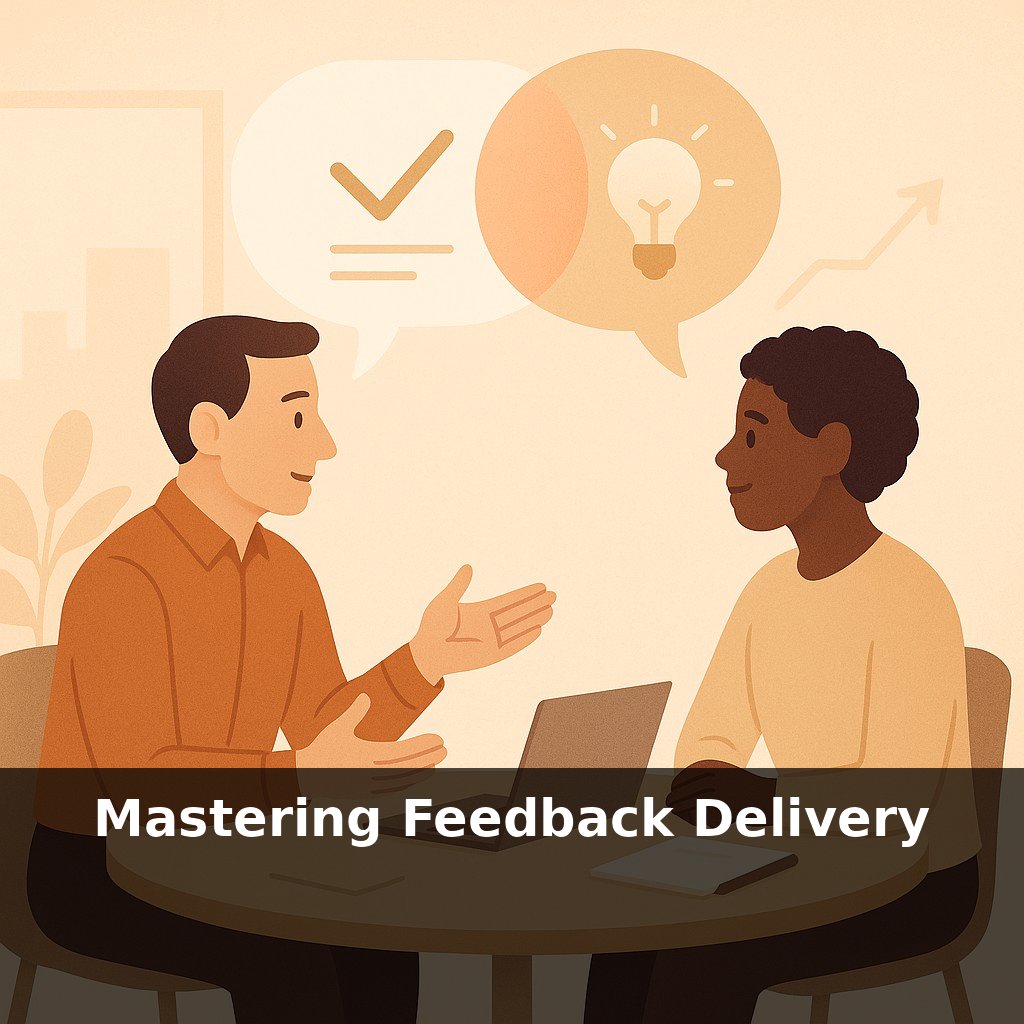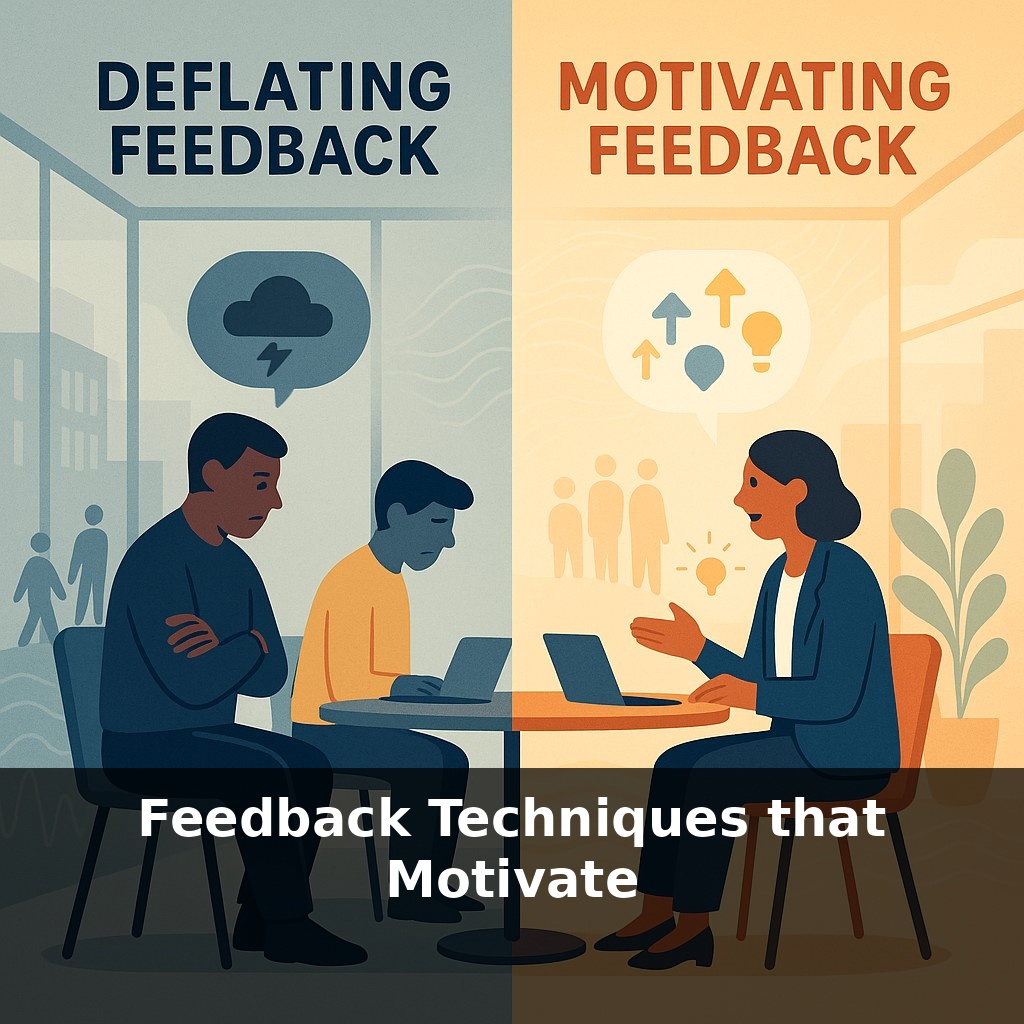
Right now, somewhere in a busy office, two managers are giving feedback. One walks out with an energized, loyal team. The other quietly triggers their next resignation. Same day, same company—totally different impact. The twist? The secret isn’t what they said. It’s how.
If you’ve ever walked out of a 1:1 feeling oddly deflated—even when the words sounded positive—you’ve experienced the gap between “feedback” and *motivating* feedback. The research is blunt: people don’t just react to the message; they react to whether it feels fair, specific, and worth acting on. That’s where techniques like the SBI (Situation–Behavior–Impact) framework matter, not as corporate jargon, but as scaffolding that keeps your message from collapsing under stress. Add to that your non-verbal signals—eye contact, posture, tone—and you’re suddenly shaping how safe it feels for someone to really hear you. In this series, we’ll turn those abstract ideas into concrete, repeatable moves you can use in real conversations, especially when the stakes are high and time is short.
So where do most managers slip? Not in *caring*—in *precision*. We rush in with “great job” or “this needs work” and skip the part the brain actually craves: clear, controllable details. That’s why weekly “meaningful feedback” multiplies engagement, while vague praise barely moves the needle. Today’s employees are filtering every comment for two questions: “Is this fair?” and “Do I have a say?” When your words spotlight effort, offer a specific next step, and leave room for dialogue, you’re no longer just judging performance—you’re co-authoring someone’s growth plan.
Think of this like upgrading from “reacting in the moment” to running a repeatable playbook. The goal isn’t to sound robotic—it’s to reduce the mental friction for both you and the person you’re coaching.
Start with timing. Weekly is powerful, but the real shift is moving from “event-driven” feedback (only after disasters or huge wins) to “moment-driven” feedback: short, specific check‑ins close to the work. That’s how Adobe’s Check‑In model works in practice—frequent, light-touch conversations that make feedback feel normal instead of like a verdict. When people stop bracing for feedback, they start using it.
Next, decide *what* you’re reinforcing. Motivation research consistently points to three levers: effort, learning, and smart strategy. So instead of, “You’re a natural presenter,” try, “You broke a complex topic into three steps and checked for understanding—that structure kept the room with you.” You’re rewarding controllable choices, not fixed traits. Over time, that shifts people from “protecting their image” to “experimenting and improving.”
Now layer in *how* you open the conversation. A small but powerful move: ask for self‑assessment before you weigh in. For example: “On a scale of 1–10, how do you think that client call went? What pushed it up or down?” This does three things at once: it signals respect, surfaces blind spots, and lets you calibrate your message. Harvard Business Review’s feedforward research leans heavily on this future‑focused, collaborative tone.
In digital settings, you have fewer cues, so each one matters more. Turning your camera on, looking at the lens when you deliver key points, and pausing deliberately after asking a question all serve as stand‑ins for in‑person presence. Even your response time to a progress update (“Saw this—nice move on simplifying the dashboard. Let’s debrief tomorrow.”) quietly tells people whether their effort is visible.
Finally, remember that motivation compounds. When someone acts on your feedback, close the loop: “I noticed you tried that new approach in today’s standup. What did you learn from it?” You’re not just praising—you’re reinforcing a learning cycle that makes the *next* hard conversation easier, not harder.
Watch what happens when you tweak just *one* element of a familiar conversation.
Version A: “Nice job in the meeting.” The recipient smiles, says thanks, and has no clue what to repeat next time.
Version B: “In today’s roadmap review, you paused after each slide to ask ‘What’s unclear so far?’ That kept the room engaged, and leadership leaned in instead of checking out.” Then you add: “Next time, where else could you use that check‑in move?”
Same setting, same person, same outcome on paper—but Version B plants a concrete mental bookmark: *do more of that*. Over time, these specific call‑outs become a pattern library of “moves that work” people can draw from when stakes rise.
In sports, coaches don’t just yell “Play better.” They highlight the exact footwork or timing that changed the play, then co-design the next drill. Your role is similar: spotlight the repeatable micro‑choices, then invite the other person to help design what they’ll try next.
Motivating feedback will also reshape how teams *learn together*. As AI tools surface patterns in everyday comments, managers may spot friction before it turns into conflict and redirect energy toward shared goals. Think of teams less as static org charts and more as “live dashboards” of evolving strengths. As employees see their growth trends, not just snapshots, feedback shifts from a one-off verdict to an ongoing calibration loop they actively want to join.
When you treat each conversation as a small prototype instead of a finished product, you give yourself permission to adjust tone, timing, and focus without drama. Over a quarter, those tiny iterations stack up like compound interest—shaping a culture where people expect to tweak, refine, and improve together, instead of waiting for permission to change.
Try this experiment: For the next five workdays, pick one person you work with and give them a single, behavior-specific piece of feedback right after you see the behavior (e.g., “When you paused to ask the client clarifying questions before answering, it made our team look really prepared”). Make sure each bit of feedback names the concrete behavior, the impact it had, and why it matters to the team or goal. Keep a quick tally of who you gave feedback to, how specific you were, and how they reacted in the moment (body language, energy, engagement). At the end of the week, compare those reactions to how people usually respond to your more generic “Nice job” or “You need to improve” comments, and decide which phrasing you want to keep using going forward.