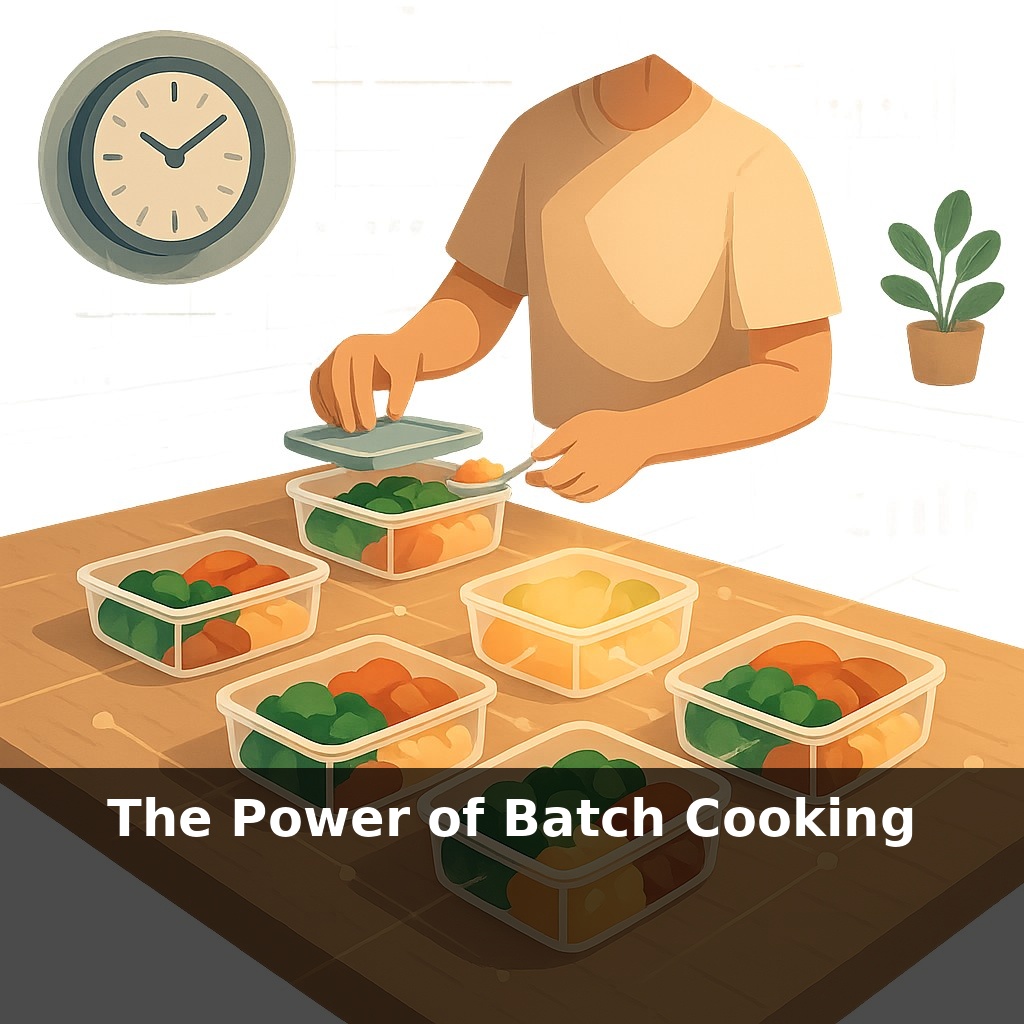
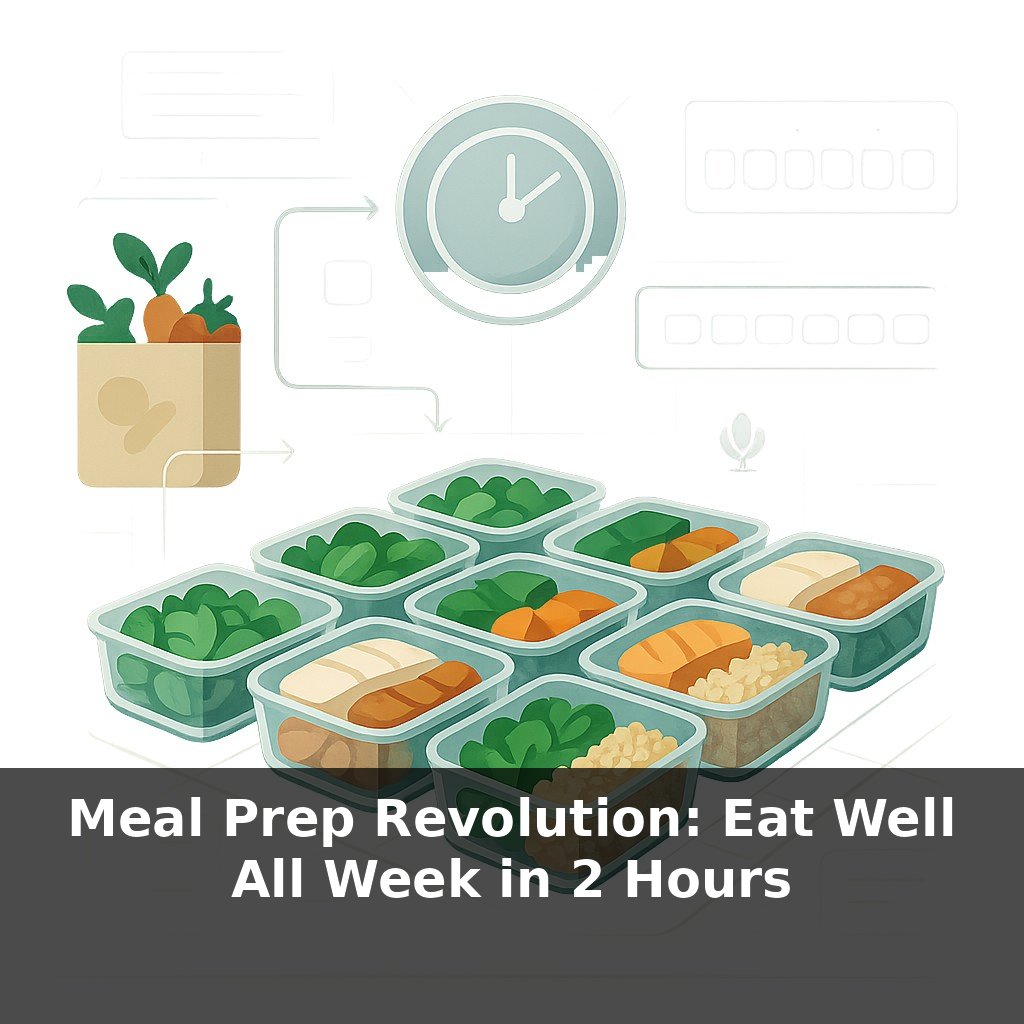
Right now, someone is spending half an hour cooking a single dinner… when they could have used the same time to cover most of their meals for days. In this episode, we’ll step into that kitchen and unravel how one simple shift can quietly rewrite your week.
Americans, on average, spend 37 minutes a day cooking—yet regular batch cooks get nearly the same payoff in almost half the active time. That extra quarter hour, compounded over a week, is like finding a bonus evening you didn’t know you had. But time is only one layer of the story. When you scale recipes instead of decisions, your grocery list tightens, impulse buys shrink, and those forgotten vegetables in the crisper finally get a purpose.
This isn’t about living on dull leftovers; it’s about building flexible “ingredients for your week” in one focused session, then remixing them into different meals with almost no friction. And the benefits reach beyond convenience. Studies are now connecting routine batch-style prep with better nutrition choices and far fewer fast-food detours, especially on the nights when willpower is lowest and drive-thrus are loudest.
So where does this actually fit in a real week? Think of batch cooking as designing “infrastructure” for your future self: a few anchor items—like a big pot of grains, a tray of roasted vegetables, a protein cooked two ways—that plug into whatever the week throws at you. Late meeting? You’re reheating, not starting from zero. Kids’ practice ran long? You’re assembling, not negotiating takeout. The research angle matters too: people who prep like this tend to keep more basic, whole ingredients at home and fewer ultra-processed “emergency” options within arm’s reach.
A 2022 study followed over a thousand Canadian adults and found something striking: people who prepped meals at least twice a week weren’t just cooking more—they were reshaping their entire food environment, with 26 percent lower odds of grabbing fast food. That’s the quiet power hiding inside a few hours of intentional cooking: you’re not only feeding your week, you’re changing the default settings of your decisions.
To see how this plays out, zoom into one concrete example: a single oven session. Say you run it for two hours on Sunday. You slide in a tray of chicken thighs, a sheet of mixed vegetables, and a pan of potatoes. In the background, a pot of lentils simmers and a batch of hard-boiled eggs cools on the counter. On paper, you’ve just spent roughly 2 kWh of energy and maybe 90 minutes of partial attention. In practice, you’ve quietly created the backbone for eight to ten different meals—grain bowls, wraps, salads, quick soups, a “clean out the fridge” hash—without touching a drive-thru menu.
From a budget perspective, scaling up like this works a bit like compound interest in finance: the bigger the “batch,” the more every minute and every dollar you invest gets reused. Buying a family pack of chicken or a bulk bag of dried beans usually drops your cost per serving. Those ingredients then split across multiple dishes, so your per-meal price falls even further—often by that 25 percent margin researchers see when people commit to regular prep.
Food waste shifts, too, once you start planning with the freezer in mind. Instead of letting half a bag of wilting spinach or those last three bell peppers slide toward the trash, you chop and cook them into a base you can portion and freeze immediately. Trials from WRAP in the UK suggest that this simple move—cooking and freezing instead of “saving for later” in the fridge—can trim household food waste by almost a third.
The tech layer matters here as well. A shared note with your “batch bases,” a reminder to move tonight’s dinner from freezer to fridge, even a simple label system with dates can be enough to turn your freezer from a graveyard of mystery containers into a live menu you actually trust and use.
Think of your Sunday session as drafting blueprints, not just “making food.” You’re designing reusable modules. Roast a neutral pan of vegetables with just salt and oil, then divide the tray into three containers and season each one differently later in the week—taco spices on one, garlic and herbs on another, a splash of soy and sesame on the third. One oven run, three distinct directions.
Or take one pot of beans: portion some plain, mash another portion with spices for quick spreads, and blend the rest into a soup base you can thin out whenever you need it. Same ingredient, three textures, three speeds of weeknight cooking.
You can play with temperature, too. A tray of seasoned tofu or salmon can be eaten cold in a grain bowl, room-temp in a wrap, or crisped in a hot pan for a fast “fresh” dinner. By thinking in layers—base, sauce, crunch, fresh element—you’re effectively creating a tiny, rotating menu from just a handful of prepared pieces.
Your freezer might soon feel less like storage and more like a savings account. As smart fridges learn to “read” containers and expiration windows, they could nudge you toward using what’s on hand before suggesting new purchases, quietly trimming both emissions and grocery bills. AI-driven recipes might chain together leftovers from several weeks, the way a good architect reuses structural elements, so each round of prep lays the groundwork for the next, forming a self-reinforcing loop of low-effort, low-waste eating.
Your challenge this week: once, just once, run a “test batch.” Pick one protein, one grain, one vegetable, make at least four portions, and label each with a future day and flavor idea. Treat it like seeding a playlist—then notice which nights you feel lighter, what you skip buying, and how much mental noise quietly disappears.