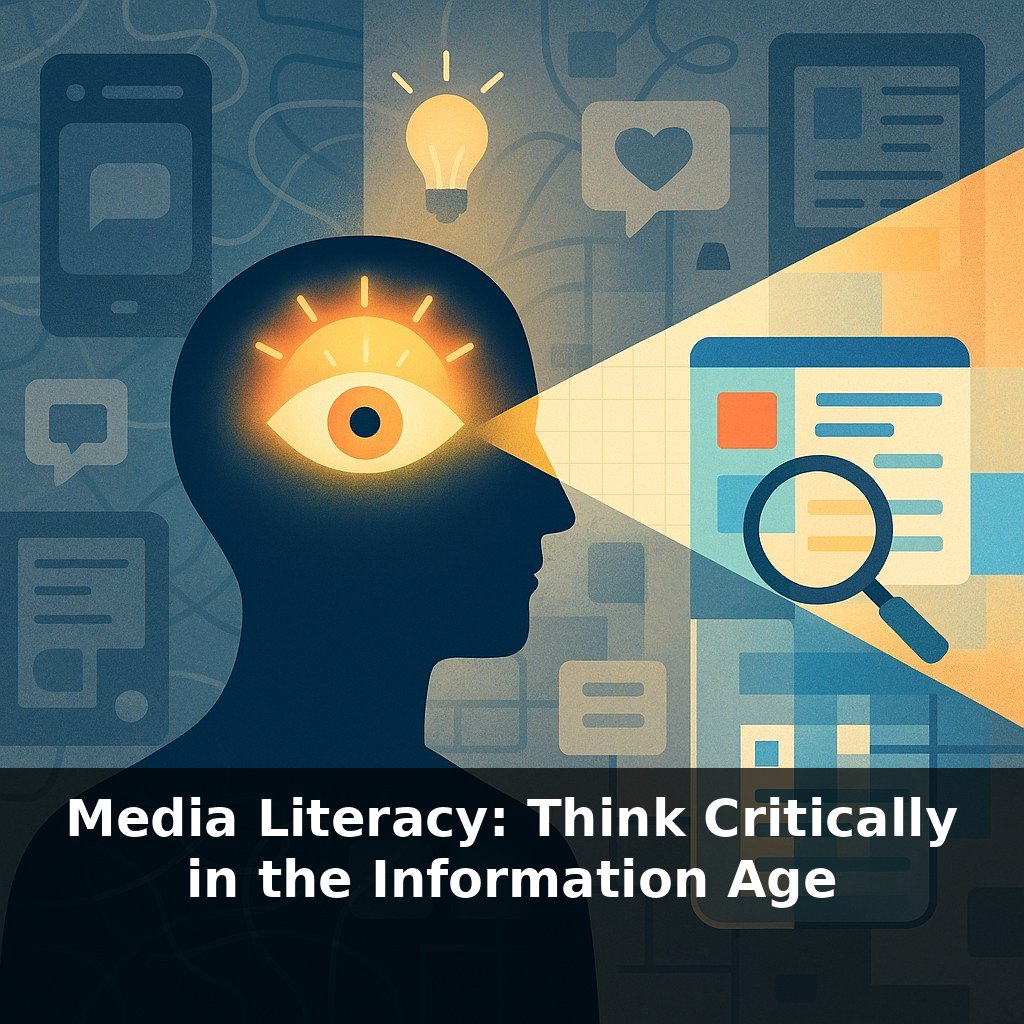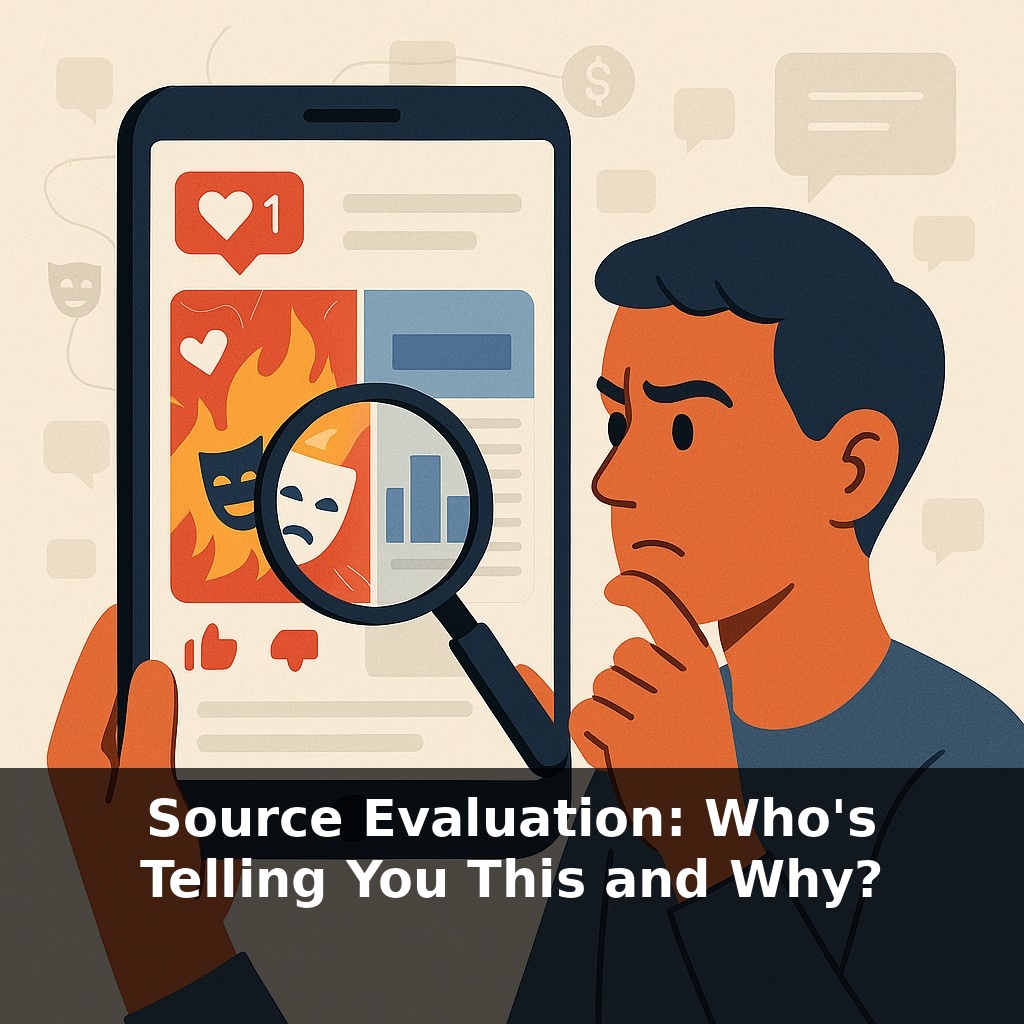
About half of adults now get at least some of their news from social media—yet most of them say they don’t really trust it. You’re scrolling, a post pops up with a confident claim and a slick graphic. In that split second, how do you decide if it deserves space in your mind?
Stanford researchers once showed teens two professional-looking websites about climate science. Ninety‑six percent couldn’t tell that one was quietly funded by the oil industry. The pages *felt* the same—clean layout, scientific language, authoritative tone—yet the motives behind them were miles apart. That gap between appearance and reality is exactly where misinformation thrives.
In this episode, we’ll slow down and ask three questions of any source: Who’s talking (and how do we know they’re qualified)? What are they using to back up their claims? And why are they telling us this now? Instead of staring harder at a single page, we’ll step sideways—opening new tabs, checking who else trusts this source, and following the money, the links, and the track records that lie just beneath the surface.
A useful trick is to stop treating a single article or post as “the source.” The real source is the network around it: who links to it, who quotes it, who debunks it, who funds it. Lateral readers treat the web like a map instead of a tunnel, zooming out to see where a claim sits in the wider landscape. Frameworks like SIFT and CRAAP are just structured ways of asking better questions about that landscape: Is this outlet consistently reliable on this topic? Do domain experts take it seriously? Does the evidence trace back to primary data, or to a closed loop of self‑referencing sites?
Think of those three pillars—authority, evidence, motive—as dials you can turn up or down, not boxes to tick once and forget. The trick is learning what “high” and “low” look like in the wild.
Start with authority, but widen the lens beyond degrees. Track record matters more than titles. A doctor speaking about vaccines in peer‑reviewed journals and major hospitals? Strong. The same doctor promoting miracle crypto schemes? Weak—on *that* topic. Authority is domain‑specific. A Nobel physicist doesn’t automatically become a trustworthy voice on nutrition or geopolitics. When you check a name or organization in a new tab, look for patterns over time: Have they been corrected or retracted often? Do other experts cite them approvingly, critique them, or ignore them?
Evidence is where many confident‑sounding claims quietly fall apart. Reliable sources don’t just assert; they show their work. You’re looking for: - Specific data (numbers, dates, sample sizes) - Links to original documents, datasets, or studies - Clear distinction between data, interpretation, and opinion
A fast test: follow one citation all the way back. Does the link go to an actual study, a government report, or a reputable investigation—or to a blog that cites another blog that cites…nothing? Closed loops are a red flag, especially when all roads lead back to the same tiny cluster of sites.
Motive is often the least obvious and the most revealing. Ask: who gains money, status, or influence if I believe this? Funding disclosures, “partners” lists, and ad patterns are clues. A site covered in affiliate links to the product it’s reviewing is not automatically lying—but you should expect a bias toward praise. Similarly, a “grassroots” group that shares an address or funders with an industry lobby is unlikely to present the full picture.
Here’s a subtlety: some of the most persuasive misinformation mixes strong‑looking evidence with hidden motives. That’s why lateral reading works so well. By checking what other credible outlets say about a person, organization, or claim, you’re effectively asking, “How does this source behave when it thinks no one’s watching?”
You’re watching a short, emotional video that claims a new “study” proves a popular painkiller is deadly. No jargon, no charts—just a dramatic narrator and a scary headline. Instead of instantly judging the claim, zoom in on who’s talking *and* who’s standing quietly in the background. Does the channel mostly post health panics? Do medical associations or major hospitals ever cite their work—or only conspiracy forums and supplement vendors?
Now flip it: a calm, text‑heavy blog argues that climate change is exaggerated, and it *does* link to data. Open the “About” page: is the organization funded by an energy company or a neutral grant maker? Search their name with “controversy,” “criticism,” or “funding” and notice who’s raising concerns—serious outlets, or ideological rivals?
Analogy time: source checking is less like tasting one spoonful of soup and more like reading the whole recipe—who wrote it, which ingredients they used, and whether other cooks trust it enough to serve.
Deepfakes, voice clones, and AI-written articles will soon blur “who” is speaking almost completely. You might see a convincing video of a local doctor or candidate who never said a word of it. That shifts the key question from “Does this sound real?” to “Can I *trace* this?” Think less about judging each post, more about mapping its supply chain: who first published it, who amplified it, and which tools label or verify it. In that world, your habits will matter more than any single headline.
Your conclusions don’t need to be final verdicts; they can be “working drafts” you’re willing to revise. Treat each new claim like dough resting on the counter: give it time, poke it from different angles, and see if it rises or collapses. Your challenge this week: pick one viral post and trace it back three steps. Notice how the story changes—or doesn’t—along the way.