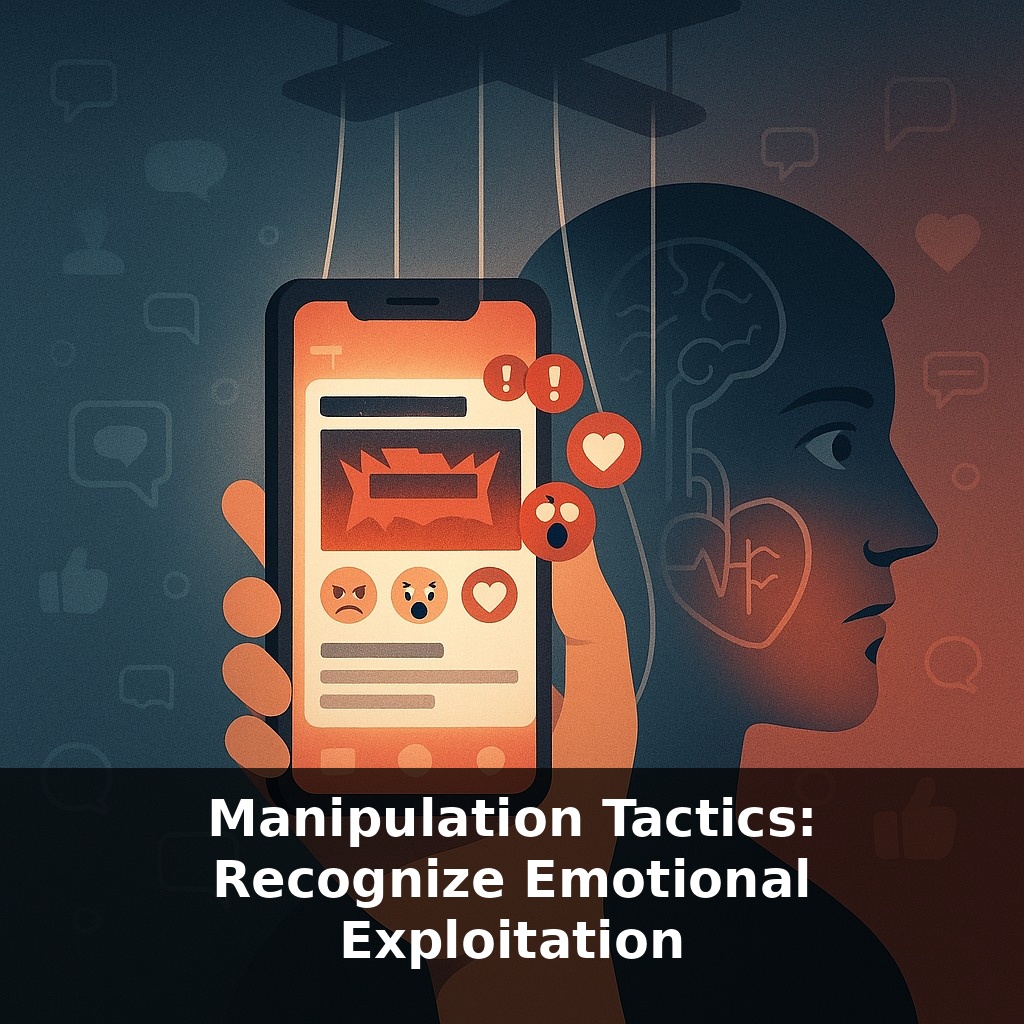
About six times more: that’s how much faster false stories race across social media than true ones. You’re scrolling, half-distracted, when a furious headline grabs you. You feel it before you think it. The question is: did you just choose that reaction, or did someone script it?
That spike of outrage or thrill you feel isn’t random; it’s the product of careful engineering. Emotional ads outperform rational ones, and entire industries are built on that gap. Campaigns and brands don’t just hope you care—they test which exact wording raises your pulse, which color button you’re more likely to tap, which image keeps your eyes locked a little longer. Think of it like seasoning in cooking: the facts are the ingredients, but the emotional “spice mix” is what makes you crave more and come back. Fear, belonging, indignation, pride—each gets sprinkled in precise amounts, then amplified by algorithms that notice what keeps you hooked. Over time, you’re nudged toward content that feels urgent, personal, and true simply because it’s intense. In this episode, we’ll pull apart those emotional recipes so you can tell when your feelings are being used as a remote control.
Some emotional shortcuts are baked into how your brain works. Fear jolts your threat system, tightening attention and boosting memory for whatever seems dangerous. Anger rallies your sense of moral certainty and “us vs. them,” making complex issues feel strangely simple. Nostalgia softens skepticism by wrapping messages in warmth and familiarity. Add social proof—likes, shares, “trending” labels—and your brain quietly concludes, “If so many people react, this must matter.” Manipulators mix these signals on purpose, not to inform you, but to steer what you notice, remember, and feel compelled to do next.
Fear, outrage, and warm fuzzies aren’t random vibes floating around your feed; they’re often the *delivery system* for specific tactics. Instead of looking at the content’s opinion (“this policy is good/bad”), look at its structure. Certain patterns show up again and again when someone wants your feelings to do the heavy lifting.
One common structure is **framing**: choosing a narrow window through which you see an issue. A headline about crime can quietly decide whether you blame individuals, neighborhoods, or politicians—before you even see a number. Is something a “tax relief” or a “tax loophole”? Same policy, different emotional script. Once the frame is set, your brain fills in the rest.
Then there’s **fear appeals**. These follow a simple recipe: 1. Name a threat (“your kids,” “your savings,” “your freedom”). 2. Crank up vivid, worst-case imagery. 3. Offer one “obvious” action—vote, share, buy—as the escape hatch. If the message makes the danger feel huge and your options feel tiny, you’re probably in a fear funnel, not a nuanced explanation.
**Social proof** is another favorite. When you see “everyone is furious about X,” your brain shortcuts: “I should care too.” That “everyone” might be a tiny, noisy group, boosted by paid promotion or selective screenshots. The emotion isn’t just in you; it’s staged in the crowd you’re shown.
**Scarcity** taps urgency in a different way: “Only 3 left,” “Last chance to protect your rights,” “Before it’s banned.” Real deadlines exist, but manipulators fake or exaggerate them because a ticking clock shrinks the space for slow thinking.
Finally, **personalization** makes all this feel eerily tailored. The same politician can appear as a hero of tradition to one person and a champion of change to another, depending on what past clicks suggest you’ll respond to. Over time, you’re not just sold products; you’re sold identities that match your emotional patterns.
Your leverage point is noticing the pattern before the pitch. When you catch the structure—frame, fear, crowd, clock, customization—you can ask, “What would this look like if the emotional volume were lower?” That single question reopens the door to your slower, more deliberate mind.
A quick way to spot emotional steering is to zoom in on *how* a message is built. Watch for “story compression”: a complex situation squeezed into three roles—villain, victim, and savior. A political ad that paints one opponent as pure evil, “people like you” as under attack, and the campaign as the only rescue is using your moral instincts as a shortcut.
Notice also when a post jumps straight from *feeling* to *command*: “If this makes you angry, share now,” “If you love your family, sign immediately.” That leap skips over questions like, “Is this accurate?” or “Are there other options?”
An analogy from medicine helps: the same drug can heal at one dose and harm at another. Emotional content is similar; small amounts help you care, but when intensity spikes and nuance vanishes, treat it like a warning label: “Use extra critical thinking before swallowing.”
Emotional targeting is about to feel less like a blunt ad and more like a whispered suggestion. As AI sentiment tools track micro‑reactions in real time—blink rate, scroll speed, tiny pauses—messages will adapt mid‑stream, like a chef constantly tasting and tweaking a sauce just for you. That can make public debate feel smoother yet strangely hollow, as if your feeds agree with you while quietly steering your mood, priorities, and even your sense of what “normal” looks like.
When a post hooks you, try treating it like a recipe you’ve never seen: skim the label, check the ingredients, notice what’s been left out. Is it all heat and no substance? Your challenge this week: each time you feel a spike—pride, fear, outrage—pause long enough to ask, “Who benefits if I swallow this whole, and what other flavors am I not being shown?”