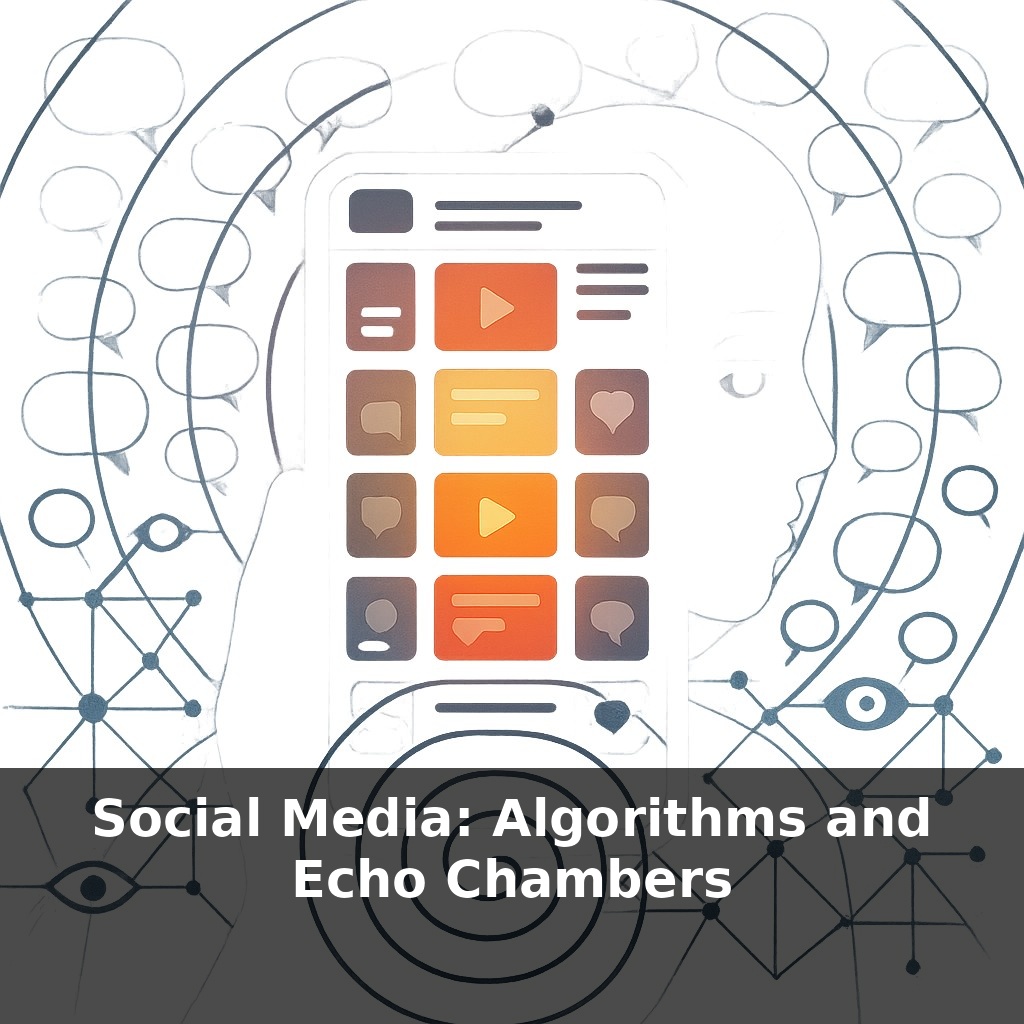
About half of what you see on social media was chosen by a machine, not by you. You open an app “just for a minute,” and suddenly the feed feels uncannily right—too right. The posts agree with you, your friends cheer you on, and quietly, opposing voices fade from view.
About 70% of YouTube watch time comes from videos the system recommends, not ones people actively search for. And TikTok’s leaked docs show its model is tuned to keep you in a “just one more clip” loop by rewarding short, sticky videos. So your feed isn’t just reflecting your tastes—it’s quietly training them. Over time, that can shift what feels normal: which jokes seem acceptable, which news feels trustworthy, which political takes sound “obvious.” The catch is that this shift is gradual, so it feels less like persuasion and more like “discovering your true self.” Add in your own choices—who you follow, what you like, what you skip—and the effect compounds: the system learns to stop showing anything that doesn’t fit the pattern it has for you, even if those missing pieces might matter for how you understand the world.
Only about one in ten posts you could see on Facebook ever reaches your screen; the rest vanish in the algorithm’s cutting room. On Twitter/X, a huge 2021 study found that who people choose to follow shapes their information bubble even more than the ranking system does. Add likes, shares, and comments, and a subtle rule emerges: views that match the crowd get boosted; ones that clash often sink. It’s less a conspiracy and more a series of tiny nudges. Like seasoning a dish, each small tweak is harmless alone, but together they can overpower the original flavor of your beliefs.
If you’ve ever felt that your feed “knows” you a little too well, that’s not an accident—it’s the outcome of millions of tiny predictions about what will keep you from closing the app. Underneath the surface, three forces tend to work together.
First, there’s the platform’s goal. Most major networks optimize for engagement because that supports advertising and growth. Any post that gets you to pause, react, or respond sends a simple message back to the system: “More like this.” Not more “true,” “fair,” or “nuanced”—just more engaging. Outrage, moral drama, and identity-signaling content often win that contest because they pull strong emotions quickly.
Second, there’s your own pattern of choices. When you mute a relative, join a subreddit, or binge one creator’s videos, you’re quietly redrawing the borders of your information world. In that 2021 Nature study of 1.6 million Twitter users, who people chose to follow turned out to be more important for polarization than how the algorithm ranked posts. In other words, the walls of many echo chambers are built from follow buttons as much as from code.
Third, there’s social feedback. When a take gets a storm of likes from “your side,” it’s more likely to be surfaced to similar users. Creators learn this quickly. If a calm, nuanced post underperforms while a sharper, more partisan version spikes, the incentives are clear. Over time, that can tilt public conversation toward the loudest, least compromising voices, even if most people actually hold more moderate views.
These forces don’t trap everyone equally. Some people follow across the spectrum, click on critical takes, or deliberately seek out fact-checks and longform sources. Others mostly interact within one community, at one emotional pitch. The result is a patchwork: some feeds are relatively mixed; others are nearly sealed.
Think of it like weather in a large country: the overall climate may be warming, but local conditions vary a lot. Some corners are stuck in perpetual storms; others get occasional clear skies. Your settings, habits, and circles help decide which forecast applies to you.
Crucially, “turning off” ranking isn’t a magic fix. A raw, chronological stream just means “latest and loudest” wins, and your past choices still determine whose updates flood in. A feed without any curation at all quickly becomes too noisy to navigate, so people reintroduce filters—lists, favorites, muting—which often rebuild the same patterns in a more manual way.
Understanding this mix of incentives, behavior, and design doesn’t require paranoia. It does ask for a different question than “Is the algorithm bad?” A sharper one is: “Given what it’s built to optimize, what kinds of content and connections is it quietly encouraging me to prefer—and which ones is it teaching me to ignore?”
Open a new or rarely used account and follow three very different clusters: a climate scientist, a fashion influencer, and a local union organizer. Within days, you’ll likely see their worlds harden into separate storylines about what matters, who’s to blame, and what “everyone knows.” Or watch how the same protest looks across platforms: on one, it’s framed as heroic; on another, chaotic; in a third, barely visible. These aren’t just different angles—they’re different agendas, shaped by which clips spark quick reactions.
Your own posts are part of this, too. Share a nuanced take on a controversial topic, then a sharper, more one-sided version. Notice which earns more responses and subtle pressure to “lean in.”
Analogy: it’s like adjusting seasoning while cooking. Each tiny extra pinch of salt (one more sensational post, one more lopsided thread) seems trivial, but by the end, the whole dish can taste drastically different from the ingredients you started with—without anyone ever deciding to change the recipe.
Lawmakers are starting to treat feeds more like public infrastructure than private toys. The EU’s Digital Services Act already lets researchers peek under the hood; similar rules are debated elsewhere. Some labs test “nutrient labels” for information: quick cues about source, bias, and evidence strength. Think of it as moving from mystery sauce to ingredients-on-the-jar. Meanwhile, AI tools may soon let you say: “Show me how five different communities see this same event.”
Your feed won’t suddenly “fix” itself—but you can treat it more like a tool than a mirror. Follow a few accounts that reliably challenge you without trolling; save longform pieces the way you’d stock a pantry; and, now and then, step outside the apps to compare headlines, like tasting a dish before adding more spice. Curiosity, not certainty, is your best algorithm.
Here’s your challenge this week: Pick one social platform you use daily and, for the next 7 days, deliberately “mess with” its algorithm once a day by searching, clicking, and following content that opposes your usual views on one specific topic (e.g., climate policy, free speech, or digital privacy). Each day, like or comment on at least three posts from credible sources outside your usual echo chamber—aim for a mix of independent journalists, experts, and people with different political or cultural backgrounds. By the end of the week, compare your feed from Day 1 and Day 7 (screenshots help) and notice how the recommendations, tone, and viewpoints in your feed have shifted.