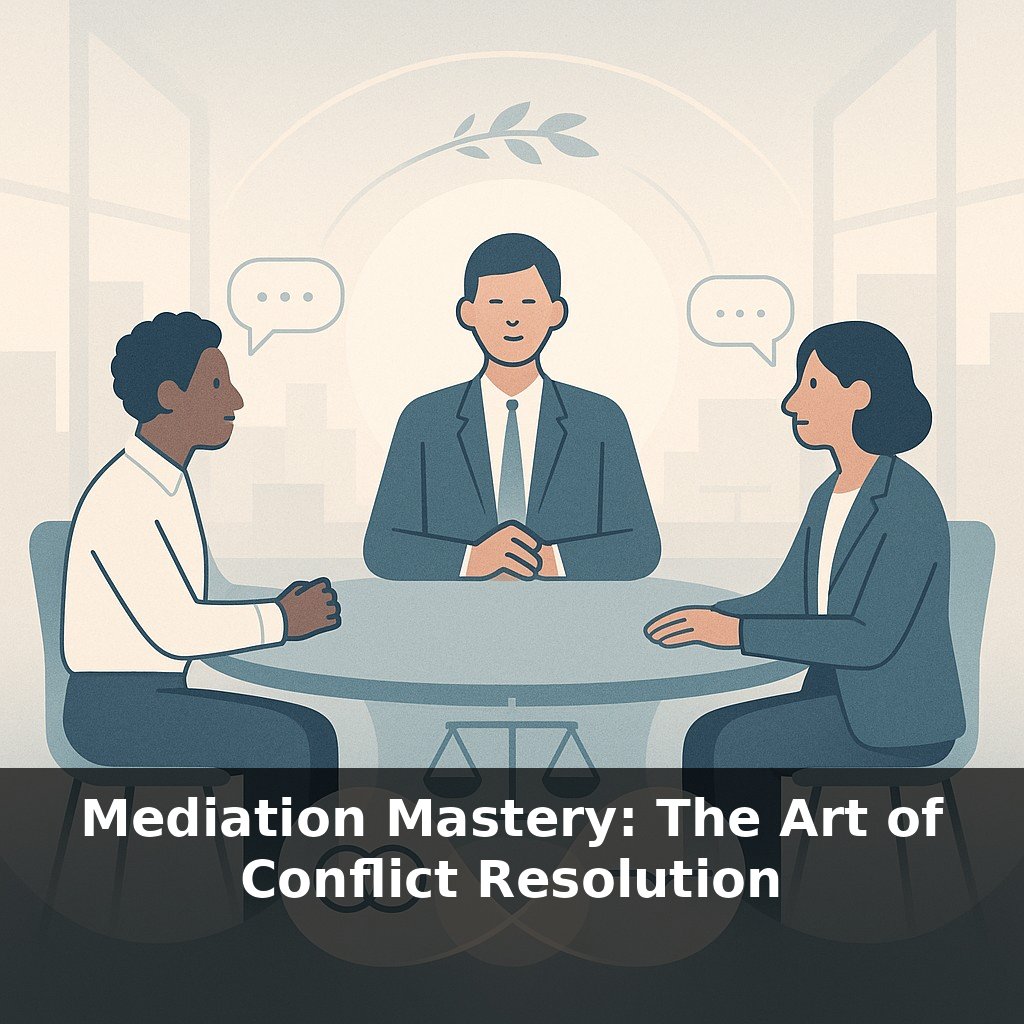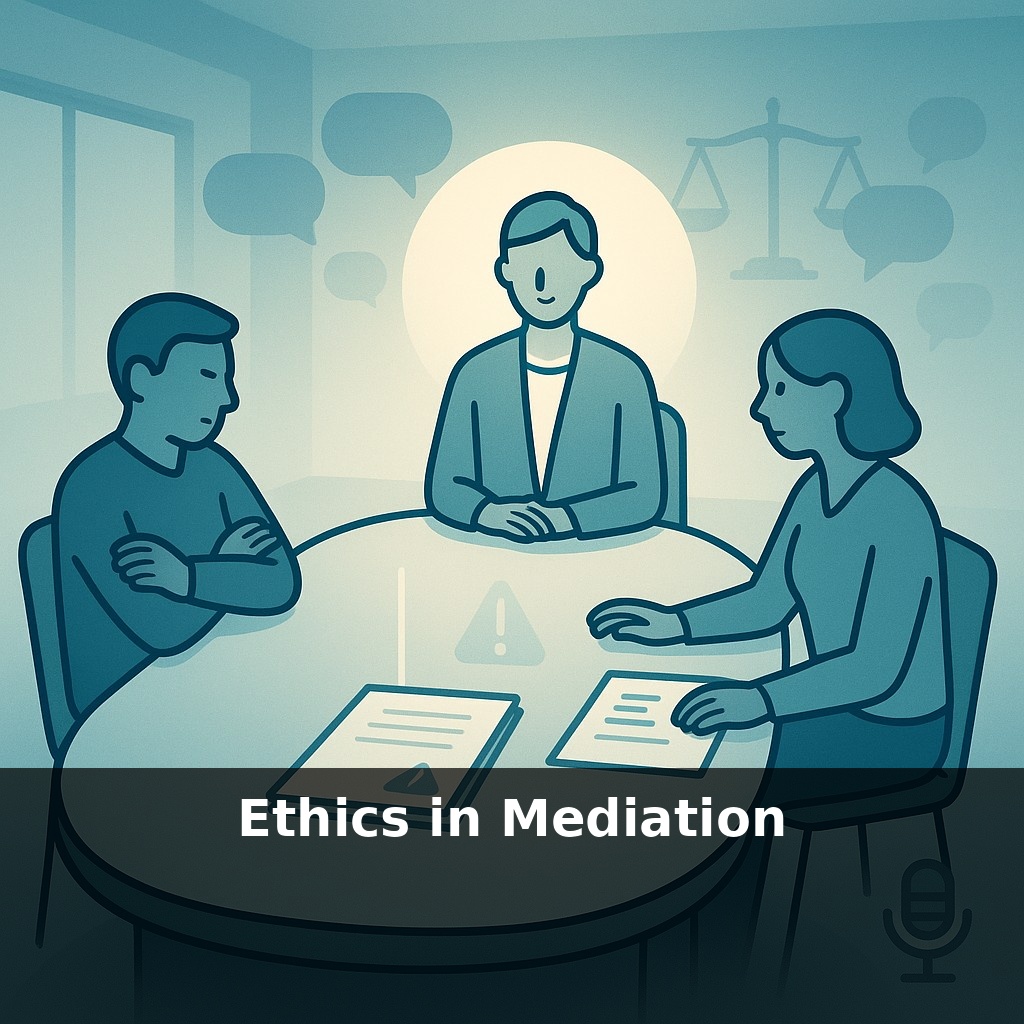
“In most mediations, the most powerful person in the room isn’t a lawyer or a judge—it’s the *ethics* no one talks about. A tense pause, a raised eyebrow, a side comment in the hallway… and suddenly, neutrality, consent, and fairness are quietly on the line.”
“Ethics” in mediation rarely collapses in a dramatic moment; it erodes in tiny, almost reasonable steps. A lawyer jokes in caucus, “Look, just push them a bit harder.” An exhausted party says, “Fine, whatever, I’ll sign.” A mediator thinks, “If I nudge them toward settlement, I’m helping, right?”
This is where the six pillars you’ve already met quietly get stress‑tested. Not in theory, but in hallway updates, pre‑session calls, and post‑session emails that never make it into the official record. Ethical pressure often hides inside *helpfulness*: speeding things up “to save costs,” soft‑pedaling bad news “so they don’t freak out,” or steering “for their own good.”
To navigate this, we need practical tools: spotting early warning signs, naming them without blowing up the process, and knowing when adjustment is enough—and when you should walk away.
The catch is that mediation now lives in a much rougher ecosystem than the tidy theory suggests. Courts in dozens of states push parties into mandatory sessions. Online platforms compress complex emotions into 90‑minute video slots. Repeat‑player insurers and institutional actors show up with rehearsed tactics and deep familiarity, while individuals may be having their first and only day in this world. Under that kind of structural pressure, those six pillars stop being ideals on a poster and become more like load‑bearing beams you constantly check for cracks as the building sways in a storm.
A strange thing happens when those beams start to creak: people quietly invite you to lean on the weakest ones.
A lawyer might say, “Off the record, my client will do whatever you recommend.” A judge hints that “moving this along” would be appreciated. In an online session, a party messages you privately: “Tell me what a *smart* person would accept.” None of these are cartoon villains. They’re tired humans asking you to trade a bit of integrity for a lot of convenience.
This is where the six pillars stop being abstract and turn into moment‑to‑moment micro‑choices. Three patterns show up again and again:
First, the **settlement‑at‑all‑costs drift**. The room feels close to agreement, but only because one side is visibly shutting down. You’re tempted to “round off” their hesitation, rephrase their words as firmer than they were, or skip a break so momentum isn’t lost. The pillar at risk: self‑determination. The practical move: slow down precisely when everyone wants to speed up—ask, “Is this actually acceptable, or just less awful than continuing?”
Second, the **quiet tilting toward the ‘reasonable’ side**. Repeat players arrive polished, patient, and data‑laden; the other side is disorganized and emotional. Your brain tags one narrative as “credible” and the other as “messy.” That’s not neutrality breaking; that’s ordinary cognitive bias. The fix isn’t pretending you have none, but building counter‑weights: equal time, equal summarizing, equal testing of assumptions, and explicit check‑ins about whether both parties feel heard.
Third, **confidential information as leverage**. In caucus, you learn something explosive: a hidden document, a likely witness, a private threat to walk away. You can’t simply “un‑know” it, yet you also can’t secretly steer the other side with hints that betray trust. Here, informed consent and confidentiality collide with your urge to “use” what you know. The move is radical transparency about process, not content: clearly define what may be shared, revisit permissions as offers evolve, and resist turning secrets into subtle pressure.
In each pattern, the question is less “What’s allowed?” and more “What keeps the structure sound when the storm gets worse?”
Consider a case where an employee alleges discrimination and the company arrives with a polished HR representative plus outside counsel. The employee keeps glancing down, answering in fragments. Instead of “rescuing” them, an ethical move might be: offer a separate caucus, invite them to name what feels unsafe, and explore options like bringing a support person or rescheduling so they can get legal advice. You’re not fixing the power imbalance, but you’re refusing to pretend it isn’t there.
In another setting, an insurer shows up as a repeat player with neat spreadsheets and a clear walk‑away number. The injured person has only a stack of medical bills. Rather than subtly siding with “data,” you could require both parties to translate key numbers into concrete impacts: timelines, risks, trade‑offs. Now, the conversation doesn’t reward whoever is most rehearsed; it rewards whoever can be clearest.
Ethical practice here isn’t heroic; it’s a series of small design choices about who gets space, voice, and time.
Algorithms will soon sit quietly in the room, suggesting offers the way spellcheck suggests words. If practitioners treat those prompts like GPS directions—useful but not infallible—they’ll keep humans in charge of the route. New rules will likely ask not just *what* outcome was reached, but *how*: who designed the tools, who audits them, who can say no. The real shift isn’t more rules; it’s more visibility into the invisible hands shaping each “voluntary” choice.
Treat each session like tuning an instrument: tiny, regular adjustments keep it from warping under tension. Over time, patterns appear—who you interrupt, whose stories you probe, when you rush. Those patterns are data. If you review them with colleagues, even briefly, you’re less a lone referee and more part of a living quality‑control system.
Here’s your challenge this week: Before your next mediation (or simulated one with a colleague), draft a one-page “Ethical Ground Rules” sheet that explicitly covers confidentiality limits, impartiality (including how you’ll handle perceived bias), and conflicts of interest, and send it to the parties 24 hours in advance. During the session, read it out loud at the start and ask each party to name one concrete example of how they’d know you were being impartial. After the mediation, spend 10 minutes reviewing your behavior against your own ground rules and jot down one specific moment where you were tempted to drift from them and how you handled it.